
Japan Honey
Jump to Regional Travel and Honey Pages
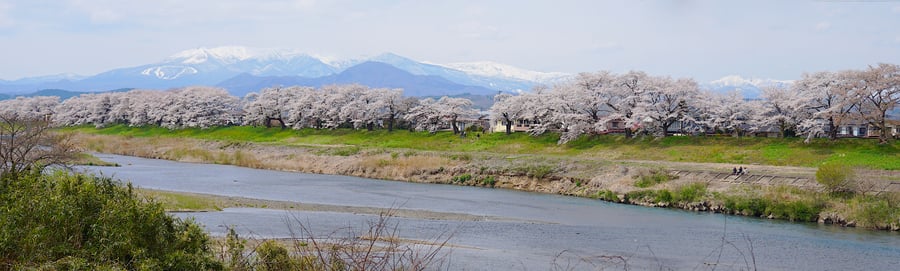
Japan stretches 3,000 kilometres from subarctic Hokkaido to subtropical Okinawa, and its seasons travel the length of it. The blossoms that open in Kyushu in March reach Hokkaido in June – and every stop along the way produces a different honey.
Of all the honey consumed by Japanese honey lovers, 94 percent is imported.
The remaining 6 percent is produced in Japan. Yet it supports over 80 individual documented honey types, each named, harvested, and sold with the focus that fine wine demands. The key to understanding this remarkable story can be gleaned from the Japanese concept of kodawari – an obsessive, exacting commitment to getting one specific thing exactly right – a refusal to accept anything less than it should be.
Before 1592 there is no credible record of honeybee keeping in Japan. The first recorded account began when an Asian bee species, Nihon mitsubachi, Apis cerana japonica, was brought from Korea during Hideyoshi’s invasion, carried back by returning soldiers along with Korean beekeeping technicians. For nearly three centuries it remained a small, local tradition – productive enough for tribute honey to reach the Imperial Court, but never a commercial enterprise. Then in 1877, Meiji-era Japan did not wait for beekeeping knowledge to arrive on its own. It sent people to study European methods and imported the Western honeybee deliberately, along with the Langstroth hive and the techniques to run it. For the first time honey was available in quantity.
This lead to the first of two pressures that Japan had not yet discovered, to impose a cost that Japan’s own ecology would impose on a bee that had not evolved there. The Nihon mitsubachi had evolved alongside Japan’s predators and kept working the same flower cascade it always had – renge in April, acacia in May, tochinoki in June, soba in autumn. The Western bee worked it too, named and documented through the same artisan retail infrastructure. A beekeeper who follows the cascade knows that the tochinoki window in the Nagano mountains is short, and that which slope matters.
The first pressure was the Asian giant hornet could eliminate the newly immigranted Western bee colony in an afternoon because the Western bee has no defense. Yet the Nihon mitsubachi evolved alongside the enemy and had developed an effective defense – hundreds of bees engulf their intruder and raise the temperature until it dies. That vulnerability was present from the immigration from 1877.
Then came the second pressure: the nectar plants that commercial beekeeping depended on were disappearing. Renge – a leguminous cover crop planted in Japanese rice paddies as spring green manure and one of the earliest nectar sources of the season – fell 81 percent in plantings between 1985 and 2018 as synthetic nitrogen fertilizers replaced what renge had always provided for free. Rural Japan was losing its agricultural workforce to the cities, and a bag of fertilizer required no cover crop, no timing, no plowing in. Mikan orchards contracted 75 percent. Domestic production peaked at 8,500 tonnes in 1978 and fell to roughly 2,600 tonnes today. What Japanese beekeeping does with what is left is unusually fine-grained: honey is sold by flower, by slope, by season and by beekeeper.
A retailer in Kyoto decided that buying honey from a wholesaler was not acceptable and began visiting every beekeeper himself. He now travels 52,000 kilometers a year and documents over 300 individual lots.
52,000km a year to taste over 300 lots -- how Miel-Mie became Japan's most documented single-origin catalog
The founding logic was simple and radical: if you want to know what a honey actually is, you have to visit the beekeeper who made it. Ichikawa Takusaburo built Miel-Mie on that premise. He travels approximately 52,000 kilometers every year -- not to buy in bulk, but to taste individual lots, meet individual beekeepers, and decide whether a specific harvest from a specific hive site in a specific season is worth documenting. Over 300 honey types pass through that evaluation annually.
Kaneichi Shouten has been in business since 1930. The Miel-Mie brand launched in 1998. The catalog is organized by prefecture, season, and floral source, with lot-level notes that read more like wine documentation than retail copy -- acacia from a named hillside in Akita, yamazakura from the Tono mountains documented separately from ornamental cherry, each lot named for its producer. The selection changes year to year because the harvest changes year to year and Ichikawa decides lot by lot what makes the cut.
In March 2024 Miel-Mie opened a dedicated mead brewery inside a restored Kyoto machiya, extending the same logic -- specific origin, specific character, documented and named -- into fermented honey.
A high school beekeeping club in Sapporo decided their city should produce honey, entered the national competition, and won.
How the Sapporo Odori High School beekeeping club beat professional producers to win the 2018 national championship
Sapporo is not a beekeeping city. It is a cold northern city on an island that was not the center of Japanese agricultural settlement until the Meiji era. The Odori High School beekeeping club decided this was not an obstacle.
The project was built on school grounds adjacent to the Hokkaido University Botanical Garden, which gave the bees access to a large documented urban plant collection. The curriculum involvement was deliberate: science students handled hive management, arts students designed packaging, commerce students worked the business model, calligraphy students handled labeling. The national competition entry was the integrating project that tied all four streams together.
In 2018, their entry into the domestic division of Honey of the Year won both the judged championship and the visitor prize -- a double win in the same year the Nihon mitsubachi division was first established. They were competing against professional producers from across Japan. The school has continued the program. Student media covering the project documents how the curriculum integration has been maintained across all four vocational streams.
A university project in Urayasu – a city of reclaimed land with no agricultural history, built next to Tokyo Disneyland – set out to create a primary industry product from a campus rooftop and won the national championship in its third year. The competition itself is held every August 3, the date chosen because 8 and 3 read as hachi-mitsu, which means, honey, in Japanese.
Rooftop hives in a city with no farmland, no forest, and no agricultural history -- national champion in year three
Urayasu is built entirely on reclaimed land. Before the 1960s, most of the city did not exist. It has no farmland, no forest, no agricultural history of any kind. It is best known internationally as the location of Tokyo Disneyland. Its economy is tourism.
The Meikai University Faculty of Hospitality and Tourism started a beekeeping project in 2022 with a specific stated goal: to create a primary industry product -- something grown rather than bought -- from a campus rooftop in a city that had never had primary industry. The hives went on the roof. The bees worked the surrounding urban landscape and found sakura.
In 2025, in the project's third year of competition entry, the Urayasu Honey Project won both the domestic champion title and the visitor prize at the national Honey of the Year. Spring multifloral dominated by cherry blossom, from rooftop hives in a city whose only relationship with primary industry was the decision to create one.
Which bee made the honey in the jar, and which flower it came from, are the first questions a Japanese honey buyer learns to ask. A furusato nozei gift economy has made it possible for a beekeeper in a mountain village to reach a buyer in Tokyo without ever leaving the mountain.
The tax-redirect program that lets a mountain beekeeper reach a Tokyo buyer without leaving the mountain
Furusato nozei -- hometown tax -- is a Japanese tax-redirect program that lets citizens designate a portion of their national tax payment to a rural municipality of their choosing. The municipality sends a thank-you gift, typically a local product. The program was introduced in 2008 to address the drain of tax revenue from rural areas to cities, and to give rural producers a direct channel to urban buyers who would never otherwise find them.
For honey, the effect has been significant. A beekeeper producing 200 kilograms a year in a mountain village in Nagano or a coastal district in Ehime has no realistic path to a Tokyo shelf. The minimum order quantities, the distributor relationships, the retail positioning -- none of it scales down to a small producer with a single-origin lot. Furusato nozei removes that barrier entirely. The beekeeper registers with the municipal gift program. A Tokyo resident who grew up in that prefecture, or who simply wants to support rural production, redirects part of their tax and receives the honey by post.
The program now lists thousands of honey products from across Japan. It has become one of the primary discovery channels for domestic single-origin honey, and for some small producers it is the entire distribution model. The beekeeper stays on the mountain. The honey reaches the city.
Tap or click a region to explore its honey. Map data: dataofjapan / Natural Earth (CC0).
Honeys Japan Is Known By
Nihon mitsubachi hyakkamitsu (Japanese native honeybee hundred-flower honey). Japan’s own honeybee, Apis cerana japonica, is found only in the Japanese islands and fills its comb once a year, so the autumn hundred-flower honey cut and pressed from those combs comes to roughly 30 tonnes nationally against 2,800 tonnes from Western bees.
Fixed-comb hive, once-yearly harvest, 30 tonnes nationally -- why this honey's rarity is structural not incidental
Apis cerana japonica has been kept in hives in Japan since at least the 7th century -- the Nihon Shoki records honey given to the Imperial Court as tribute from the provinces. By the Edo period there were written manuals. It is a managed bee with a documented beekeeping tradition stretching back over a thousand years. What it is not is interchangeable with a Western bee colony, and that distinction shapes everything about the honey it produces.
The difference begins with the hive. Nihon mitsubachi build round comb inside a fixed cavity. They cannot be kept in Langstroth frames -- the movable frame design that allows Western beekeepers to inspect, manipulate, and extract without disturbing the colony. The standard hive for Nihon mitsubachi today is the pile box, a stack of simple wooden boxes added at the bottom as the colony expands downward. At harvest, the top boxes containing cured honey are removed and the lower boxes with the brood remain intact. The colony survives. The older log hive method required destroying the colony to extract the honey, which meant capturing a new swarm each spring -- a significant constraint on expanding production. The log hive tradition has been most persistently maintained on Tsushima Island, where beekeepers read colony conditions from the behavior of bees at the entrance -- flight patterns, traffic density, the sound the hive makes, since the fixed comb cannot be inspected directly. The Tsushima page covers that specific expression in full.
The colony itself is small. A strong Nihon mitsubachi colony reaches 6,000 to 7,000 workers. A Western bee colony can exceed 50,000. Western bees collect four to five times as much nectar. Queen bees cannot be commercially reared or sold -- there is no queen market for Nihon mitsubachi the way there is for Apis mellifera. The beekeeper works with the colony they have, captured from a swarm or inherited from a previous season.
The harvest is once a year, in autumn, after a full season of foraging across whatever blooms in the colony's territory. The honey is the accumulated character of that entire year -- a hundred-flower honey in the literal sense. Nationally, Nihon mitsubachi produce approximately 30 metric tons of honey annually. Western bees in Japan produce roughly 2,800 metric tons. The rarity is structural, not incidental.
- Renge honey (Chinese milk vetch, Astragalus sinicus). From the milk vetch sown into rice paddies as winter green manure and worked in the April weeks before the fields are flooded; the agriculture ministry names it first among Japan’s single-flower honeys, and Gifu adopted the flower as its prefectural emblem in 1954. Renge honey
- Tochi honey (Japanese horse chestnut, Aesculus turbinata). From a horse chestnut that grows wild only in Japan, and the Japan Beekeeping Association’s nectar-plant handbook places it with the Japanese linden at the head of the country’s mountain nectar sources, a good June yielding up to 30 kilograms from a single hive.
- Sakura honey (cherry blossom). Made in the short April window when the cherry is in flower, and a wild mountain cherry lot from the Tono hills of Gifu took both the blind judges’ first place and the visitors’ vote in the domestic division of the 2024 Honey of the Year, against eighty entries.
- Mikan honey (Satsuma mandarin, Citrus unshiu). From the terraced mandarin orchards along the Kii peninsula and the Seto Inland Sea, which flower in May and cover about 30,000 hectares, the largest single nectar planting the agriculture ministry records.
- Acacia honey (black locust, Robinia pseudoacacia). What Japan sells as acacia honey is made from a North American tree planted across the country from the early Meiji years for windbreaks and bare hillsides, and it supplied 1,276 of the 2,892 tonnes Japan produced in 2005.
Quality and Standards
Japan classifies honey under JAS (Japanese Agricultural Standards) in standard categories: pure honey, blended honey, and processed honey products. There is no geographic protection system for honey equivalent to European PDO or PGI designations. Any producer may use a regional name on a label without official certification or protected origin verification.
Import labeling requires country-of-origin declaration. Most supermarket honey sold in Japan is imported from China, Canada, or Argentina. Chinese honey enters at a cost per kilogram significantly below domestic pricing, creating a two-tier market where artisan domestic honey commands a substantial premium at specialty retail.
Adulteration testing has become a significant issue internationally. At the 2025 Apimondia World Beekeeping Congress in Nagoya, honey was permanently removed from the World Beekeeping Awards competition following NMR (nuclear magnetic resonance) testing failures across multiple national entries. NMR spectroscopy detects sugar adulteration that standard pollen and moisture tests miss. This decision reflects a broader concern about honey authenticity that shapes how premium Japanese honey is positioned for export and how domestic buyers evaluate product integrity.
Japan’s first certified domestic organic honey was produced by Matsumoto Beekeeping in Aizuwakamatsu, Fukushima, JONA-certified since 2006.
Specialty Retailers
- L’Abeille (Imabari, Ehime, founded 1946). Origin: Yugeshima island mikan orchards in the Setouchi. Primary documentation source for Akita acacia, Nagano Nihon mitsubachi, yamazakura, and Setouchi citrus honeys. Japanese catalog with seasonal lot notes.
- Sugi Bee Garden (Yamaga, Kumamoto, founded 1946). Japan’s largest beekeeping enterprise. Annual 2,400km migration from Kyushu to Hokkaido following the seasonal flower cascade. Primary documentation source for migratory beekeeping at industrial scale and for Kumamoto regional production context.
- Miel-Mie, operated by Kaneichi Shouten (Kyoto, corporate founded 1930, brand 1998). Honey Hunter Ichikawa Takusaburo visits beekeepers across Japan and abroad, tasting over 300 honey types per year and traveling approximately 52,000km annually. Primary source for single-origin lot documentation across all Japanese regions. Opened dedicated mead brewery in a Kyoto machiya in March 2024.
- Dorato, operated by Otoneriza Inc. (Kyoto and Kobe, owner Emi Oishi). Staff blogger Matsura Yuki. Primary source for renge honey cultural narrative and retail intelligence. The blog account of the renge front’s decline is the most specific English-adjacent documentation of what that loss means to the people who follow Japanese honey.
Competition Record
- Honey of the Year 2025 (8th competition) domestic champion and visitor prize (double win): Urayasu Honey Project, Meikai University Faculty of Hospitality and Tourism, Urayasu City, Chiba. Spring multifloral dominated by sakura, from campus rooftop hives. The project started in 2022 with the stated goal of creating a primary-industry product from a city with no primary industry. Urayasu is the location of Tokyo Disneyland. Won in its third year of entering.
- Honey of the Year 2024 (7th competition) domestic champion and visitor prize (double win): Hori Beekeeping (Ena and Mizunami, Gifu). Yamazakura monofloral from the Tono mountain range.
- Honey of the Year 2024 Nihon mitsubachi division champion: Kaisen Ryori Seikai (seafood restaurant with beekeeping side operation, Ehime).
- Honey of the Year 2023 (6th competition) domestic champion and visitor prize (double win, first year entering): Mori to Hachi to, Akiu-cho, Sendai, Miyagi. Sakura honey (Hatsuzaki).
- Honey of the Year 2023 Nihon mitsubachi division champion: Tomiya Honey Project, Tomiya City, Miyagi. City hall rooftop apiary operating both Western and Nihon mitsubachi hives simultaneously.
- Honey of the Year 2019 (5th competition) domestic champion: Hori Beekeeping, Gifu. Yuzu monofloral from the Ena region.
- Honey of the Year 2018 and 2019 Nihon mitsubachi division champion (both years): Hiraouchi Beekeeping, Saka-cho, Hiroshima. Gravity-drip extraction only. The 2018 win came in the year of the Western Japan floods that devastated the Saka-cho area.
- Honey of the Year 2018 (4th competition) domestic champion and visitor prize (double win): Sapporo Odori High School Mitsubachi Project, Sapporo, Hokkaido. Early summer multifloral adjacent to the Hokkaido University Botanical Garden. First year the Nihon mitsubachi division was held.
- Honey of the Year 2017 (3rd competition) domestic champion and visitor prize (double win): Hagi-Iwami Airport Mitsubachi Project, Shimane Prefecture. Airport grounds multifloral.
Festivals and Events
- Honey of the Year / Hachimitsu Festa - Ginza Kami Parupu Kaikan, Tokyo. Held annually on August 3, Japan Honey Day (the digits 8 and 3 read as hachi-mitsu in Japanese). National competition organized by the Japan Honey Meister Association since 2015. Three divisions: domestic Western bee, imported, and Nihon mitsubachi. Public component allows visitors to taste approximately 100 honeys from 23 or more countries and cast votes for the visitor prize. Suspended 2020 to 2022; resumed 2023. 175 entries in 2025. The venue at Ginza Kami Parupu Kaikan is also where the Ginza Bee Project was founded in 2006, the event credited with launching Japan’s urban beekeeping movement.
Illustrative Links
Links in other languages show a
 icon. Click the icon to open via Google Translate in a new tab -- close the tab to return. Click the link itself to visit the original site directly.
- Sugi Bee Garden – Corporate site of Japan’s largest beekeeping enterprise. Documents the annual 2,400km migration route, honey types by region, and migratory commercial beekeeping operations. (Corporate)
-
MAFF Beekeeping in Japan – Ministry of Agriculture, Forestry and Fisheries beekeeping hub. Hive counts, honey production statistics, acacia naming standards, and policy documents. (Government)
-
Japan Beekeeping Association – Industry body publishing major nectar plant classification lists and domestic beekeeping situation overviews. (Industry)
-
Sapporo Odori High School Mitsubachi Project – Student media coverage of the school’s urban beekeeping program, including the 2018 Honey of the Year domestic championship. Documents curriculum integration across arts, science, commerce, and calligraphy. (School)
See also
Sources
- Ministry of Agriculture, Forestry and Fisheries (MAFF) Livestock Bureau. Beekeeping Situation in Japan (Reiwa 6, November 2024 edition). https://web.archive.org/web/20250623011707/https://www.maff.go.jp/j/chikusan/kikaku/lin/sonota/attach/pdf/bee-84.pdf
- Japan Beekeeping Association (Nihon Yoho Kyokai). Domestic beekeeping situation documentation. https://www.beekeeping.or.jp/
- Japan Honey Meister Association. Honey of the Year competition records 2015-2025. https://83m.info/
- Kaneichi Shouten / Miel-Mie. Single-origin honey catalog and Honey Hunter documentation. https://miel-mie.com/
- L'Abeille. Domestic honey catalog. https://shop.labeille.jp/