
Paris Basin Honey
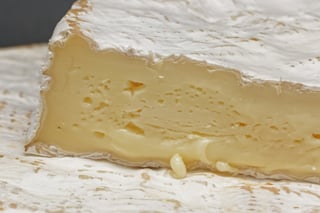
Meaux is a market town on the Marne east of Paris, and for six days of the week its two market halls of 1879 are a car park. On Saturday they fill, about two hundred and fifty traders, the food trade until one o’clock, and the thing to eat standing up is a wedge of the one Brie de Meaux still made and ripened in the town itself, at the fromagerie Saint-Faron, from the raw milk of twelve farms, ladled into its mould by hand in two goes and ripened for seven weeks. The clay east of Paris holds water, so it grew grass rather than wheat, the grass became cheese, and the cheese went to the capital.
The Paris Basin is a bowl of chalk and limestone laid down under old seas, with a city at the point where three rivers, the Seine, the Marne and the Oise, run together, and the country around the city is arranged to feed it. Wheat off the Beauce, the plain south-west of Paris, still arrives in the city’s bakeries as a named flour. Peaches ripened against plastered walls at Montreuil and went to Les Halles, the central market of Paris, where the growers had a quarter of their own; grapes cut with a length of stem at Thomery stood in small bottles of water so that October fruit reached the Paris market until May, and the last consignment left in 1970.
At Amiens about a dozen families still row vegetables out of 300 hectares of water gardens to sell on Saturday, where 250 gardeners did a century ago. And honey from the Gâtinais, the farm country south of Fontainebleau around Montargis, was graded into four classes and sent up in forty-kilo barrels, its wholesale price for the year set at one village market on the 28th of July.
Everything here is within a morning of one city, and that decides the shape of a visit. Paris has five main-line stations and each faces a different piece of the basin; the lines run out like spokes and there is no rim. So the week is spent going out and coming back, cathedral by cathedral, forest by forest, market by market, with a car for the Sologne, where the heath, the ponds and the château at Chambord need a night. The forest at Fontainebleau, where by the forestry office’s own account the first waymarked walking trails in the world were cut in 1842, lies inside the Paris fare zone, reachable on a city day ticket.
Food
In Orléans, where the Loire turns towards Paris, the last vinegar house in the city runs a forty-five-minute visit that ends in a tasting, Tuesday to Saturday all year on booking, five euros. Martin-Pouret was founded in 1797 and is the last house working the Orléans method, fermenting and ageing in oak; there were close to three hundred vinegar makers here in the nineteenth century, because Orléans was where wine from the Loire and Burgundy was loaded for Paris, and the wine that turned on the way was not thrown away. The visit, the shop on the rue Jeanne d’Arc and a 1580 mustard recipe revived (Maison Martin-Pouret, Orléans – French translated to English ).
Mushrooms fifty metres down in the tuffeau, Brie tasted in the town that makes it, the Reims gingerbread Paris could not match, and the tart the hunters ate at Lamotte-Beuvron
Bourré, Loir-et-Cher -- guided visits daily, April to November and the winter school holidays. The champignon de Paris is grown under the Loire now: at the Cave des Roches, growing since 1893, you go down into the tuffeau, the soft white stone of the Loire's cliffs, to see it: a working mushroom farm, a village carved in the rock and a tour of about an hour, fifty metres below the vines, twelve euros, at 10, 11, 14, 15, 16 and 17h from April to September and at 11, 15 and 16h in the autumn and the holidays (La Cave des Roches, Bourré -- French translated to English ).
Meaux, Seine-et-Marne -- tastings Saturday and Sunday at 11h and 16h from April to October, Saturday only at 11h in winter; free on the first Sunday of the month. The town's own house of the Brie de Meaux walks you from the milking to the ripening cellar and pours a commented tasting, six euros, with the Saturday market a short walk away (Maison du Brie de Meaux, 5 place Charles-de-Gaulle -- French translated to English ). At Jouarre, twenty kilometres east, what its owners call the oldest fromagerie in the Brie, founded in 1895, ripens a farmhouse organic Brie de Melun and carries in its own history a brie noir, the cheese left six months in the loft; call before visiting (Fromagerie Ganot, Jouarre -- French translated to English
).
Reims -- year-round. The gingerbread trade in France began here: by the middle of the sixteenth century there were about twenty pain d'épiciers in the trade, most of them at Reims, and Sophie Gondolle, drawing on René Gandilhon's study, writes that the Paris guild could not rival them "en raison de la qualité des miels de Champagne". The recipe Henri IV's physician wrote down in 1608 is rye flour, honey and a little pepper or cinnamon, and the honey left in the nineteenth century, replaced by molasses when its price rose (Sophie Gondolle's history of gingerbread, built on Gandilhon's study of 1959, RILEA, 2022 -- French translated to English ).
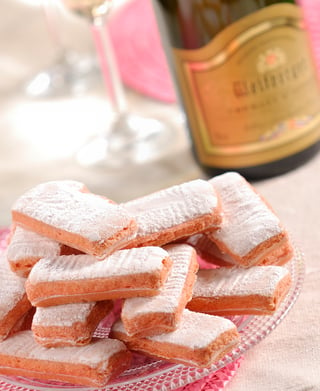
The city's other biscuit, the biscuit rose of 1691, is a bread-oven economy, baked once and dried in the falling heat after the bread, which is why it is bis-cuit and why it survives dipping; Maison Fossier keeps the double baking and runs a guided trail through its biscuiterie on the rue Maurice-Prévoteau (Châlons Tourisme -- French translated to English ).
Lamotte-Beuvron, Sologne -- open seven days; the fair named for the Tatin sisters is in September. The Hôtel Tatin stood opposite the station, and the sisters who kept it from 1878 to 1906 cooked for the bourgeois of Orléans and Paris who came down to shoot in the Sologne, so the tart exists because Paris came south for the hunting. Curnonsky presented it in Paris in 1926 as the tarte des demoiselles Tatin, and the house was in the first Michelin guide of 1900.
The bar keeps the sisters' range with its Gien tiles, and in July 2025 the historian Pascal Arnoux, writing on Gilles Pudlowski's blog, found the tart "fondante et savoureuse, fidèle à sa légende" (Les Pieds dans le Plat -- French translated to English ); menus 39 euros, rooms from 91. Other reviews divide on the tart. The town's own page tells the sisters' story, and flowers their grave each September before the fair (Mairie de Lamotte-Beuvron -- French translated to English
).
Vegetables rowed to market in Amiens on Saturday, and a Chartres game pie whose birds stopped coming
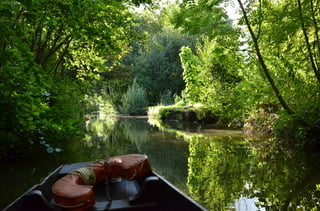
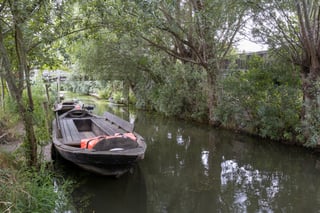
Amiens -- Saturday morning on the place Parmentier; boats on the water gardens from 1 April to 30 October. The families who still work the hortillonnages reach their plots in the old bed of the Somme only by barge, along 65 kilometres of channels. They sell every Saturday in the Saint-Leu quarter as Les T'cho Légumes des Hortillons, and the flat-bottomed boat with one long raised end, built to land without cutting the bank, takes visitors out through the season (Amiens Tourisme -- French translated to English ). The macaron d'Amiens and the gâteau battu, a tall brioche of butter and yolks, are at the Maison Trogneux, whose own site carries 275 customer reviews of the gâteau battu, 4.7 out of 5, the dissenters saying "trop sec" (Maison Trogneux -- French translated to English
).
Chartres -- the game season, and the Semaine Henri IV at the end of February. The pâté de Chartres, famous since the eighteenth century, was made with plovers and dotterels, birds of passage over the Beauce; when the birds stopped coming the recipe took partridge and pheasant instead, and the city's cooks serve it in the game season. The city's gastronomy page carries the recipe, with the mentchikoff, a praline heart in Swiss meringue rolled by hand over three days since 1893, and the poule au pot served in the Semaine Henri IV for the only king crowned at Chartres, on 27 February 1594 (Ville de Chartres -- French translated to English ).
Culture
In the Sologne in early November a village church fills for the Messe de Saint-Hubert, and the mass is sounded rather than sung: a rallye of hunting horns, twelve notes on the natural harmonics, played by people who learned them by ear in an école de trompe. UNESCO listed the art of the sonneurs de trompe in 2020, and the listing is about the music, not the hunt (the inscription, in the committee’s own words). Lamotte-Beuvron’s church has held one on a Sunday around 3 November and Chambord’s on an evening in late November, the same autumn the estate’s black-bee honey is potted; the dates move each year, the season does not. What runs through the culture here is a trade taught by hand to the next person.
Willow peeled in the street at Villaines, the only museum of the compagnons, the sword handed over at Orléans on 29 April, and fifteen oak churches with their doors unlocked
Villaines-les-Rochers, Touraine -- La Pèlerie, the third weekend of May, free; the workshops year-round. A cooperative founded in 1849 employs about forty basketmakers in a village whose workshops are cut into the limestone, several of them Meilleurs Ouvriers de France, the State's title for the best craftsmen in a trade, and they grow the willow as well as weave it. The willow year runs on the calendar the village publishes: cut after the first frosts, bundled and graded, stood in basins to shoot again, and peeled in May and June at the height of the sap rise (Commune de Villaines-les-Rochers -- French translated to English ). La Pèlerie is the peeling done in public, by hand and by machine, with a willow hedge built in front of you and a giant basket made on the spot (Azay-Chinon Val de Loire Tourisme -- French translated to English
).
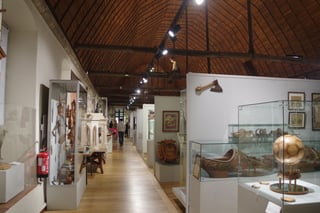
Tours -- daily except Tuesday, closed 5 to 23 January 2026; 6.60 euros, free under 26. Compagnonnage, the guild system in which a young tradesman travels town to town on the Tour de France for five years on average and earns the right to teach only by a masterwork judged by the compagnons, was inscribed by UNESCO in 2010 (UNESCO -- French translated to English ), and the only museum of it in the world is at Tours, in a twelfth-century abbey under a vault built like an upturned hull: more than four hundred masterworks from thirty trades, among them a wrought-iron grille that took fourteen years (Musée du Compagnonnage, Tours -- French translated to English
).
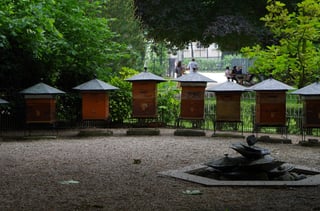
Paris keeps the same habit in a garden: the beekeeping school in the Jardin du Luxembourg, on the Senate's own page, has taught since 1818, run since 1856 by the Société centrale d'apiculture, open to anyone who enrols, with a diploma at the end and the year's honey sold at the Orangerie in the autumn (Sénat, Jardin du Luxembourg -- French translated to English ).
Orléans -- 29 April to 10 May 2026; the sword on the evening of 29 April, the ride at 10h on 1 May. The Fêtes de Jeanne d'Arc mark her entry into the city on 29 April 1429 and the English departure on 8 May, and the 2026 edition is the 597th. The sword is handed over in the cathedral on the evening of 29 April; a young woman of Orléans, chosen by public candidature, rides out in armour from the place du Martroi at 10h on 1 May; the medieval market runs at the Campo Santo from 7 to 10 May (Ville d'Orléans -- French translated to English ). The festival entered the French inventory of intangible heritage in 2018, and the organisers call it among the oldest commemorative festivals in France.
The Der, Champagne -- any day; the churches are unlocked. South of the Lac du Der about fifteen villages have churches framed entirely in oak, because Der is the old word for oak and it was the only building timber the wet Champagne had; the same frame runs through the houses, the square-courtyard farms and the barns. Most were glazed by the sixteenth-century glass masters of Troyes, and the tourist office's route names them and says push the door, they are all open: Outines, the largest, with timbers from 1512 and walls clad in wooden shingles; Lentilles, from about 1512; Châtillon-sur-Broue with the only fully enclosed porch (Office de tourisme du Lac du Der -- French translated to English ).
Three cathedrals lit for nothing after dark, a suburb with two hundred murals, and Sunday dancing on the Marne since 1918
Chartres, Amiens and Reims -- nightly, free: Chartres 11 April 2026 to 3 January 2027; Amiens 11 July to 12 September and again in December; Reims Fridays and Saturdays at 22h45 from 29 May to 19 September. Chartres lights twenty-one sites from nightfall, the scenes looping so that no one misses a start (Ville de Chartres -- French translated to English ).
At Amiens the subject is specific: paint found during restoration showed the whole sculpted west front was coloured from the thirteenth century, and Chroma puts the colour back on the stone for fifty minutes, with the historian Michel Pastoureau advising on the restitution (Ville d'Amiens -- French translated to English ).
At Reims Regalia re-stages the day of a king's coronation on the cathedral front, with a second show on the basilica of Saint-Remi on Sundays and Mondays from 7 June to 20 September, no booking (Reims Tourisme -- French translated to English ).
Vitry-sur-Seine and the 13th arrondissement -- any day, from the street. Vitry counts its art in two layers: about 150 commissioned works under the one-per-cent rule, two or three added a year, a Sonia Delaunay mosaic at the ice rink and a Dubuffet among them, and more than two hundred murals by some fifty street artists since Christian Guémy, C215, set up his studio there in 2009 and drew the rest in (the town's own map of both layers, Ville de Vitry-sur-Seine -- French translated to English ). Across the river, up to twenty-six giant works line the boulevard Vincent-Auriol, seen for nothing from the pavement or from the elevated metro line 6.
Joinville-le-Pont, on the RER A -- Sundays, April to October. The guinguette is this region's own invention, a dance floor, an orchestra and a meal on the riverbank, and it survives in a handful of places on the Marne loop, chief among them Chez Gégène, open since 1918 and the subject of Bourvil's 1952 song about a plumber's Sunday on the Marne. Several dozen people still dance the musette there every Sunday; François, ninety, a retired engineer, has come every Sunday for sixty years and explains the decline himself: once everyone had a car, people went further afield. The floor and the band are the reason to go; the meal, on its reviews, is not.
The bee Napoleon chose, and where its originals are kept
Paris and Fontainebleau -- any day; the Cabinet des médailles on the rue de Richelieu, the château daily except Tuesday. On 12 June 1804, a month after the Empire was proclaimed, the Council of State met to choose its emblems, and Cambacérès argued for bees, because France was organised around one chief as a hive is. The eagle took the arms and the bee took the mantle, purple velvet sown with gold bees.
The Fondation Napoléon's page on the imperial symbols gives the reason the bee was chosen: gold "bees", in fact cicadas, had been found in 1653 at Tournai in the tomb of Childéric, the fifth-century father of Clovis, so the insect tied the new dynasty to the oldest kings of France (Fondation Napoléon -- French translated to English ). One of the Tournai bees survives at the Bibliothèque nationale de France, 1.6 centimetres of gold and garnet weighing under two grammes, found on 27 May 1653 (Bibliothèque nationale de France, Cabinet des médailles -- French translated to English
).
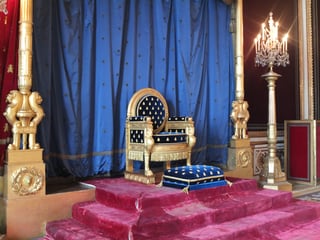
At Fontainebleau, the throne room Napoleon fitted out in 1808 is the only one in France still in place, the Tuileries and Saint-Cloud having gone (Panorama de l'art, Réunion des musées nationaux -- French translated to English ).
The hive metaphor had a scientist behind it: Réaumur gave nine of his memoirs on insects to the honeybee, and Jean Torlais's 1958 study of them opens on his line that their republics "sont dignes d'occuper un esprit philosophique" (Revue d'histoire des sciences, on Persée -- French translated to English ).
The far north: two families of wicker giants, the highest spoil heaps in Europe, and the pool France voted its favourite monument in 2026
Douai and Cassel -- Douai on the Sunday after 5 July and the two days following; Cassel on Easter Monday and the Mardi Gras weekend. The processional giants of Belgium and France are wicker and cloth figures up to nine metres tall and 350 kilos, carried through the streets since the end of the fourteenth century, and UNESCO's inscription of 2008 names Cassel and Douai among the four French towns where the tradition is still alive (UNESCO -- French translated to English ).
At Douai, Monsieur Gayant, 8.5 metres and 370 kilos, has come out since 1530 with Marie Cagenon and their three children, the Sot des Canonniers and the Wheel of Fortune float, for three days in which the town expects close to 100,000 people (Douaisis Agglo Tourisme -- French translated to English ).
At Cassel, on its hill over the Flanders plain, Reuze Papa and Reuze Maman parade at both carnivals, and the association that keeps them is preparing his two-hundredth birthday for Easter Monday, 29 March 2027 (Les Amis de Reuze Papa -- French translated to English ).
Loos-en-Gohelle, outside Lens -- any day of the year, free; about an hour up and down. The Nord-Pas de Calais mining basin runs some 120 kilometres across the two departments, and [UNESCO listed it in 2012 as one cultural landscape](https://whc.unesco.org/en/list/1360/), pit heads, spoil heaps, garden cities, churches and union halls together, for its continuity and homogeneity. The way into it is on foot: the twin spoil heaps of the 11/19 pit at Loos-en-Gohelle, which the tourist office calls the highest in Europe, climb to 186 metres by a stabilised path with a platform at 110, the pit's preserved headgear at their foot and a café at the base from the spring holidays to the Heritage Days (Lens-Liévin Tourisme -- French translated to English ).
Bruay-la-Buissière -- the swimming season, closed in winter; the water at 29 degrees. The Piscine Art Déco Roger Salengro opened on 1 August 1936, the year paid holidays were created, built by the architect Paul Hanote because the mayor, Henri Cadot, wanted the miners and their families to have open-air swimming; it was listed in 1997 and is, in the agglomeration's words, the last open-air Art Deco pool in France still open to the public (Communauté d'agglomération de Béthune-Bruay -- French translated to English ). On 16 September 2026, in its ninetieth year, it was voted the Monument préféré des Français, with 50,000 swimmers through it that season by the regional broadcaster's count (Béthune-Bruay -- French translated to English
).
Natural History

At dawn on a November morning at the Lac du Der, in the wet Champagne east of Paris, tens of thousands of common cranes lift off the water in family groups and head south-west. The lake is a reservoir, filled in 1974 to hold back the floods of the Seine basin, and it was dug on the shortest line between the cranes’ northern breeding grounds and Spain. “Les oiseaux ne font pas de détours,” Aurélien Deschatres of the LPO’s crane network told France 3: once there was water on that line the birds began to land. The lake’s own page says where to stand, the season runs mid-October to mid-March with the great counts in late October and November, and it is free (Office de tourisme du Lac du Der – French translated to English ).
The forest where nature reserves were invented, a nature reserve on the Loire below Orléans, seals at low tide in the Baie de Somme, and the Sologne's rut with the heather in flower
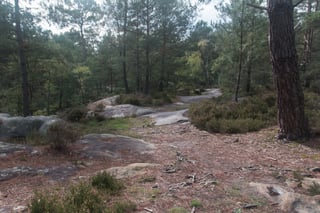
Fontainebleau -- any day; heather on the platières from June to August, the forest inside the Paris fare zone. The sand under this forest was left by an old sea and cemented unevenly into sandstone slabs that broke into boulder fields as the sand beneath them washed away; and because sand drains, pools are few, which is why one of the office's foresters, Catherine Deck, singles out the mare aux Fées. In 1861 the painters of Barbizon created an artistic reserve of about a thousand hectares, which the office calls the first natural space in the world with a conservation measure, eleven years before Yellowstone; 22,000 hectares now, 1,500 kilometres of path of which 400 are waymarked, two thousand rock shelters with prehistoric engravings, two hundred marked climbing circuits (Office national des forêts -- French translated to English ).
Saint-Mesmin, four kilometres below Orléans -- any day; keep off the sandbanks. The national nature reserve created in 2006 protects about nine kilometres of river, 263 hectares with a 90-hectare protection perimeter, taking in the wooded point where the Loiret meets the Loire and the islands of Mareau, run by the Loiret Nature Environnement association (Réserves naturelles de France -- French translated to English ). The Loire's confluences with the Cher and the Indre downstream were listed under the Ramsar convention in February 2026, for some 49,000 waterbirds and about a tenth of mainland France's ospreys.
Le Hourdel, Baie de Somme -- every low tide, all year; 300 metres, and a guide accredited since 2025. The harbour seals were nearly gone a few decades ago, were protected from the 1960s and came back on their own from other European colonies, and the bay now holds the largest harbour-seal colony in metropolitan France; on one July day in 2021 the park counted 885 harbour and 312 grey seals across every site from Calais to the bay. The marine park's own page carries the counts (Parc naturel marin des estuaires picards et de la mer d'Opale -- French translated to English ).
The county tourist board's seal page gives the rule: the seals haul out on the sandbanks at low tide twice a day, keep 300 metres, a disturbed mother can abandon her pup in summer, and since 2025 the prefecture accredits the guides who take you out (Somme Tourisme -- French translated to English ).
The Sologne and Chambord -- the rut from mid-September to mid-October, five free viewing areas and five free hides; guided listening from 45 euros, booked by phone from 1 June. More than 346,000 hectares of the Sologne are designated under the European habitats directive, the largest terrestrial Natura 2000 site in France, and the State's own page names the threat as the abandonment of the traditional uses, extensive farming and fish-farming, that keep the ground open. The four heaths, dry heather, ling, wet heather and the cross-leaved heath of the bogs, are the floor of the region's honey, and a State scheme recorded in 2016 placed hives on them in exchange for their restoration, because beekeepers wanted the heath kept.
Chambord puts its herd at about 700 red deer and opens the reserve for the rut at dawn and dusk (Domaine national de Chambord -- French translated to English ); the stags roar in the weeks the heather and the oak honeydew are being taken off the hives.
Twisted beeches in a State forest near Reims, and a market-garden marsh that is one of two left in France
Verzy, fifteen kilometres from Reims -- any day; best bare, from November. The Faux de Verzy are beeches that grow low and twisted, branches falling to the ground and rooting, a variety of the common beech. The site was classed in 1932 on thirteen and a half hectares, and the national forestry office's reserve of 1981, enlarged in 2021, now takes in more than nine-tenths of the faux in the forest, a stand the office calls unique in the world for its extent and its natural regeneration, with a stony path through it (Office national des forêts -- French translated to English ).
The Marais Audomarois, near Saint-Omer -- by flat boat; check the season with the boatmen. UNESCO's biosphere reserve here holds one of France's two remaining wetland floating-garden systems, shaped by market gardening since the seventeenth century and still worked (UNESCO Man and the Biosphere programme); the other is the hortillonnages of Amiens, ninety kilometres south, so both of the country's surviving water gardens are in this region. About a hundred families live on the islands, 160 kilometres of channels are navigated by the flat-bottomed bacôve, the marsh holds a third of the aquatic plant species found in France, and the rare aquatic warbler feeds here on migration.
Built Heritage
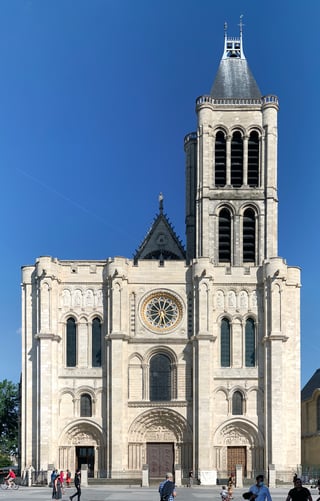
At Saint-Denis, north of Paris, a Gothic spire is being rebuilt in front of the public. The north tower of the basilica where the kings of France are buried reached ninety metres, was struck by lightning in 1837 and taken down in 1846 and 1847; the first stone of its return was laid on 14 March 2025, and the basilica stays open throughout. La Fabrique de la flèche, the visitable worksite at the foot of the church, opens Tuesday to Saturday from 10h to 16h45 and Sunday from noon, seventeen euros, free under 26 (Basilique cathédrale Saint-Denis, Centre des monuments nationaux – French translated to English ). The stone they cut is the region’s own: the limestone quarried from under Paris built this church and the cathedrals of Reims, Laon and Soissons.
The cathedrals cut from the stone under Paris, a 32-kilometre wall that keeps a bee strain apart, the chalk cellars of Reims, and a town that exists because of a fair
Chartres, Amiens, Reims and Beauvais -- any day; Beauvais's choir under scaffold. UNESCO's own text for [Chartres](https://whc.unesco.org/en/list/81/) calls its west front an authentic example of the art created at Saint-Denis; [Amiens](https://whc.unesco.org/en/list/162/) was built in under a century, 1220 to 1288, by three linked master builders; [Reims](https://whc.unesco.org/en/list/601/), with the Tau palace and Saint-Remi, is the coronation church. Beauvais is the sequence's limit: its choir, at 48 metres the highest Gothic choir in the world, was built from 1225 and part of its vaults fell in 1284; the nave was never built, and a crossing tower finished in 1569 at about 150 metres fell four years later (Cathédrale Saint-Pierre de Beauvais -- French translated to English ); the choir has been under consolidation for decades, with 17 million euros committed in January 2025 for its 800th anniversary.
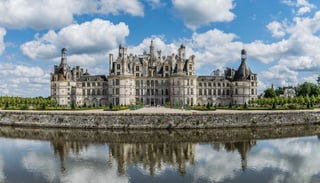
Chambord and Villesavin, Sologne -- Chambord daily; Villesavin's garden from spring, check the season. François I ordered the wall of Chambord in 1542 as the boundary of the ideal city he imagined, and at 32 kilometres long and three to four metres high it makes Chambord, in the culture ministry's words, the largest walled park in Europe, now the monument's protection perimeter and the fence of its wildlife reserve (Ministère de la Culture -- French translated to English ). Inside that wall the estate's black-bee colonies mate, and the honey sold at Chambord is certified from them. Nine kilometres away, Villesavin, built from 1527 by the man who oversaw Chambord's construction and still lived in, opened a melliferous garden on its old kitchen garden in spring 2025 with the Sologne black-bee conservatory (Val de Loire Tourisme -- French translated to English
).
Reims, the crayères -- booked visits year-round. The chalk under Reims was quarried for building the city from the tenth century, and the pits, cut down from the surface as shafts like upturned funnels up to 35 metres deep and joined by 57 kilometres of galleries, were empty when the champagne houses moved out to the hill and gave them a new use, Ruinart first in 1768; [UNESCO listed the hillsides, houses and cellars in 2015](https://whc.unesco.org/en/list/1465/). Ruinart's visit goes about forty metres down for two hours with a tasting; Taittinger's goes eighteen metres down by 116 steps through fourth-century workings and the remains of the abbey of Saint-Nicaise.
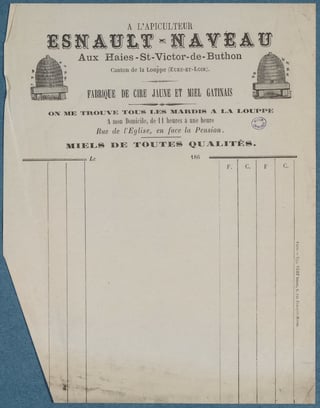
Provins -- year-round; the ramparts free, the monuments on a pass from 9.50 euros. [UNESCO's inscription of 2001](https://whc.unesco.org/en/list/873/) is the mechanism: the town's layout, merchant houses, vaulted cellars, warehouses and walls survive because of the Champagne fairs held here, and the pass covers the Tour César, the tithe barn, the guided underground galleries and the priory (Provins Tourisme). Provins was a honey name before the Gâtinais was: the Paris price list of 1793 quotes miel de Brie from Meaux, Provins and Rozay.
Two thousand candles on a Saturday at Vaux-le-Vicomte, the quarries under Paris reopened in 2026, the market that left the city in 1971, and a stained-glass workshop open on Fridays
Vaux-le-Vicomte -- every Saturday from 16 May to 26 September 2026, gates 17h30, fireworks 23h; 22 euros, booking obligatory. Two thousand candles are lit on the house and across the 33 hectares of Le Nôtre's formal garden, the fountains play until 20h30 when the water allows, and the evening is staged as a return of the party of 17 August 1661 that Fouquet gave for Louis XIV. The château's practical page carries the dates, the prices and the shuttle from Melun station, booked ahead (Château de Vaux-le-Vicomte -- French translated to English ).
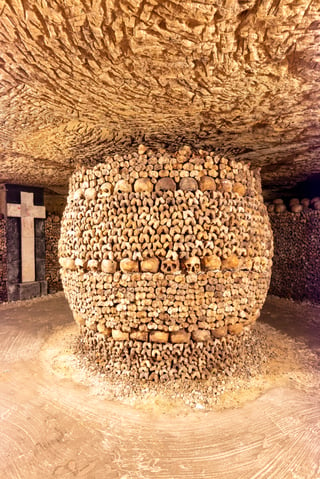
Paris, the Catacombs -- reopened 8 April 2026; 31 euros, two hundred people at a time. The quarries under the city were open to the public from 1809 as an ossuary, 1.5 kilometres of gallery twenty metres down out of some 280 to 300 kilometres that exist, the rest closed by prefectoral order. The site closed in November 2025 and reopened in April 2026 after conservation work, the administrator saying the galleries were never meant for 600,000 visitors a year and the load and humidity were degrading the bones (Ville de Paris -- French translated to English ). The inspection that still manages the ground under Paris was created by Louis XVI on 4 April 1777, after three hundred metres of the rue Denfert-Rochereau fell into the workings in 1774.
Rungis -- the first Friday of each month, on a 149-euro box; Nogent-sur-Marne, from the outside. Les Halles left the centre of Paris for Rungis in 1971, and the wholesale market's own page admits individuals by one door only, the Rungis Prestige box, with visits coordinated on the first Friday of the month (the market's visit page, Semmaris -- French translated to English ). The other end of the same move stands at Nogent-sur-Marne: the last of the twelve iron and glass pavilions Baltard built for the Halles, saved when the rest came down, re-erected by the town and listed in 1982, which the State had refused to do while the pavilions stood in Paris; it is a hire hall now, seen from the street inside the original Halles railings.
Lèves, outside Chartres -- Fridays at 14h30, by reservation. The Ateliers Loire, founded in 1946 by Gabriel Loire and run by the third generation, make stained glass in slab glass set in cement, a technique of the founder's, for some four hundred buildings in France; the workshop opens for a guided visit every Friday at 14h30, and the garden is a Vitrailleraie, an open-air museum of the house's panels (C'Chartres Tourisme -- French translated to English ).
I want to dig deeper
The days out above make a week. This one is for the reader who wants to stay with one thing: a harvest you are paid to join, a hundred kilometres on foot across the wheat plain with a few thousand others, or a hive opened with your own hands in a garden the Senate keeps.
Picking Champagne for the minimum wage, two pilgrimages passing each other on the Beauce, and a beekeeping course in the Luxembourg gardens
The Sologne's honey country -- a car and two nights; mid-September to mid-October for the rut and the heather harvest. Start at Chambord for the wall, the deer and the honey certified from the estate's own black-bee colonies, and at Villesavin nine kilometres away for the melliferous garden opened in 2025.
Then Yvoy-le-Marron, which the department made its Sologne apiary village: Les Ruchers de Saint-Marc taste their crus at a bar à miels in the shop, mornings, call before you go (Val de Loire Tourisme -- French translated to English ), and Bernard Gaucher, here since 1990 with about 400 hives moved within seventy kilometres, sells honey, gingerbread and mead from a forest farm beside a chestnut grove of two-hundred-year-old trees he took back into cultivation in 2015, groups by appointment (Miels et Châtaignes de Sologne -- French translated to English
).
End at Saint-Viâtre, where the Maison des Étangs explains the pond system and the fish-farming that keeps the heath open, guided at 10h15, 14h15 and 16h15 from April to October, and the village nets its pond on the last Saturday of October with mulled wine on the bank (Maison des Étangs -- French translated to English ); La Ruche de Sologne sells from the same village by appointment and at Lamotte-Beuvron's Friday market.
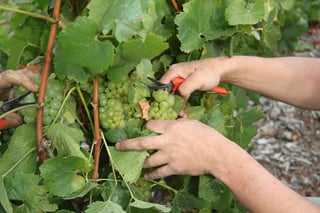
The Champagne harvest, as a picker -- late August to mid-September; offers published from about June. Each autumn pickers are hired across the Marne, the Aube and the Aisne for two or three weeks, paid the legal minimum wage. The reason there is work is a sentence in the appellation's rules: any means of harvest that cannot bring in whole bunches is forbidden, so the grapes are cut by hand and travel whole to the press in perforated crates, and a prefectoral order fixes the day picking ends. In the abbey village of Hautvillers above the vines, a beekeeper runs a two-and-a-half-hour visit from hive to jar, suit, apiary, extraction and tasting, twenty euros, telephone to arrange it (Office de tourisme d'Hautvillers -- French translated to English ).
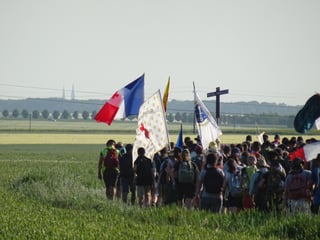
The Pentecost walk across the Beauce -- 23 to 25 May 2026; registration closes days before. Two pilgrimages cross the wheat plain in opposite directions on the same weekend, a hundred kilometres over three days, and pass each other. Notre-Dame de Chrétienté walks Paris to Chartres in chapters of about fifty, its 44th edition in 2026, with a shortened route for those who cannot manage the distance and, in the president's words, an average age of twenty-one (Notre-Dame de Chrétienté -- French translated to English ); Pèlerinages de Tradition walks the other way, an opening Mass at 7h45 on the cathedral parvis, forty kilometres to Rambouillet, forty more, thirty into Paris, with a children's column at twenty a day (Pèlerinages de Tradition -- French translated to English
).
Both descend from the student pilgrimage Charles Péguy walked alone in 1912 and Sorbonne students took up in 1935, which grew to twelve thousand.
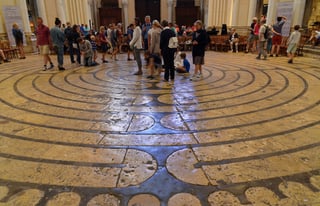
For the reader who arrives on any other weekend, the cathedral uncovers its labyrinth for walking every Friday from 10h30 to 16h45, Lent to All Saints, 261 metres of single path in eleven rings, shoes obligatory (Cathédrale de Chartres -- French translated to English ).
Beekeeping -- enrolment in September for the Paris year; one Saturday in June for the Touraine day. A year's course in the Jardin du Luxembourg or a day in the Touraine. The beekeeping school in the Senate's garden, teaching since 1818 and run by the Société centrale d'apiculture since 1856, enrols in September at the apiary, runs theory from January to mid-March and practicals from mid-March to September on its twenty-three colonies, and ends in an exam and a diploma; it is volunteer-taught and open to anyone.
Three kilometres from Chenonceau, a professional beekeeper whose hives stand at Villandry, Azay and the Clos Lucé runs a seven-hour day for six to twelve people, one Saturday in June: a hive opened in the morning, frames harvested, extracted and potted in the afternoon, kit provided, a picnic at the apiary, 110 to 165 euros, with a three-day beginners' course beside it (Le Rucher de la Dame Blanche, Civray-de-Touraine -- French translated to English ).
The Honey of the Paris Basin
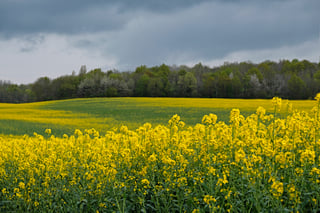
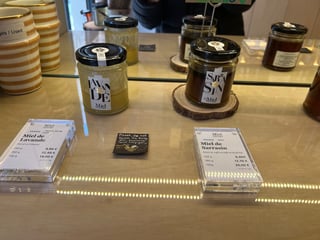
The honey here is the honey of a countryside arranged to feed one city, and it moves the way the food does. On the plains the year runs on the crops: colza, the rapeseed, in April, acacia in May, then the seed fields of carrot, onion and radish that flower in June and July and give the Paris counters their unusual jars, sunflower into August, and in Champagne a lucerne left unmown in strips so that it flowers for the bees.
In the forests it runs on trees: the small-leaved lime of the Picardy forests, cut and regrown for centuries into the stands behind the region’s one protected honey name, registered in November 2025 across 1,481 communes, and in the Sologne oak honeydew in June and again in August with a note of heather, from hives kept among black bees inside Chambord’s wall.
Most of the beekeepers move. A Gâtinais house takes its hives to the Oise for lime, to the Essonne for buckwheat and to the Marne for lucerne, as Gâtinais beekeepers carried theirs to the Sologne in the eighteenth century, and the label names the places the hives stood.
The plant that made the old Gâtinais honey is back: sainfoin, the fodder legume whose introduction in the eighteenth century, in Fanica’s account, made possible a pale, fine honey Paris paid for, and whose disappearance ended the Sologne transhumance; a cooperative of eight farmers in the Aube, Sainfolia, was founded in September 2015 to bring the plant back and now grows it on some 700 hectares for fodder, seed and a sainfoin honey (Savourez le Grand Est, the region’s agrifood association – French translated to English ).
The harvests themselves are shorter, and one beekeeper’s record shows it: Les Ruchers d’Alexandre in the Vexin have logged first flowerings since 2015, the rapeseed opening on 16 April in 2016 and 11 March in 2026, a full lime bloom in 2020 that gave no nectar in grey weather and a 2025 one cut short by a storm on 13 June, which is what the Miel Factory founder means when he says a harvest that once ran a month now runs a few days (Les Ruchers d’Alexandre – French translated to English ). The road below follows them out of Paris and back.
The Honey Road
One itinerary out of Paris and back, spoke by spoke. The honey is the reason to go; the rest happens along the way.
Paris -- year-round (city gateway); the Luxembourg sale one morning in late September. Start on the rue Vignon at half past nine, where La Maison du Miel has sold the honeys of the French regions since 1898 and publishes the six tests it runs on every harvest, the last a pollen map to catch a honey sold under the wrong origin (La Maison du Miel, 24 rue Vignon -- French translated to English ).
Find it in Google Maps
In the Marais, Miel Factory sells single-flower honeys by the spoon from a tasting counter, one beekeeper to one honey; its founder told this site the shop's Paris honey comes from the Bois de Vincennes, mostly lime, once a year and in very small volume (Miel Factory, 28 rue de Sévigné -- French translated to English ).
Find it in Google Maps
And in the Jardin du Luxembourg, the beekeeping society sells the year's harvest from its apiaries at its September honey fairs, from the morning until the honey runs out, and tells you to bring a bag (Société centrale d'apiculture -- French translated to English ).
Find it in Google Maps
The city's hives have multiplied: the city estimated about 650 in 2019 and 1,500 three years later, fifteen to the square kilometre, and the regional biodiversity agency, reporting those figures, recommends apiaries about 2.5 kilometres apart for the wild bees' sake, without asking for the hives to go (Agence régionale de la biodiversité Île-de-France -- French translated to English ). The honeys are judged each November: the society's Concours des miels d'Île-de-France, its 25th in 2026, with the jury sitting at Saint-Maurice on 14 November, open to any beekeeper in the region with a registered apiary number (Société centrale d'apiculture -- French translated to English
).
And at Montreuil, east of the city, the town-hall roof carries hives you can visit for nothing, one hour, April to September, booked through HelloAsso (Les Ruchers de Montreuil -- French translated to English ).
This leg as a driving route in Google Maps: Start La Maison du Miel, rue Vignon; A Miel Factory, rue de Sévigné; B the society's apiary, Jardin du Luxembourg; End the town hall, Montreuil.
The park hives are kept by associations on the city's ground, and you can buy their honey
Paris lends its parks to beekeepers and wants their honey sold. Associations and beekeepers keep the hives in the city's parks, gardens and cemeteries under a standard agreement the Conseil de Paris adopted in 2017, free for a teaching apiary and at a small rent for one that sells its honey, and the city has made a "Miel de Paris" mark for honey produced on its ground (Ville de Paris -- French translated to English ). The year before the agreement the city had counted 143 hives on its own sites, among some 700 in Paris.
It now wants fewer new ones. With the hives at an estimated 1,500, the city limits new hives so as not to harm the wild species, often the more threatened (Ville de Paris -- French translated to English ), and tells anyone who wants to keep bees to join an association rather than start an apiary; its 2018 call for new park sites had already proposed none in nine arrondissements. Every hive in France is declared each autumn, between 1 September and 31 December, and the apiary number that comes back is the one posted at an apiary's gate.
You can buy the honey, though not always in the park it came from. The beekeeping society sells its apiaries' honey at its September fairs, in the Luxembourg and in the parc Georges Brassens, whose teaching apiary has run since 1986 (Société centrale d'apiculture -- French translated to English ). In the parc Montsouris the keeper of ten hives placed there in 2019 by a participatory-budget vote sells the honey to the neighbourhood first and opens the hives free at the city's garden festival at the end of September (Les Ruches du Parc Montsouris -- French translated to English
), and the Opéra sells the honey from its roofs, kept since 2014 by Mugo, as a small seasonal jar in its shop (Opéra national de Paris -- French translated to English
).
Find it in Google Maps
Beyond the city, the towns keep their own. Puteaux has kept an apiary since 2007 in the parc Lebaudy, on the Île de Puteaux in the Seine below La Défense: about twenty hives behind railings, rebuilt in French pine with a regional grant in 2023, which gave 347 kilos of honey in 2024 and a silver medal at that year's Île-de-France competition (Ville de Puteaux -- French translated to English ). The town sells the honey at its information counter, the Puteaux Point-Info, and opens the apiary to the public one Sunday morning in June.
Find it in Google Maps
The Gâtinais -- Friday and Saturday; the first harvest is the hawthorn's, in April. South from the Gare de Lyon, through the Fontainebleau sandstone and the Gâtinais park, to the honey country that once set the Paris price. At Rozoy-le-Vieil, on the canals east of Montargis, the Rucher des 4 Vallées opens its shop on Friday and Saturday morning, with a free tasting, more than five hundred hives moved out each year to the Oise, the Berry and the Marne for lime, chestnut and lucerne, so that the whole basin is on one shelf (Tourisme Loiret -- French translated to English ).
At Fay-aux-Loges in the Forêt d'Orléans, Les Ruches de Fay sell at the miellerie, the extracting house, on Saturday mornings, bees that follow the flowering, in the beekeeper's words, from the Beauce to the Sologne, the banks of the Loire and back to the Gâtinais (Les Ruches de Fay -- French translated to English ); the Gâtinais honey house at Boutigny-sur-Essonne takes three harvests without moving a hive, hawthorn first, and its hours differ by source, so telephone (Visit Paris Region). Between them: Milly-la-Forêt, the seven-lock staircase at Rogny, and the gingerbread at Pithiviers, kept by a confrérie, a brotherhood of its makers.
At Château-Renard, east of Montargis, the Musée vivant de l'apiculture gâtinaise, a family apiary, opens every afternoon from early April to the end of August by appointment only, seven euros (Académie d'Orléans-Tours, portail pédagogique -- French translated to English ); its founder, the beekeeper Jacques Goût, told France 3 that "c'est la proximité de Paris, Paris qui a imposé les modes, qui a rendu célèbre le miel du Gâtinais".
This leg as a driving route in Google Maps: Start the Gâtinais honey house, Boutigny-sur-Essonne; A Rucher des 4 Vallées, Rozoy-le-Vieil; B Musée vivant de l'apiculture gâtinaise, Château-Renard; End Les Ruches de Fay, Fay-aux-Loges.
The Sologne -- harvests in June and August; the rut from mid-September; the honey bar in the mornings. Chambord sells the honey of its own apiary in the château shops, certified from Sologne black-bee colonies, an acacia and a forest honey of oak honeydew, potted cold in small jars of 126 to 132 grammes (Domaine national de Chambord -- French translated to English ).
Twenty-five kilometres on, Yvoy-le-Marron, the village the department made its Sologne apiary village, has the bar à miels, a honey tasting bar, at Les Ruchers de Saint-Marc, mornings, call before you go (Val de Loire 41 -- French translated to English ), Bernard Gaucher's forest farm with its gingerbread and mead by appointment, and the department's public black-bee apiary; Saint-Viâtre has the pond house and La Ruche de Sologne by appointment, and Lamotte-Beuvron the Friday market and lunch at the Maison Tatin, the hotel the tart was born in, open seven days, menus from 39 euros. Telephone the appointment-only addresses; the gates are otherwise closed.
This leg as a driving route in Google Maps: Start Chambord; A Les Ruchers de Saint-Marc, Yvoy-le-Marron; B Bernard Gaucher's forest farm, Yvoy-le-Marron; C La Ruche de Sologne, Saint-Viâtre; End Maison Tatin, Lamotte-Beuvron.
The Loire -- the day course one Saturday in June; the shops year-round. The Sologne runs out at Blois, whose Saturday market by the Prefecture carries the Sologne honeys, and the river carries you to Amboise, Chenonceau and the tuffeau cellars of Vouvray and Montlouis. The tourist board calls it honey from the châteaux of the Loire: Le Rucher de la Dame Blanche at Civray-de-Touraine, three kilometres from Chenonceau, keeps hives at Villandry, Azay-le-Rideau, the Clos Lucé and the Bourdaisière, sells the honey in their shops, and runs the beekeeper-for-a-day course above (Touraine Val de Loire).
This leg as a driving route in Google Maps: Start the Saturday market by the Prefecture, Blois; A the Clos Lucé, Amboise; B Le Rucher de la Dame Blanche, Civray-de-Touraine; C the Bourdaisière, Montlouis-sur-Loire; D Villandry; End Azay-le-Rideau.
Champagne -- the visit through the season; the vendange in September. East from the Gare de l'Est to Epernay and onto the Route touristique du Champagne, the region's signposted route, up the Marne to Hautvillers, the abbey village above the vines, where Le Miel de Bacchus sells its honey and runs the two-and-a-half-hour hive-to-jar visit, twenty euros, own car to the apiary, a honey stop on the wine route itself; the shop opens Friday afternoons and no booking channel is published for the visit, so telephone first (Office de tourisme d'Hautvillers -- French translated to English ).
The lucerne honey of the chalk plain is on the Rozoy shelf and in the Champagne houses' summer jars; the crayères of Reims and the timber churches of the Der are the road on either side.
This leg as a driving route in Google Maps: Start Épernay station; A Le Miel de Bacchus, Hautvillers; End Reims.
Getting Here
Paris is the only gateway, and it fans out from five termini, each facing a different piece of the basin: the Gare du Nord for Chantilly and Amiens, the Gare de l’Est for Reims and Épernay, the Gare de Lyon for Fontainebleau and Montargis on the Transilien R, Austerlitz for Orléans and Blois, Montparnasse for Chartres and Tours. Reims is under an hour by direct TGV, Amiens about an hour by the fastest TER, Fontainebleau-Avon under an hour on a Paris day ticket, Orléans and Chartres about an hour, Tours a little over an hour.
The network is radial and has no rim: Tours to Amiens takes most of a day and every route goes through Paris, so two towns an hour from the capital can be half a day from each other. Plan the week as spokes out of Paris and back. The Sologne is the exception; Chambord, Lamotte-Beuvron, Yvoy-le-Marron and Saint-Viâtre need a car and a night, from Orléans or Blois as the base.
Seasonal Events Not to Miss
Chartres en lumières – 11 April 2026 to 3 January 2027, nightly, free. Twenty-one sites lit from dusk, the scenes looping so that no one misses a start. (The city’s programme, Ville de Chartres – French translated to English )
The Foire du Trône, Paris – 27 March to 25 May 2026, on the pelouse de Reuilly at the edge of the Bois de Vincennes. What the city calls the largest funfair in France began as a fair for the honey-and-rye gingerbread the monks of Saint-Antoine handed out in a famine, and the gingerbread pigs are still sold there. (The city’s history of the fair, Ville de Paris – French translated to English )
The carnivals of Cassel – the Mardi Gras weekend and Easter Monday; 29 March 2027 is Reuze Papa’s two-hundredth birthday. The town wakes to drums and cymbals in the morning and the two giants parade in the afternoon and come home in triumph at night, at both carnivals. (The giants’ association, Les Amis de Reuze Papa – French translated to English )
Fête du miel et de l’apiculture, Pannes, Gâtinais – 10 to 12 April 2026, 10h to 18h. The Maison de la Ruche et des Abeilles du Gâtinais opens for three days with beekeepers’ stands on the place André-Rigault and honey to taste. (The commune’s notice, Commune de Pannes – French translated to English )
Fêtes de Jeanne d’Arc, Orléans – 29 April to 10 May 2026. The 597th edition: the sword handed over in the cathedral on the evening of 29 April, the ride from the place du Martroi at 10h on 1 May, the medieval market from 7 to 10 May. (The city’s presentation of the festival, Ville d’Orléans – French translated to English )
La Pèlerie, Villaines-les-Rochers – the third weekend of May, free. The willow peeled in public by the basketmakers’ village, a hedge built in front of you and a giant basket made on the spot. (The tourist office’s page on the festival, Azay-Chinon Val de Loire Tourisme – French translated to English )
Open days at the rucher-école d’Orville, Gâtinais – 23 and 24 May 2026, 9h to 18h. The Abeille du Gâtinais opens its teaching apiary at Boulancourt: hives opened, honey tasted and sold, a botanical trail. (The beekeepers’ union notice, UNAF – French translated to English )
Regalia, Reims – 29 May to 19 September 2026, Fridays and Saturdays at 22h45, free. The day of a king’s coronation projected on the cathedral front, with a second show on the basilica of Saint-Remi on Sundays and Mondays from 7 June to 20 September. (Reims Tourisme’s page for the season – French translated to English )
Les Médiévales de Provins – 13 and 14 June 2026. The Champagne fairs played back into the upper town UNESCO listed for them, its 41st edition. (The festival’s own site – French translated to English )
Fêtes de Gayant, Douai – the Sunday after 5 July and the two days following. Monsieur Gayant, 8.5 metres, comes out of the Maison des Géants with his family, the Sot des Canonniers and the Wheel of Fortune float, and the town expects close to 100,000 people over the three days. (The tourist office’s page on the fêtes, Douaisis Agglo Tourisme – French translated to English )
Chroma, Amiens – 11 July to 12 September 2026 nightly, and again in December, free. The cathedral’s west front returned to the colour found under restoration, fifty minutes, with the historian Michel Pastoureau behind the restitution. (The city’s page, Ville d’Amiens – French translated to English )
The rut at Chambord – mid-September to mid-October. Five free viewing areas and five free hides at dawn and dusk; guided listening from 45 euros, booked by phone from 1 June. (The estate’s rut page, Domaine national de Chambord – French translated to English )
Fête du miel, parc Georges-Valbon, La Courneuve – 13 September 2026, 14h to 18h, free. Honey made in the park on sale, hives opened when the weather allows, run with the Société centrale d’apiculture. (The Paris tourist office’s listing, Paris je t’aime – French translated to English )
The Paris honey sales – September, one morning each, until the honey runs out. The beekeeping society sells the year’s crop from its apiaries at its September fairs and the Luxembourg apiary at the autumn exhibition; the Georges-Brassens teaching apiary in the 15th marks forty years on 26 and 27 September 2026 with talks, tastings and a sale. (The society’s fairs page, Société centrale d’apiculture – French translated to English ; the city’s notice of the Brassens weekend, Ville de Paris – French translated to English
)
The pond netting at Saint-Viâtre – the last Saturday of October. The village pond seined the traditional way, with mulled wine, boudin and potato galettes on the bank. (The Maison des Étangs – French translated to English )
The cranes at the Lac du Der – mid-October to mid-March; the great counts in late October and November, dawn. Tens of thousands of common cranes lifting off the reservoir, free from the shore. (Where to stand, on the lake’s own page, Office de tourisme du Lac du Der – French translated to English )
Amiens Christmas market – 20 November to 30 December 2026. Run since 1997 by the town-centre traders themselves, two kilometres of streets and more than a hundred chalets, opposite the station. (The tourist office’s page, Amiens Tourisme – French translated to English )
Where to Buy Honey
A honey crop can sell out in August and not return until the next season, so every entry here is a producer who has sold in the last year or states it intends to, and none implies a shelf: telephone first, or accept that the jar may not be there.
Producers you can walk into. The Rucher des 4 Vallées at Rozoy-le-Vieil, Friday 9h to 12h and 13h30 to 19h, Saturday 9h to 12h, free tasting, more than five hundred hives and the lime, chestnut and lucerne honeys they bring back from the Oise, the Berry and the Marne (Tourisme Loiret – French translated to English ).
Find it in Google Maps
Les Ruches de Fay at Fay-aux-Loges, every Saturday 9h to 12h at the miellerie, Forêt d’Orléans honeys and an open day on 4 October 2026 (Les Ruches de Fay – French translated to English ).
Find it in Google Maps
The Miellerie du Gâtinais at Boutigny-sur-Essonne, flower, forest, chestnut and acacia honeys from hives that never move; its hours differ by source, so telephone (Visit Paris Region).
Find it in Google Maps
Les Ateliers de l’Abeille at Chavignon on the Chemin des Dames, a shop, a museum and the Picardy lime honey under its protected name, with a lime-honey beer, Monday and Wednesday to Saturday, the name being an IGP (Complexe apicole de Chavignon – French translated to English ); the IGP’s own register lists the twenty-two producers engaged in the scheme (Miel de tilleul de Picardie – French translated to English
).
Find it in Google Maps
In Champagne, Le Miel de Bacchus at Hautvillers opens its shop on Friday afternoons, 13h to 17h30, by its own site (Office de tourisme d’Hautvillers – French translated to English ).
Find it in Google Maps
By appointment, and the entry says so. Bernard Gaucher’s forest farm at Yvoy-le-Marron, honey, gingerbread and mead, groups by appointment (Miels et Châtaignes de Sologne – French translated to English ); La Ruche de Sologne at Saint-Viâtre, 250 colonies across the Sologne, the Berry and the Beauce, farm shop by appointment and at Lamotte-Beuvron’s Friday market and Blois on Saturday (La Ruche de Sologne – French translated to English
); the Miellerie Véron at Villeneuve-sur-Bellot, third generation, selling the Brie’s honey under the name the 1793 price list used, visits for groups by appointment (Miellerie Véron – French translated to English
); and on the Beauce, Au Rucher de Thivars states farm sale, the Chartres market on Saturday morning and Morancez on alternate Sundays, with no published hours, so telephone (Terres d’Eure-et-Loir – French translated to English
).
In Google Maps: Bernard Gaucher’s forest farm, Yvoy-le-Marron; La Ruche de Sologne, Saint-Viâtre; Miellerie Véron, Villeneuve-sur-Bellot; Au Rucher de Thivars.
Shops. In Paris, La Maison du Miel, 24 rue Vignon, Monday to Saturday 9h30 to 19h, the French regions’ honeys since 1898 (La Maison du Miel – French translated to English ), and Miel Factory, 28 rue de Sévigné, Tuesday to Saturday 11h to 19h30 and Sunday 14h to 19h, single-flower honeys tasted at the counter (Miel Factory – French translated to English
).
In Google Maps: La Maison du Miel, rue Vignon; Miel Factory, rue de Sévigné.
At Puteaux, just west of the city, the town sells the honey of its parc Lebaudy apiary at the Puteaux Point-Info, 120 rue de la République, Monday, Wednesday and Thursday 9h to 12h30 and 14h to 18h, Tuesday 14h to 18h, Friday 9h to 12h30 and 14h to 17h30, Saturday 9h to 12h (Ville de Puteaux – French translated to English ); and in Paris the Opéra sells the honey from its roofs in its shop, a small seasonal jar (Opéra national de Paris – French translated to English
).
In Google Maps: Puteaux Point-Info, rue de la République; the Opéra’s shop, place de l’Opéra.
At Versailles the Potager du Roi’s shop sells the garden’s own honey, chestnut and lime, 250 grammes for 8.90 euros in 2026, kept by a beekeepers’ association (Office de tourisme de Versailles – French translated to English ).
Find it in Google Maps
In the Sologne, the château shops at Chambord sell the estate’s black-bee honey (Domaine national de Chambord – French translated to English ), and in the Loiret the château de la Bussière sells the honey of the black-bee apiary in its walled garden from the château shop (L’Abeille noire du Loiret – French translated to English
).
In Google Maps: Chambord; the château de la Bussière.
In the north, Histoire d’Abeille at Bouin-Plumoison, a bee museum with a shop, Tuesday to Saturday 10h to 12h and 14h to 18h (Histoire d’Abeille – French translated to English ).
Find it in Google Maps
Markets. Chartres, place Billard, Saturday 8h to 14h, where the Thivars honey is sold (Ville de Chartres – French translated to English ); Meaux, the two halls of the place du Marché, Saturday, the food trade until 13h (Meaux Marne Ourcq Tourisme – French translated to English
); Lamotte-Beuvron, Friday mornings since 1870, about a hundred traders (Mairie de Lamotte-Beuvron – French translated to English
) and Blois, place de la République, Saturday 8h30 to 17h45 (Ville de Blois – French translated to English
) for the Sologne honeys; Amiens, place Parmentier, Saturday morning, where the hortillons sell (Amiens Tourisme – French translated to English
).
In Google Maps: Chartres, place Billard; Meaux, the halls of the place du Marché; Blois, place de la République; Amiens, place Parmentier.