
Apiculture
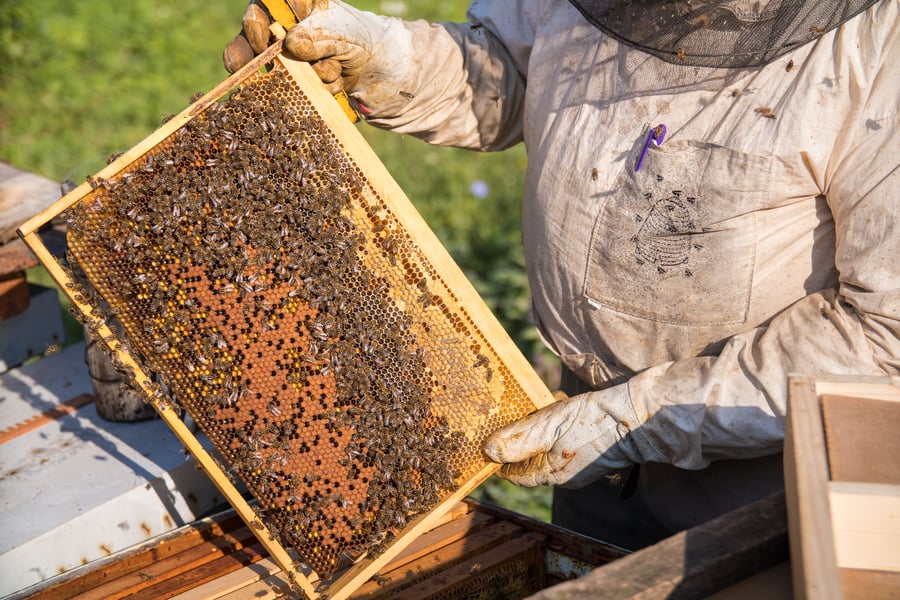
A colony of honey bees makes about 100,000 foraging flights to bring home 5 kilograms of nectar, and from that nectar it makes 1 to 3 kilograms of honey. The bees eat most of what they make. Beekeeping is the arrangement that leaves a surplus: a keeper gives the colony a home, protects it from disease and predators, and times the harvest so that the bees can spare what is taken.
This page is the background to every honey on HoneyTraveler. It explains how a colony lives as one unit, how a hive is built and where it stands, what a beekeeper does in each season, how colonies are kept healthy, how honey, wax and the other hive products are harvested, and what beekeeping is up against today.
Introduction to Apiculture and the Colony as a Superorganism
Apiculture is every way people get honey from bees. FAO, the United Nations food and agriculture agency, sorts it into three kinds: hunting wild nests, giving a wild colony a place to settle and harvesting it later, and keeping bees in hives. This page is about the third.
The other two ways are still practised: honey is hunted on Himalayan cliffs and farmed on planks in a Bornean swamp

Honey hunting continues where the bee cannot be housed. In Nepal the giant cliff bee Apis laboriosa hangs its single comb from rock faces, and hunters reach it on handmade ropes hung from the cliff top; the hunt belongs to the history of the Gurung and Magar peoples, two of Nepal's hill communities, and a village in Baglung district made it the centrepiece of a three-day honey festival in May 2026.
Bee maintaining, FAO's middle category, gives a wild colony a place to settle and takes the honey later. In the flooded forest of Danau Sentarum in West Kalimantan, where the swamp trees give the giant honey bee nothing tall to hang from, harvesters peg tikung, carved hardwood planks, into the branches at a slant, and the bees build on the plank. A plank of tembesu, a local hardwood, lasts forty years and two generations, and each son cuts a new notch into its edge to mark the family's ownership.
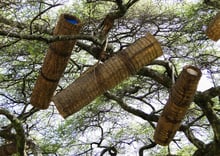
Beekeeping itself takes many forms before it reaches the frame hive. In south-western Ethiopia log hives hang from branches ten metres up in the forest and are climbed at night; at the last count, in 2018/19, nineteen in twenty of the country's seven million hives were traditional hives, log hives among them. In Nepal's hills the Asian hive bee is kept in hollowed logs on balconies, out of reach of the marten, or in cavities made, in one researcher's words, "simply by removing the bricks from the wall of the house".
A beekeeper keeps colonies, and a colony works as a single unit: the workers lay no eggs while they have a queen, the queen does nothing but lay, and the core of the nest is held at a steady warmth by thousands of bees together. Biologists call a society like this a superorganism. The idea dates from 1910 and is still argued over. The colony, not the bee, is the unit that survives and reproduces.
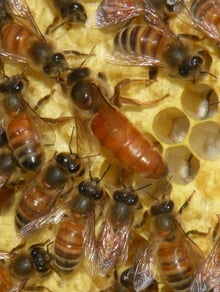
A colony has three kinds of bee, which biologists call castes. One queen lays the eggs, more than a thousand a day at the height of the season. A few hundred males, called drones, live in the colony through late spring and summer to mate with queens from other colonies; when forage fails in autumn the workers drag them out to die. Everything else is done by the workers, tens of thousands of females.
A worker’s job changes with her age. In her first days she cleans cells. Then she feeds larvae; from about her twelfth day she builds comb from wax that her own body secretes; then she stores nectar, fans, and guards the entrance. After about three weeks she leaves the hive to forage, and most workers die in the field. Biologists call this schedule temporal polyethism. A summer worker lives about six weeks. A worker reared in autumn lives up to six months, and these long-lived bees carry the colony through winter.
Keeping bees matters for more than honey. More than three quarters of the world’s leading food crops depend to some degree on animal pollination, by the count of the intergovernmental biodiversity panel IPBES, and the honey bee is, by the panel’s account, the most widespread managed pollinator in the world; in the United States, by the Department of Agriculture’s Economic Research Service’s 2025 account, beekeepers have reported earning more from renting colonies to growers than from honey since 2022. The same panel adds that managed honey bees often cannot fully make up for lost wild pollinators, and whether they harm wild bees is still being measured. Moving colonies also moves their diseases.
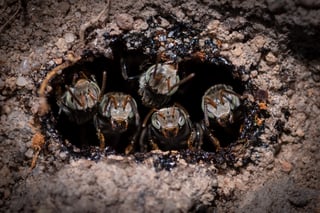
The Western honey bee, Apis mellifera, is the bee almost all of this page describes. It is native to Africa, Europe and the Middle East. No honey bee is native to the Americas, Australia or the Pacific, and every colony there descends from bees that people shipped in. Asia has its own hive bee, Apis cerana, kept from Afghanistan to Japan; by one 2017 estimate about a third of China’s bees are cerana. The tropics have the stingless bees, hundreds of species that store honey in small pots of soft wax rather than in comb; HoneyTraveler’s stingless bee honey page covers them. The giant honey bees of Asia are not kept at all: Apis laboriosa hangs its single comb from Himalayan cliffs, up to a hundred combs on one cliff face, and is hunted, not hived.

Hive Anatomy, Basic Equipment and Apiary Siting
The modern hive is a stack of boxes that comes apart, and the whole design rests on one measurement. Bees leave a passage of about six to nine millimetres open between any two surfaces in the nest: a wider gap they fill with comb, a narrower one they glue shut with propolis. A frame hung with that gap on every side lifts out without cutting anything. The United States Department of Agriculture credits Lorenzo Langstroth with the discovery of this bee space; his patent is dated October 1852, and FAO finds the hive that carries his name the most widely used across the Americas.
Fixed comb, movable frame, or Warré's box opened once a year: three ideas of what a hive is for
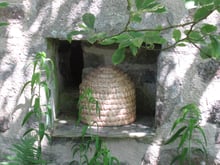
Until the middle of the nineteenth century bees were kept in hollow logs, boxes and skeps, the domed straw baskets, and built their combs fast to the walls as they do in a wild nest. Taking honey meant cutting the combs out, often killing the colony, and a keeper could not look inside without wrecking it; the Department of Agriculture's 1967 handbook links American foulbrood to colony losses as far back as the 1670s, when the beekeeping of the day made inspection impossible.
Beekeepers answered that with the movable frame. A comb that lifts out can be inspected for disease, returned to the bees after the honey is spun out, and carried on a truck. FAO states that virtually all the honey in international trade still comes from frame-hive beekeeping, and that its advantage over a well-run top-bar hive lies only in the reuse of combs and the possibility of moving the bees.
Émile Warré set out from the other end. His Ruche Populaire (People's Hive) was designed to be cheap, built without frames or foundation, enlarged from below without opening the hive, and opened once a year; he wrote that it wintered on 12 kilograms of stores against 15 to 18 for a frame hive, and claimed for it "respect for the laws of nature, thus no diseases".
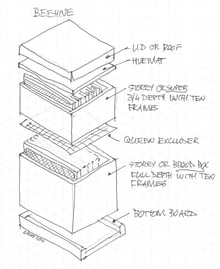
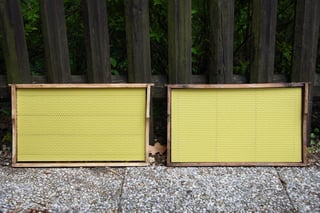
A Langstroth hive is a bottom board, a stack of boxes and two covers. The bottom board is the floor and the landing platform, tilted a little forward so that rain runs out. The boxes share one footprint and differ only in depth; each holds ten frames, and each frame a sheet of foundation, thin beeswax pressed with the pattern of worker cells so that the bees build straight comb. A box in which the queen is laying and young are being reared is a brood chamber; the same box with no brood in it is a super, and holds honey. A deep box full of honey weighs more than 25 kilograms, which is why honey is often kept in shallower boxes. Many beekeepers lay a queen excluder, a grid whose slots a worker passes and a queen cannot, between the brood boxes and the supers, so that no eggs are laid in the honey.
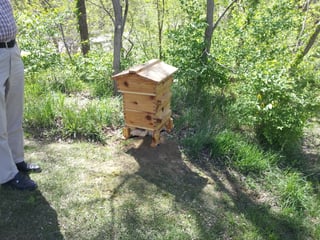
Not every hive is built this way. FAO, the United Nations food and agriculture agency, finds other frame hives in its place across Europe: the Dadant standard in Italy, the Zander common in Austria and the National in Britain, both built so that the brood chamber can be extended, and the Layens in Spain and Portugal. The top-bar hive does without frames and foundation: combs hang from bare bars and are cut off to harvest, and FAO reports it as the commonest hive in Africa because it costs less to build. Émile Warré’s Ruche Populaire (People’s Hive), a French priest’s design published in its twelfth edition in 1948, stacks identical square boxes of eight bare bars, adds new boxes underneath rather than on top, and is opened, Warré wrote, once a year.
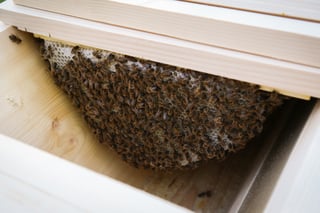

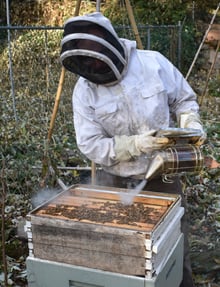
The keeper’s kit is short: a veil every time the hive is opened, a suit and gloves for those who want them, a flat steel hive tool for prying apart boxes and frames the bees have glued with propolis, and a smoker, a metal fire pot with a bellows burning burlap, wood shavings or dry leaves for a cool, thick smoke. Beekeepers have smoked bees for well over a century, and in 1967 the Department of Agriculture still wrote that exactly why it works was unknown. In 1995 entomologists at the University of California and the University of Illinois measured part of the answer: smoke dulls the bees’ antennae to their own alarm scent, and to floral scents too, for ten to twenty minutes, which the authors say appears to be one part of why smoked bees defend the nest less.
Where the hive stands matters as much as what it is. Bees need water, up to four litres a day for a colony in hot weather, so a source within a kilometre or so. A hive is best placed in morning sun, which warms it early, behind a windbreak, on firm, well-drained ground out of any hollow where cold air settles, and in hot climates in shade. A colony forages over a circle of about three kilometres’ radius: when researchers decoded the dances of a forest colony, half of its foraging fell within about two kilometres and almost all within six. A beekeeper learns the flowers of that circle, because the honey is made from them and not from anything in the hive.
The Seasonal Apiary Cycle and Colony Dynamics
The beekeeper’s year follows the colony’s, and nearly every task is a matter of timing. In a temperate climate the colony is smallest in late winter, grows fast through spring, divides if it can in late spring, gathers its crop in the weeks a plant is in flower, and shrinks again to a cluster that lives on what it stored. The keeper’s work is to stay a step ahead of each turn.
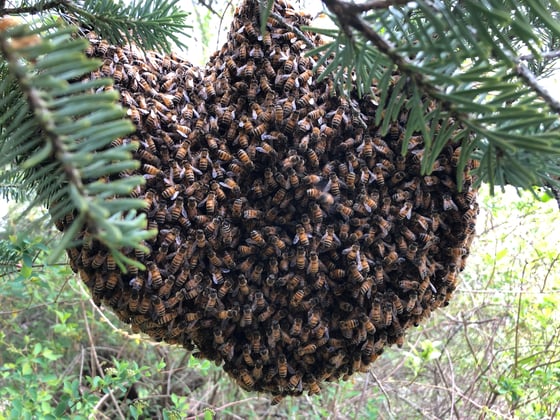
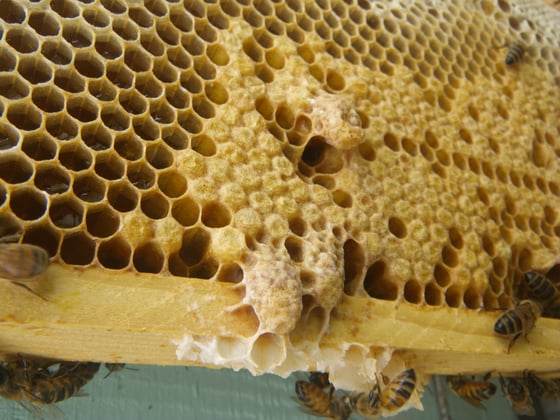
Spring begins inside the hive. Lengthening days and the first pollen start the queen laying, the population climbs, and drones are reared again. A strong colony soon crowds its boxes, and a crowded colony prepares to swarm: the workers rear new queens in cells along the bottom edges of the frames, and when the first is nearly ready the old queen leaves with about half the bees to found a colony elsewhere, usually just before the main flow, the weeks when a plant yields nectar faster than the bees can use it. For the keeper that is half the bees gone at the worst moment, so spring work is swarm prevention. Room is given before it is needed, and because a new queen takes about sixteen days from egg to adult, colonies are checked at least every two weeks. Once queen cells are found, the surest answer is to split the colony, the old queen and half the bees into one hive and the queen cells into another; Penn State’s extension service calls the split the most effective method at that point, and cutting the cells out one by one slow and prone to error.
Summer is flow and dearth. A flow is read by weight: a strong colony on a good source can gain three kilograms in a day, and the keeper adds empty boxes above the brood nest as fast as the bees fill them, because new comb is drawn best during a flow. Honey from one plant exists because the keeper takes off the combs the bees have capped with wax as soon as that plant’s flow ends and before the next begins, and most single-flower honey also depends on moving the bees to the flower. When the flow stops, bees from strong colonies rob weak ones, and the keeper fits a screen over the entrance against robbing and leaves the hives alone. Through the heat the bees cool the nest themselves, fanning and spreading water to evaporate, and hold the brood near 35 degrees whatever the weather outside.
Nearly half of Italy's apiaries are migratory, and most of China's beekeepers: what moving bees gives and what it costs
Honey from one flower is largely a product of moving bees. FAO's bulletin on hive products states, in its pages on single-flower honeys, that the commonest technique is migratory beekeeping, timing the move and the placing and removal of boxes so that an earlier honey does not mix with the one wanted. A 2022 review reports nearly half of Italy's apiaries as migratory and most of China's Western-honey-bee keepers, some making journeys of thousands of kilometres a year, and traced a Carpathian habit of moving for single-flower honeys back at least three hundred years; Austria, it notes, moves for "special honeys", in its words, and rarely for paid pollination.
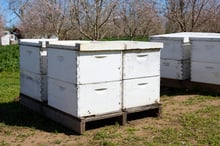
In the United States the moving is for rent. More than a million and a half colonies went to the almond orchards of the Pacific south-west, California above all, in 2025, by the Department of Agriculture's count, at about 200 dollars a colony. The Department's own 1967 handbook already described western beekeepers making four or more moves a year, from the coast to almonds, to sage and alfalfa, and back.
The cost is in disease. The 1967 handbook recorded that migration increased its spread, and the 2022 review, written for a parasitology journal, treats moving colonies as a route by which mites, viruses and gut parasites travel between regions, and notes that no study has measured what they pass to wild bees. The stationary beekeeper forgoes the single-flower crop and the rent, and avoids the road.
Autumn is a weighing exercise. The long-lived bees reared from late summer on are the ones that will live until spring, and the colony needs enough of them to cover its combs; a colony too small to cover its stores starves beside them, so small colonies are united. Those winter bees are reared on pollen and carry what it gave them as larger stores of body fat, so autumn forage matters as much as autumn stores: where it fails, beekeepers feed protein supplements, and Utah State University’s extension service reports that colonies on natural forage had lower virus levels and fewer queen losses than colonies fed only pollen supplements, and that in one study a poor diet cost three colonies in ten. Then the stores themselves. How much honey a colony needs for winter depends on the climate, from about 20 kilograms in lowland Britain to twice that in the cold north of the continent, and the keeper hefts the hive to judge it. What is short is made up with sugar syrup, two parts white sugar to one of water, fed while the weather is still warm enough for the bees to take it down and dry it. Other sugars have been tried in its place, invert syrup and corn syrup among them, on the argument that sugar already split into glucose and fructose spares the bees the work; the trials that compared them found plain sugar as good or better. A mouse guard goes on the entrance, because the bees leave the cold floor of the hive in winter and mice move in.
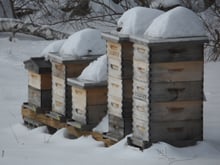
In winter the keeper does least. As the temperature falls the bees draw into a cluster, the outer bees packed into an insulating shell a few centimetres thick and the bees inside shivering their flight muscles for heat, and they eat their way slowly upward through the stores. The cluster heats itself, not the hive: the Department of Agriculture’s handbook states that the part of the hive the bees do not occupy stays at the outside temperature, insulated or not, and that heavy packing does more harm than none. Damp is the greater danger. The bees give off water vapour as they eat and it condenses on the cold walls; Britain’s National Bee Unit states that it is the damp, rather than the cold, that kills bees. A hive tilted forward and a small opening at the top let the moisture out. The winter check is by lifting: heft the back of the hive every couple of weeks, and if it comes up easily put fondant, a block of soft sugar, over the cluster. The hive is opened, if at all, on a mild day for twenty seconds.
In the tropics the year has the same shape, and the dearth is the wet season or the dry one; colonies must be at full strength when a short flow begins rather than growing into it, and a tropical colony that is starved or disturbed does not cluster and wait; it leaves.
Colony Health, Biosecurity and Integrated Pest Management
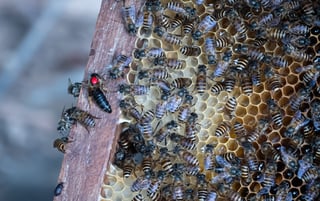
One parasite has changed what beekeeping is. The mite Varroa destructor came to the Western honey bee from the Asian hive bee, which lives with it and is rarely harmed. The Western honey bee is harmed, and the mite is now on every continent except Antarctica. The Honey Bee Health Coalition, a body of extension services, regulators and the United States Department of Agriculture, calls it the most damaging honey bee pest and a major factor in colony losses worldwide. A female mite slips into a brood cell just before the bees cap it with wax, breeds on the developing bee, and rides out on the adult, feeding on its fat body, the tissue where an insect stores its reserves, and passing from bee to bee. Much of the damage is believed to be done not by the feeding but by what the mite carries: viruses, above all deformed wing virus.
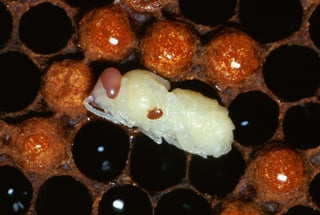
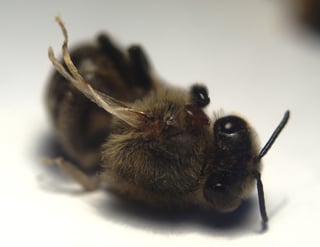
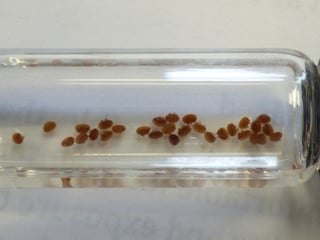
Because the mite breeds inside sealed cells, a keeper cannot see how many there are by looking. The count is made by sampling: about 300 adult bees, half a cup, are shaken from a brood comb into alcohol or into powdered sugar, the mites that fall off are counted, and the result is written as mites per hundred bees. Since the mite population peaks just after the bee population does, in late summer as brood declines, the colony that must rear its winter bees is the one most exposed, and the autumn count is the one that matters. The Coalition’s 2026 guide treats one mite per hundred bees as the point to act in spring and two in late summer, and adds that thresholds are an evolving science and vary by region.
Counting first, treating only past a threshold and rotating the treatments is what the Coalition calls integrated pest management. What follows a high count is a rotation rather than a single cure, because where one synthetic chemical is used alone the mite becomes resistant to it. Beekeepers remove and freeze frames of capped drone brood, where the mites concentrate; they break the brood cycle with a split or a caged queen, so that for a few weeks the mite has nowhere to breed; and when counts pass the threshold they treat, with formic acid, which reaches mites under the cappings and can be used with honey on the hive, with thymol from thyme oil, which cannot, or with oxalic acid dribbled in syrup or vaporised, which works best in the broodless weeks of early winter and nowhere near as well when brood is present. The acids and the oil are alternated with one another and with the synthetic chemicals, sold as strips hung between the frames, and the count is taken again after every treatment, because a count of zero means only that no mites were on the bees sampled.
Organic and conventional beekeeping, each on its own terms: the rules, the objections to each, and the measure both claim
FAO's 2026 guideline on organic beekeeping sets out how the organic apiary differs. Hives are of untreated wood; foundation wax comes from organic units; the bees should be local strains able to cope with local conditions and diseases; and the apiary stands at least 3 kilometres from non-organic apiaries. Mites and diseases are controlled with the organic acids, thymol and the brood break described above, never with synthetic acaricides, the chemicals sold to kill mites, or antibiotics; a colony that receives one loses its organic status for a year and its wax is replaced.
The rules reach into the year's work. Enough honey and pollen is left at harvest for the colony to live on without feeding, and sugar is allowed only in an emergency, from organic sources, and never left to be stored in the comb; queens' wings are not clipped; bees are not killed on the combs at harvest; and the smoker burns natural plant material. Naturland, the German organic association, adds that queens may not be caged to stop swarming, that stock is increased by using the swarming habit, and that plastic foundation is prohibited.
Bees for Development, a British charity, lists what it objects to in intensive beekeeping: bees bred for docility and low swarming rather than selected by nature, swarming prevented, queens inseminated by instrument, colonies trucked long distances, drone brood killed, sugar fed in place of honey, plastic hives and foundation, medicines given against bacterial disease before any appears, and large numbers of colonies crowded into intensively farmed land.
The conventional case is made in the same terms. The Honey Bee Health Coalition states that doing nothing about Varroa is not a practical option for most beekeepers, and its rotation of acids, oils and synthetic strips exists because the mite kills untreated colonies; FAO's own organic guideline allows a synthetic treatment when natural ones fail, at the price of a year's conversion and the colony's wax. The organic rules also keep the apiary 3 kilometres from any non-organic one, and FAO counts traceability and marketability among organic honey's advantages. Both systems claim the same measure: FAO's 2021 guide to good beekeeping practice, which covers frame hives, synthetic treatments and moving colonies, is written for sustainable apiculture, and its 2026 organic guideline says organic practice is a pillar of the sustainability of beekeeping. They differ on how a colony is kept alive and on what the keeper may put into the hive.
Two bacterial diseases of the larvae are older than Varroa, and in Britain a keeper who suspects either is required by law to report it. American foulbrood is the one Britain’s National Bee Unit calls the most destructive: its spores are fed to a larva by its nurses, germinate in the gut and kill it after the cell is sealed, and the dried remains hold spores that stay infectious for decades in old comb, stored equipment and honey. Because the spores resist disinfectants and extremes of temperature, the Unit destroys an infected colony together with its frames and wax. European foulbrood is, by the same count, the most widespread: the bacteria compete with the larva for its food rather than invading it, so a well-fed larva may survive and the disease can persist in a colony for years, often weakening it without killing it. A light case is treated by shaking the bees onto clean foundation and destroying the old comb.
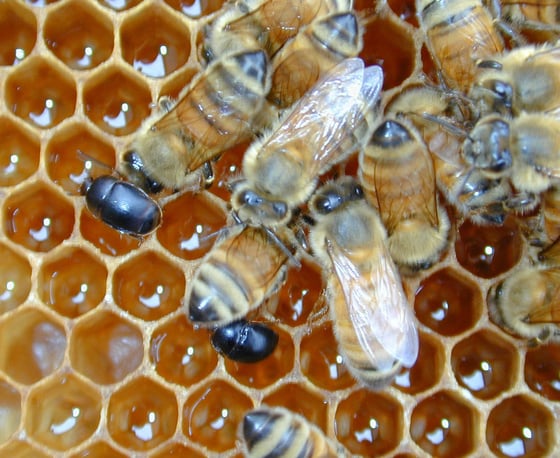
Two pests take weak colonies and stored comb. The small hive beetle, an African insect first confirmed in the United States in 1998 and in Australia soon after, lays in the hive; its larvae tunnel through comb and foul the honey, which ferments and is ruined, and honey in the extracting room is at risk until it is spun out. The greater and lesser wax moths lay on unguarded comb, and their larvae eat the wax. In nature they are decomposers; in a honey house they empty a stack of stored supers. Weak colonies are the ones both take, so the keeper’s first defence against the beetle and the moth is a large, well-fed colony; and against all of these the Coalition lists culling old brood combs among its biosecurity practices, the routines that keep disease out of an apiary, while North Carolina State University’s extension service (NC State Extension) notes that wax stores pesticide residues.
Harvesting, Hive Products and Honey Science
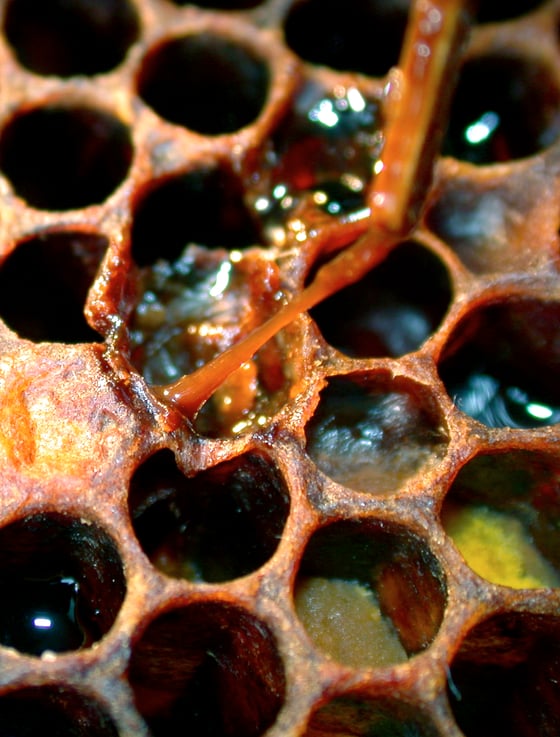
Honey is nectar with most of the water taken out and its sugar changed, and the bees do both before the keeper touches it. Nectar is the sugar solution flowers secrete, anywhere from a few percent sugar to mostly sugar. A forager drinks it into a honey sac in her abdomen and on the way home adds the first of the colony’s own enzymes. In the hive it passes from bee to bee, each taking it in and giving it up again so that water evaporates from it; one enzyme, invertase, splits the nectar’s sucrose into glucose and fructose, the two sugars that make up most of honey, and another, glucose oxidase, turns a little of the glucose into gluconic acid and hydrogen peroxide, which give honey its acidity and slow bacterial spoilage. The thickened nectar goes into open cells, where the warmth of the colony and the fanning of thousands of wings dry it further, and in one to three days it is honey. When it is dry enough to keep, the bees seal the cell with a wax cap.
That cap is the keeper’s signal, because water is what spoils honey. Honey always carries yeasts, and they can grow only while there is enough water for them: FAO puts the line at about 18 percent, below which fermentation is unlikely, and one of its manuals says honey under 18.6 percent water is not susceptible to fermentation; the international standard for honey allows no more than 20, or 23 for heather honey. Bees cap honey when it is dry enough, so the keeper harvests only combs that are mostly capped, and in a wet climate may still check with a refractometer. Honeydew, the sweet excretion of aphids and scale insects feeding on trees, is gathered and ripened the same way and yields the honeydew honeys.
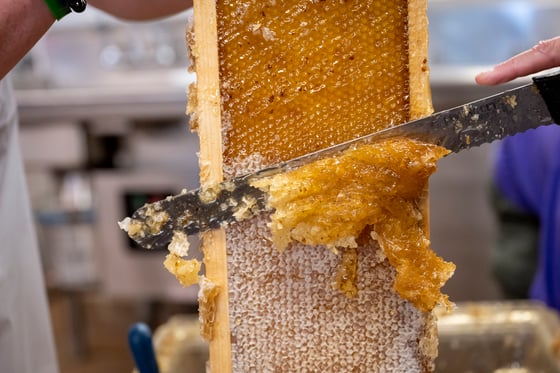
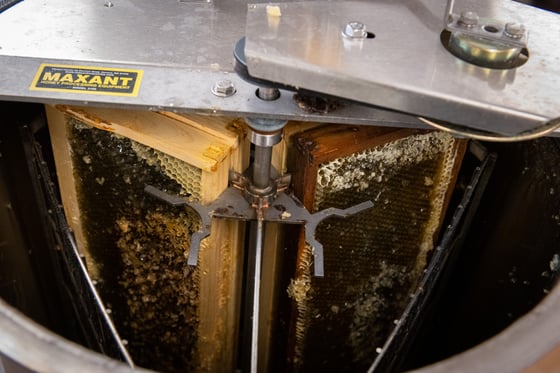
The harvest itself is short. The keeper clears the bees from the full boxes, slices the wax caps off the combs with a heated knife, and sets the frames in an extractor, a drum that spins the honey out against the walls and leaves the comb whole to go back to the bees. Comb from a hive without frames is crushed and pressed instead. The honey then stands a few days in a warm tank while wax and air rise and grit sinks, and is strained through a fine mesh and bottled. Straining takes out wax and leaves most of the pollen; it is from that pollen that a laboratory later identifies which flowers a honey came from. Fine pressure filtering, done after heating, takes the pollen out too and gives a clear honey that stays liquid longer: that international standard, the Codex standard for honey, requires such honey to be labelled “filtered honey”, while United States grade standards permit the removal, as Vaughn Bryant, who identifies honeys by their pollen, has written. “Raw” has no definition in the standard, and the National Honey Board states that it has none in United States federal law; it is a seller’s promise about heat and filtering, and the raw honey and honey standards pages cover what those words mean on a label.
Minimal handling against processing: what heat and filtering do to a honey, and what they do not
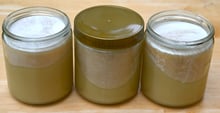
The minimal path is the one this page has described: capped comb, uncapped, spun, settled and strained through a mesh that takes the wax and leaves the pollen, then bottled with no heat beyond a warm room. Such a honey sets in time, since most honeys hold more sugar than their water can keep dissolved; a honey rich in glucose sets fast, and crystallisation runs quickest at about 14 degrees, so a cool pantry hastens it. The standard lists crystalline honey as a normal style, not a defect.
Processing exists to sell liquid honey that stays liquid. Warming a set honey to 40 or 50 degrees for a day or two to reliquefy it does it no measurable harm, Bogdanov writes; pasteurising, a few seconds at 70 to 78 degrees, kills the yeasts and dissolves the crystals at the cost of one of the bees' enzymes; and fine pressure filtering after heating removes the pollen so that the honey stays clear and liquid longer on the shelf. It also removes the pollen a laboratory reads to tell where the honey came from.
Between the two sits creamed honey, crystallisation under control: the method patented at Cornell University in the 1930s heats the honey to kill its yeasts, seeds it with a few percent of finely set honey, and holds it near 14 degrees until it sets fine and smooth. Time matters more than temperature. Bogdanov's table gives ten to twenty years at 10 degrees to reach the freshness limit the standard's annex sets, and a day or two at 60, so months in a warm shop do more to a honey than seconds of pasteurising.
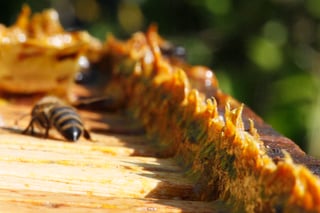
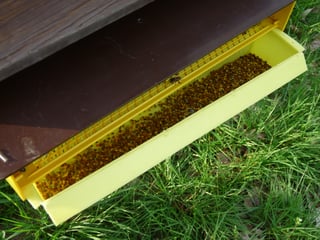
Honey is not the only crop. Beeswax is secreted by young bees from glands on the underside of the abdomen and chewed into comb; a comb weighing twenty grams carries a kilogram of honey. The wax is costly for the colony to make, and NC State Extension puts it at about eight kilograms of honey eaten for each kilogram of wax, so a frame-hive keeper takes only the cappings and gives the combs back, and the cappings yield the lightest wax, which Krell’s FAO bulletin rates the highest in quality. Propolis is scraped from the frames or collected on screens the bees fill as if sealing a crack, rarely more than a few hundred grams a year; the Western honey bee is, Krell writes, the only honey bee known to gather it. Royal jelly, the glandular food that nurse bees give the queen and queen larvae, is never stored by the bees and exists as a harvest only because a keeper makes the colony rear queens, then lifts the larvae out of their cells three days later and spoons out what they had not yet eaten, about half a kilogram from a hive over a season. Pollen is taken at the door, through a screen that strips the pellets from the hind legs of returning foragers; the screen takes them from fewer than half of the bees that pass, and the pollen is collected daily in a humid climate, dried at once, and never trapped for days or weeks after the fields around the apiary have been sprayed.
Pressures on Beekeeping Today
Beekeepers in the United States lost two colonies in five in the year to April 2026, and more than half the year before, by the count of the national survey run by the Apiary Inspectors of America with Auburn and Oregon State universities; the fifteen-year average is about two in five. A loss rate is not a fall in colony numbers, since lost colonies are replaced: worldwide the number of hives kept has grown by about half since 1990, by FAO’s count, while in parts of Europe and North America it has fallen, and the survey’s authors note that the United States count of honey-producing colonies in 2025 was the lowest since 2008. The loss rate is the measure of what beekeeping is up against.
The first of four pressures is pesticides. In 2018 the European Union banned all outdoor use of three neonicotinoids after its food safety authority found that most of their uses were a risk to wild bees and honey bees; use in permanent greenhouses was kept, and the other neonicotinoids then approved stayed approved, one of them judged low-risk to bees. The risk is rarely a dead bee at the hive: a 2012 French field experiment that tagged foragers found that a dose too small to kill them left many unable to find their way home. Fungicides are usually seen as fairly safe for bees, and a 2013 study by the United States Department of Agriculture found pollen from hives rented to seven crops carrying heavy fungicide loads, and bees that ate it more likely to be infected with a gut parasite. The same study found that in five of the crops the rented bees had gathered their pollen almost entirely from weeds and wildflowers, not from the crop their keepers were paid to pollinate.
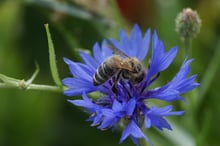
Which is the second pressure: fewer flowers. Honey bees need a mixed diet of pollens, and Utah State University’s extension service names one cause, that many crops in the United States are grown in monoculture, which narrows what a colony can choose. What beekeepers do about it is move, feed, and keep colonies off sprayed ground. The third is timing. A 2019 German experiment moved colonies between sites to throw their spring development out of step with the bloom; colonies that lagged the flowers had smaller spring populations and less honey, while the colonies left in step with the bloom carried three times the Varroa load by summer. Warm winters, the authors write, may put colonies out of step with the bloom in the same way.
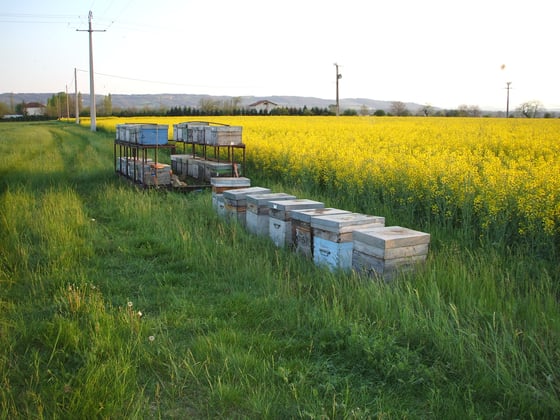
The fourth pressure is the bee itself. Breeders select for hygienic behaviour, the habit of detecting and removing diseased or mite-infested brood under its cappings, and the Department of Agriculture’s laboratory at Baton Rouge has bred lines that remove most of the pupae on which mites are breeding; there is as yet no standard or label for mite-resistant stock, and a line bred too far in that direction grows slowly. Against that selection stands the colony’s own defence, which is variety. A queen mates with several drones, seven to fifteen by one extension service’s count, and in two experiments published in 2007 colonies whose queens carried the sperm of ten or fifteen drones grew faster, stored more, wintered better and resisted foulbrood better than colonies whose queen carried one drone’s.