
Salvation Jane Honey
The Story
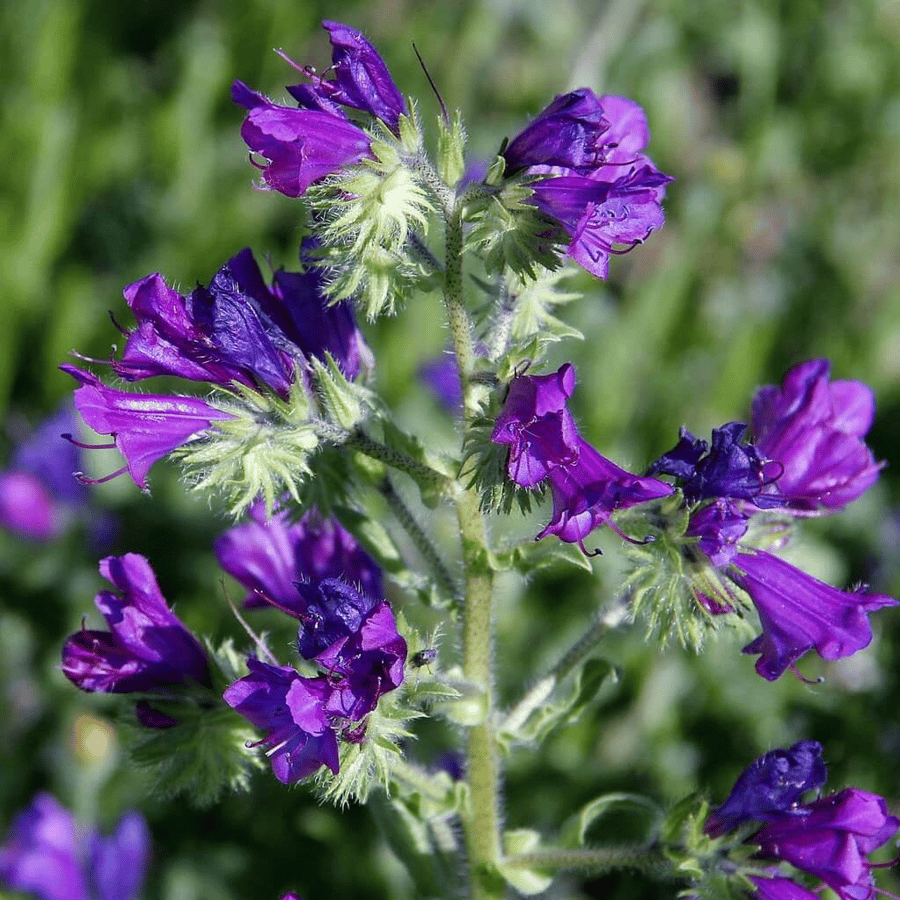
This honey evokes both a curse and a blessing, from a flower once believed to be an antidote to the poison of the snake it is named for. The plant is Echium plantagineum, purple viper’s bugloss – Echium from the Greek for viper, after a seed shaped like a snake’s head and an old belief the plant could draw the venom from a bite. In Australia it picked up two more names and opposite verdicts: farmers call it Paterson’s Curse, an imported weed that poisons livestock and overruns paddocks; beekeepers call it Salvation Jane, the flow that fills the hives in early spring when little else is out. The honey keeps the kinder name.
What reaches the jar is light and mild: pale amber to near-white, thin, slow to candy, with a clean floral sweetness and none of the resinous edge of the eucalypt honeys it usually outsells. Its standing rests on volume, not rarity. Paterson’s Curse is the single most targeted nectar plant for New South Wales beekeepers – ahead of yellow box and the ironbarks – because a good spring throws a purple flow across the western slopes that almost nothing native can match for sheer quantity. New South Wales is the country’s biggest honey state, and this weed is its biggest honey.
Characteristics
Salvation Jane is among the lighter Australian honeys, extra light to light amber and sometimes close to white, with a clean floral sweetness and a delicate aroma. It carries the low moisture and high glucose typical of ground-flora honeys, but its rate of granulation is not reliably documented as fast or slow and varies between crops. Its commercial character is shaped less by the flower than by handling: most of it is blended into general table honey, lighter and milder, while the uncommon single-origin form is darker and fuller. The honey is a table honey, not a medicinal-grade one.
Click to Display — The Details: botanical origin, sensory profile, pairings, health and what gives it its character
Botanical Name: Salvation Jane (Echium plantagineum)
Botanical Family: Boraginaceae
Bee Species:
Apis mellifera, the introduced European honey bee, which carries all commercial Salvation Jane production. The plant flowers across cleared and overgrazed inland pasture, well outside the range of most native bees.
Color:
extra light to light amber, sometimes near-white; the rare unblended single-origin form runs darker
Flavor Profile:
mild, light, clean and floral; fuller and stronger in the unblended form
Tasting Notes:
Most Salvation Jane reaches the table blended into general honey, where it reads as light and mild – a clean floral sweetness without the resinous edge of the eucalypt honeys. The rare straight, unblended version is a different experience: darker and full-flavoured, which is how a specialty producer describes it once it is not diluted into a blend. One Australian producer’s single-origin Salvation Jane is described as lemon-yellow, smelling of savoury herbs – thyme and oregano – with a smooth sweet palate and a note of candied almonds. The everyday jar is the mild one; the full character shows only in the unblended crop.
Aroma:
delicate, light, gently floral
Defining Compounds:
Salvation Jane carries trace pyrrolizidine alkaloids from the Echium nectar, the compounds behind the livestock toxicity and the food-safety attention, though at levels the food regulator does not consider a concern for normal honey consumption. As a ground-flora honey it is low in moisture with a high proportion of glucose, the profile typical of the inland herbaceous sources.
Forage Origin:
Salvation Jane honey comes from the nectar of Echium plantagineum, a winter-growing annual in the borage family, Boraginaceae – not a eucalypt, and unrelated to almost every other major Australian honey. It germinates with autumn and winter rain, throws up a rosette of coarse hairy leaves, and flowers purple from roughly September into December across the temperate inland, heaviest on the disturbed and overgrazed ground of the western slopes and plains. A single good season can carpet whole paddocks, which is what makes the flow so large.
The plant carries several names, and the distinction matters when reading a label. In New South Wales and the eastern states it is Paterson’s Curse; in South Australia it is more often Salvation Jane; in older usage it is purple viper’s bugloss, and in the cut-flower trade Riverina bluebell. All are the same species. The name Paterson’s Curse records its history as a pasture weed – it is toxic to grazing livestock, especially horses, and it is a declared weed across much of its range – so the plant a beekeeper values is the same plant a farmer is legally obliged to control. Honey is sold under the positive name, Salvation Jane.
Echium is, in fact, distinguished company. The genus is native to the western Mediterranean and the Atlantic islands off north-west Africa, where it is prized rather than fought: in central Spain, viper’s bugloss honey is a recognised monofloral with its own pollen standard, and on the volcanic slopes of Tenerife the red Echium yields a certified honey, pale and creamy, known in Spanish as miel de tajinaste. In its homeland the plant is a heritage crop, not a weed.
Pairings:
A mild, light honey in its common blended form, Salvation Jane suits everyday use: stirred into tea, spread on toast, spooned over yoghurt. The rarer unblended crop, darker and carrying savoury herb and candied-almond notes, is better treated as a finishing honey, where its stronger character is not lost.
Origin Story
The curse has a name and an address. Around 1880, the Paterson family of Cumberoona, a homestead near Albury on the New South Wales side of the Murray, grew the purple flower as a garden ornamental. It escaped onto an adjoining stock route, the travelling cattle carried the seed, and within a generation the family’s name was fixed to one of the worst pasture weeds in the country. The name even carries a clerical error: the family spelled it Patterson, with two t’s, and the weed wears the misspelling. Their homestead is now underwater, drowned when the Hume Reservoir filled in 1936.
The Patersons were, on the evidence, largely innocent. A 2019 study at Charles Sturt University genotyped more than 250 plants across the weed’s native and invaded ranges and found it had entered Australia many times over – deliberately as a UK garden plant, recorded near Sydney as early as 1843, decades before Cumberoona, and accidentally in fodder and on the fleeces of imported merino sheep. One family took the blame, under a misspelled name, for a plant the whole colonial supply chain had been importing.
The kinder name is just as tangled, and “Jane” may be no one at all. One of the earliest recorded uses comes from the botanist J.M. Black, reported in the Adelaide press in 1907, and it is purely visual: the flower was said to resemble the poke bonnet worn by the Salvation Army women, the “lasses,” of the country towns – and Black’s own wording has it already christened, the name in use before he set it down. Whether “jane” carried any more meaning than a period word for a woman is not recorded. Attempts to name a real Jane belong to folk memory rather than the record: it is said that a man named Snooks coined the name at a 1912 Port Pirie cricket match, and a Mary Jane Pillar is sometimes put forward as the candidate, though no contemporary source corroborates either. By another account “salvation” has nothing to do with the bonnet at all, and reads as the drought fodder that kept stock alive when the grass failed; the references disagree over which meaning came first. The name has outlived any chance of settling which is true.
The oldest name of all is the one the botanists kept.
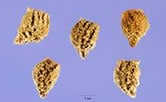
Viper’s bugloss reads as a small puzzle until you take it apart: the seeds are shaped like a snake’s head, the stem is speckled like a viper’s skin, and by the early-modern Doctrine of Signatures – the idea, developed by Paracelsus in the sixteenth century, that a plant’s appearance revealed its God-given use – those marks were taken as a sign the plant could treat snakebite. In his 1656 The Art of Simpling, the herbalist William Coles set the belief down plainly, writing that the speckled stalks made it a singular remedy “against poyson and the sting of scorpions.” The Latin Echium carries the same idea further back, from the Greek echis, a viper; bugloss is from the Greek for “ox tongue,” for the rough, tongue-shaped leaves. A honey now valued for being mild and harmless takes its name, three times over, from a snake.
That split raises a fair question about the honey, and the answer is settled. Echium contains pyrrolizidine alkaloids, compounds that can harm the liver in quantity, and traces pass into the nectar. Australia’s food regulator, FSANZ, has assessed honey for these compounds and set no regulatory limit, on the finding that normal consumption shows no evidence of harm; its only caution applies to someone eating honey made exclusively from Paterson’s Curse, every day, in more than tablespoon amounts. Most Salvation Jane reaches buyers blended into general table honey, which dilutes the alkaloids further, and the weed’s retreat under decades of biological control has lowered the levels again. The honey that built the trade is, by the regulator’s account, an ordinary table honey.
The full story: the misspelled curse, the DNA verdict, and the hunt for Jane
The curse. Echium plantagineum was a prized garden ornamental in colonial Australia, sold through nursery catalogues from the 1840s. The family most often blamed, the Patersons of Cumberoona near Albury, grew it from about 1880; it escaped onto an adjoining stock route and the travelling cattle spread it across the inland. The blame stuck so hard that a 1905 newspaper account reached for Shakespeare, calling the weed proof that “the evil men do lives after them, whilst the good is often interred with their bones.” The family spelled their name Patterson, with two t’s; the weed wears the misspelling to this day. Their homestead was later drowned under the Hume Reservoir in 1936.
The verdict. A 2019 Charles Sturt University study genotyped more than 250 plants from the weed’s native range in Spain and Portugal and its invaded ranges in Australia, the United Kingdom, and South Africa. It found far more genetic diversity in Australia than a single garden escape could explain: the plant had arrived many times, deliberately as a UK ornamental, recorded near Sydney as early as 1843 in the garden of John Macarthur, decades before Cumberoona, and accidentally in fodder and on the fleeces of imported merino sheep. The lead author put it plainly: Mrs Paterson was neither the first nor the only person to introduce it.
Jane. The salvation half of the name is South Australian. One of the earliest recorded uses, from the botanist J.M. Black and reported in the Adelaide press in 1907, has it that the name came from the flower’s likeness to the poke bonnet of the Salvation Army women working the country towns; Black’s wording suggests it was already in circulation before he recorded it. Attempts to find a real Jane belong to folk memory: by one telling, a Salvation Army historian records that a man named Snooks named the weed at a 1912 cricket match for a Salvationist at Port Pirie, “a sweet and petite little thing,” and even floats a Mary Jane Pillar, who married Charles Malone in 1900, as the candidate – though no contemporary record confirms her. By a separate account, “salvation” drops Jane entirely and refers to the drought fodder that kept stock alive when the grass failed; standard references are split on which reading is the original. The name has outlived any chance of settling which is true.
Cultural Context
Salvation Jane sits oddly in Australian life: a federally and state-declared weed that graziers spend money to control, and at the same time the source of the largest honey crop in the country’s largest honey state. The two names mark the divide – Paterson’s Curse in the paddock, Salvation Jane on the jar – and both are in everyday use depending on who is speaking and where.
Harvest & Forage
Salvation Jane flowers from roughly September into December, and in a good spring after winter rain it throws a heavy, reliable flow across the inland – which is what makes it the most targeted nectar plant for New South Wales beekeepers despite being a weed. The flow is large but the single-origin crop is deliberately uncommon, for two reasons.
First, purity is a matter of timing and the bees’ own choice. A clean single-floral take depends on the beekeeper working the hives when little else is in flower; where other plants are open, the bees mix in whatever they find, and Salvation Jane is a classic “something else the bees picked up” in a blue gum or red gum frame. Second, most producers deliberately blend it: Australia’s food regulator and the industry code both recommend diluting Paterson’s Curse honey with other honey to keep pyrrolizidine alkaloids low, so the default retail form is a blend in which Salvation Jane is one component.
For a buyer, the practical signal is the label and the seller, not anything visible in the jar. A honey named for the single floral source and bought direct from the beekeeper or a specialty distributor is the unblended form – darker and fuller-flavoured; a jar labelled simply “Australian honey” or “pure honey” with no floral name is almost always a blend. “Pure” on a label means only that nothing has been added, not that the honey is single-origin; the floral name is the thing to read.
Beekeeping Context
Salvation Jane is worked by the introduced European honey bee in a migratory industry: because the plant flowers heavily only in some springs and across a shifting inland geography, commercial beekeepers move hives to follow the bloom. The plant is also a heavy pollen producer – among the highest-protein pollens recorded for Australian bee forage – which makes it valuable for building hive strength early in the season, a separate benefit from the honey crop. This usefulness is why beekeepers have historically opposed biological-control programs aimed at eradicating the weed, putting the apiary industry at odds with graziers over the same plant.
Source Regions
- New South Wales – the largest crop; the western slopes and plains of the inland
- South Australia – the northern agricultural districts, where the Salvation Jane name originated