Viper's Bugloss/Blue Borage - Echium spp. Honey
The Story
Echium originated in the Mediterranean and has spread worldwide. The flower moved for its looks, by accident, and on a bogus cure. It was carried out of its homelands as a garden ornamental prized for its blue-purple bloom, hitchhiked on the fleeces of the wool trade, and was planted as a snakebite remedy it never delivered – and the honey had nothing to do with any of it. In its homelands it is a prized monofloral, sold under protected names; in Australia, South Africa, and the Americas the same genus is a declared noxious weed. The honey’s reputation, prized in one place and cursed in another, is something it earned only after it arrived, once the plant was established and bees were working its bloom – and the honey itself is largely the same wherever it is made.
Across every producing region the sensory profile holds remarkably steady – a yellow-gold honey with a light, clean taste, a floral bouquet, and a faint lemon note, high in fructose and slow to crystallise. Differences read more by region and handling than by species: New Zealand’s darkens faster and carries a brown tint, mainland Spain’s stays light amber and golden.
Five regions produce a named Echium honey. New Zealand’s Blue Borage and the viper’s bugloss honeys of mainland Spain and Italy come chiefly from Echium vulgare and E. plantagineum; Tenerife’s tajinaste honey draws on the Canary Islands’ own E. wildpretii and its highland relatives; and in New South Wales the same E. plantagineum that earns the name Salvation Jane yields a pale, well-regarded honey.
Elsewhere the plant feeds the hive without making a honey of its own. Across North America, South Africa, and the pampas of South America, Echium is a heavy nectar source and a noxious weed at once, its flow folded into wildflower and pasture blends rather than bottled alone. Where it is bottled alone, the question is how much makes a monofloral – conventionally around 45% Echium pollen, though a Spanish study proposes a higher bar.
Characteristics
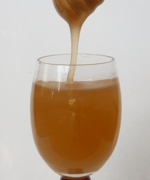
Echium honey pours a pale yellow-gold to light amber, clear and bright in the jar. The aroma is gently floral, and the flavor follows it: light and clean, delicately floral, with a faint lemon lift and none of the heaviness of darker honeys. High in fructose, it stays liquid for months and crystallises slowly into a fine, soft grain. The profile holds remarkably steady across its growing regions, though region and handling tell more than species does: New Zealand’s Blue Borage runs a shade darker and browner and deepens in the jar over time, while the viper’s bugloss honeys of Spain and Italy keep to light amber and gold.
Click to Display — The Details: botanical origin, sensory profile, pairings, health and what gives it its character
Botanical Name: Echium (Echium spp.)
Botanical Family: Boraginaceae
Bee Species:
Effectively all commercial Echium honey is made by the introduced Western honey bee, Apis mellifera, in New Zealand, the Mediterranean, and Australia alike. The Canary Islands are the exception worth naming: tajinaste honey is gathered by the abeja negra canaria, the Canarian black bee, a protected native strain of Apis mellifera isolated on the islands for some two hundred thousand years. Prized for its docility and its strong hygienic behaviour, and well adapted to the islands' dry climate and irregular rainfall, it is the subject of an active conservation programme as imported commercial strains erode its purity through hybridisation. Its effect on the honey is one of provenance and apiculture rather than flavour; the character of tajinaste honey comes from the nectar and the highland terroir, not the bee.
Color:
Pale yellow-gold to light amber, among the lighter honeys on the shelf; the Mediterranean crops sit at the paler, more golden end, while the New Zealand honey runs a shade browner and deeper. When it sets it turns lighter still, an opaque cream.
Flavor Profile:
Light, clean, and gently floral, with a faint lemon lift over a mild sweetness and none of the resinous weight of darker honeys; the finish is quick and clean rather than lingering.
Tasting Notes:
Beyond the light, clean sweetness, the genus signature is a faint lemon lift and a quick, clean finish with none of the lingering weight of darker honeys. The mouthfeel is smooth and light-bodied, and the floral character reads as delicate rather than perfumed. The set honey reads differently from the liquid: the same mild flavour, narrowed and softened through a fine, soft grain. Where the honey varies, it varies by region and handling more than by species – the New Zealand honey runs browner and a touch deeper, the Mediterranean honeys lighter and more golden – but the underlying profile holds across the range.
Aroma:
A soft, delicate floral bouquet – fresh and light rather than perfumed, carrying the same faint citrus note that follows through onto the palate.
Forage Origin:
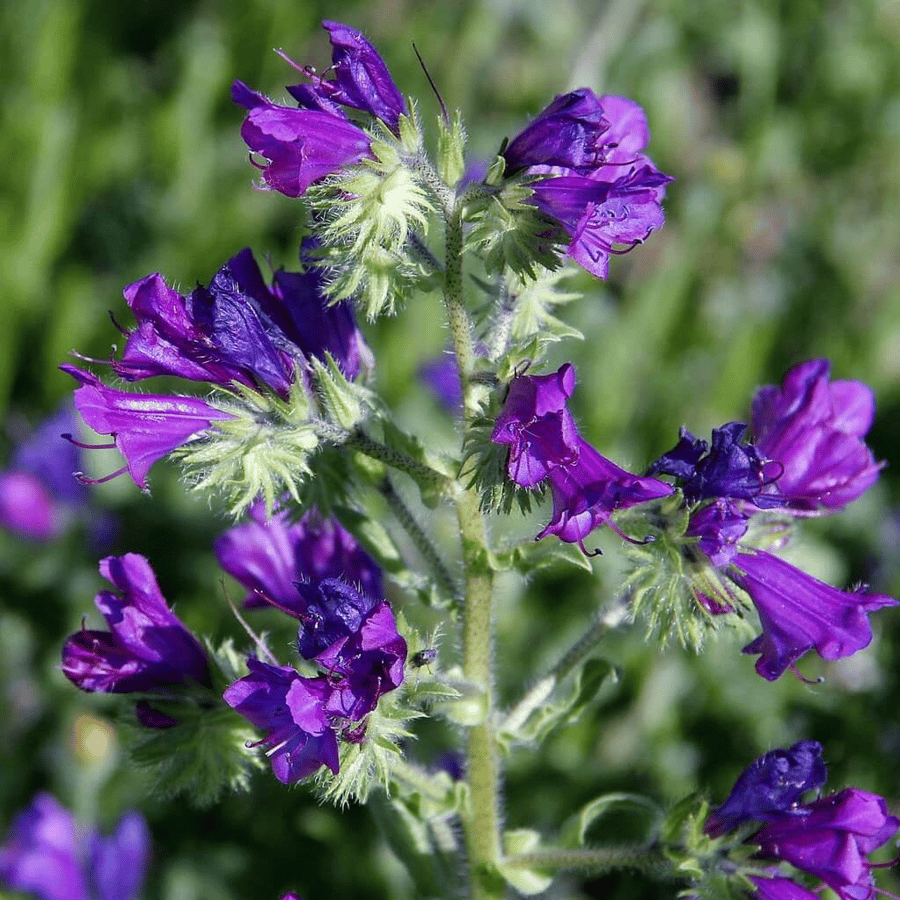
Echium honey is made from the nectar of viper’s bugloss, the common name for flowering plants of the genus Echium in the borage family (Boraginaceae). The genus runs to roughly sixty species; the honey comes chiefly from E. vulgare, E. plantagineum, and, in the Canary Islands, the endemic E. wildpretii and its island relatives. The plants carry coiled spikes of tubular flowers that open pink and turn vivid blue-violet, and they are prolific nectar producers: the bloom runs for weeks from late spring into summer, and the nectar is sheltered inside the flower against heat and rain, so it secretes through the day rather than in a short morning window. That steady, long flow is what makes Echium one of the world’s better honey plants. The flowers also yield a distinctive dark-blue pollen, a useful marker of the source in the hive. Despite the “Blue Borage” name used in New Zealand, the honey is not made from true borage (Borago officinalis), the seed-oil herb of the same family; nor should viper’s bugloss honey be confused with honey from unrelated plants sharing the “bugloss” name.
Pairings:
A light, delicately floral honey suits gentle company that will not overwhelm it. It is a natural breakfast and tea honey – stirred into a mild black or green tea, drizzled over yoghurt, porridge, or fresh ricotta and other young, soft cheeses. Its faint lemon note works well over fruit and in light dressings. Because its character is subtle, it is wasted in strong bakes or alongside bold flavours that would bury it; it rewards being tasted on its own or against a quiet backdrop.
Health Uses:
Like thousands of plants worldwide, Echium produces natural compounds called pyrrolizidine alkaloids (PAs), and traces pass into the honey. These PAs are classed as carcinogens, so in large amounts over a long time they can harm the liver – this is not a honey to eat in quantity day after day. They enter the honey mainly through the nectar; pollen-based bee products carry far higher concentrations and are best avoided.
For perspective, food-safety authorities consistently find honey a smaller dietary source of PAs than herbal teas and infusions. Assessments at ordinary consumption levels report low concern: New Zealand’s lifetime risk assessment placed exposure within tolerance, and Food Standards Australia New Zealand judges PAs in Australian and New Zealand honey unlikely to pose a health risk, with no honey-related poisonings reported in either country. Blending with other honeys lowers concentrations further. As a precaution, frequent high-volume consumption is best avoided, and pregnant or breastfeeding women, infants, and young children should not consume it.
Origin Story
Echium’s homelands are the Mediterranean basin, North Africa, and the Atlantic islands, and in those places its honey has always been a local good – gathered from native wildflowers, sold under names the regions gave it. The Canary Islands turned their endemic species into tajinaste honey, now protected within the Miel de Tenerife designation; mainland Spain and Italy have long taken viper’s bugloss honey from the same hillsides where the plant belongs. Where Echium is native, there is no story of arrival – only of a wildflower that happened to make good honey.
The other half of the world met the plant differently. In the nineteenth century Echium plantagineum travelled out of the Mediterranean three ways, and none of them had anything to do with honey. It was carried as a garden ornamental, prized for its blue-purple spikes: the first Australian record is an 1843 planting in John Macarthur’s Camden garden near Sydney, with the seed shipped from England by the old pre-Suez route – through Madeira, the Canary Islands, and South Africa. It hitchhiked by accident on the wool trade, its bristly seeds clinging to fleeces and fodder as Merino sheep moved from Spain and South Africa into the Australian colonies; genetic work confirms the Australian population is an admixture of deliberate English imports and accidental South African arrivals. And it was planted as a folk remedy for snakebite – a reading of the speckled, viper-headed seed that never cured anyone.
There is an irony folded into that journey. The same wool trade that carried Merino sheep out of Spain, the plant’s own native range, carried the weed back with them to the far side of the world. Spain gave Australia both its founding flocks and, unasked, one of its worst pasture weeds. By 1890 Echium was entrenched across New South Wales and South Australia; graziers named it Paterson’s Curse for the family said to have loosed it, while drought-country farmers, watching it stay green when everything else died, called the same plant Salvation Jane. The honey’s good name came later still, and separately – only once the hives were full did anyone think to prize what the cursed weed produced.
Harvest & Forage
Echium is a generous and forgiving nectar plant: it blooms for weeks from late spring into summer, and its flowers shelter the nectar against heat and rain, so they secrete through the day rather than in a brief morning window. This long, steady flow makes it a dependable source where it grows in quantity. In its naturalised ranges the harvest follows wild and weedy stands rather than planted forage – in Australia, beekeepers move hives onto the dense Salvation Jane flow across the inland pasture country, where the plant’s drought tolerance keeps it yielding after other sources have browned off. The honey is slow to crystallise, which eases extraction and storage.
Beekeeping Context
Echium honey is produced in two quite different systems. In its Mediterranean and Canary Island homelands it is a settled, regional honey, worked from native and naturalised wildflowers by smallholders and, on Tenerife, certified under a protected designation tied to the native black bee. In its introduced ranges it is opportunistic: the honey of a weed, taken where the plant has run wild. Australia is the clearest case, where migratory commercial apiaries work the vast Salvation Jane stands of the inland – the same plant that pastoralists fight as Paterson’s Curse – and the resulting honey is more often blended into general production than bottled under the plant’s name.
Source Regions
- New Zealand – the largest retail source; South Island high country produces the well-established Blue Borage brand from naturalised Echium vulgare
- Spain – the genus homeland on two fronts: mainland viper’s bugloss honey (miel de viborera) and the protected tajinaste honey of Tenerife
- Italy – viper’s bugloss honey (miele di erba viperina) from Sardinia and Sicily, a recognised regional unifloral
- Australia – a major if unbranded source; about 15% of national production derives from Echium, the weed graziers curse as Paterson’s Curse
- South Africa – Echium plantagineum is a documented spring forage plant in the Cape and folded into wildflower honeys, not bottled alone
- United States – a recognised honey plant across California and beyond, contributing to blends rather than a named monofloral
Regional Variants
- Blue Borage – Echium vulgare – New Zealand (South Island high country, Marlborough and Central Otago): The world’s best-established retail Echium honey and the one most likely to be sold under a brand rather than a botanical name. It comes off naturalised viper’s bugloss in the dry high country, pale and delicately floral with the faint lemon note typical of the genus. It runs a shade darker and browner than the Mediterranean honeys and deepens in the jar over time, and it is slow to crystallise. The ‘borage’ in the name misleads: this is viper’s bugloss, not true borage (Borago officinalis).
- Viper’s bugloss honey (miel de viborera) – Echium plantagineum and E. vulgare – Spain (Castilla-La Mancha and the central meseta): The honey of the plant on its home ground, where Echium is a valued nectar source rather than a weed. Light and golden, cleaner and paler than the New Zealand expression, with a mild floral sweetness. It is the honey behind the academic debate over what makes an Echium monofloral: the conventional bar is around 45% Echium pollen, but a Castilla-La Mancha study of 126 honeys argued the threshold should sit at 70%. Sold regionally as miel de viborera, occasionally as miel de argamula.
- Tajinaste honey (miel de tajinaste) – Echium wildpretii and island Echium spp. – Spain (Tenerife, Canary Islands): The most distinctive Echium honey, drawn not from the weedy lowland species but from the dramatic red tajinaste that spikes across the high slopes of Las Canadas del Teide. Protected within the Miel de Tenerife PDO, one of only three honey PDOs in Spain, it is pale with a fine floral character. It is gathered across the range of the Canarian black bee, the island’s protected native honeybee, though the bee shapes the apiculture rather than the flavour. Among the most sought-after of the island’s thirteen recognised single-flower honeys.
- Viper’s bugloss honey (miele di erba viperina) – Echium plantagineum and E. vulgare – Italy (Sardinia and Sicily): A recognised Italian unifloral with its own official characterisation sheet, produced where Echium grows wild across the islands’ open country. Pale and delicately floral in the genus style, light-bodied and clean. It is a niche regional honey rather than a major commercial type, prized locally and slow to crystallise like its Spanish counterpart.
- Salvation Jane honey – Echium plantagineum – Australia (New South Wales and South Australia): The largest volume of Echium honey made anywhere, and the strangest in reputation: the same plant is cursed by graziers as Paterson’s Curse and blessed by beekeepers and drought-country farmers as Salvation Jane, for staying green and feeding hives when the paddocks brown off. About 15% of all Australian honey derives from it. Pale and well-regarded, mild and floral, it is rarely labelled by the plant’s name on retail jars and often disappears into blends. It crystallises to a fine grain.