Traditional Foods

Foods made with honey, confections, pastries, desserts and drinks: what each food is, where it comes from, how it is made and what the honey does in it.
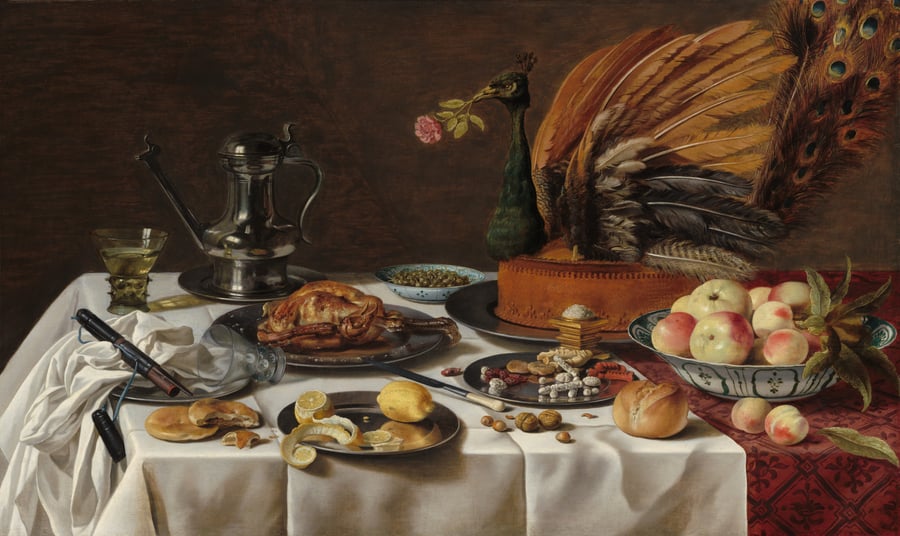
A long table with a white cloth: a tall round pie topped with a peacock's head, wings and tail feathers, a cooked bird on a pewter plate, a bowl of green olives, a pewter jug, a glass of white wine, a bowl of pale yellow and blush-red fruit, bread rolls, nuts, a cut lemon with its peel curling off the plate, and a plate of dried fruit and small baked sweets, some coated in white sugar, at the front.
Pieter Claesz, 1627. Courtesy National Gallery of Art, Washington | CC0
Still Life with Peacock Pie, 1627
A banquet table painted by Pieter Claesz, a still-life painter working in Haarlem, in the Netherlands, in 1627: a peacock pie topped with the bird's own head, wings and tail, a cooked bird, olives, bread rolls and flat biscuits, nuts, peaches and a cut lemon, with a pewter plate of dried fruit and small baked sweets, some coated in sugar, at the front.

The foods in this section are made with honey: cooked into confections, served over pastries, set into desserts. Each page says what the food is, where it comes from, how it is made and what the honey does in it.

Nougat A sweet of honey, egg whites and nuts, cooked soft or hard: torrone in Italy, nougat in France, turrón in Spain and gaz in Iran. Seadas (sebadas) Sardinia's fried semolina pastry, filled with fresh pecorino and eaten hot with strawberry tree or another Sardinian honey poured over it; a dish once made for shepherds coming home. Panna Cotta with Honey (Panna cotta al miele) Piedmont's eggless cream dessert, set with gelatin, served with honey instead of caramel: the honey is never cooked, so a mild acacia or a stronger honeydew comes through.