
Heather Honey
There are two distinct types of single flower heather honey. One is from a single species, Ling Heather (Calluna vulgaris), a true heather, and the other type is from any of the Erica species. Both the C. vulgaris and all the Erica species belong to the Ericaceae family, but of the two types, Ling Heather honey is considered true “Heather Honey,” and it is quite different from Erica honey of the Erica species. It is often called Scotch, Summer or Autumn Heather to distinguish it from other Erica species. It is a low growing evergreen native of Europe with a liking for dry acidic soils. Ling Heather is considered a symbol of Scotland and is one of the national flowers of Norway.
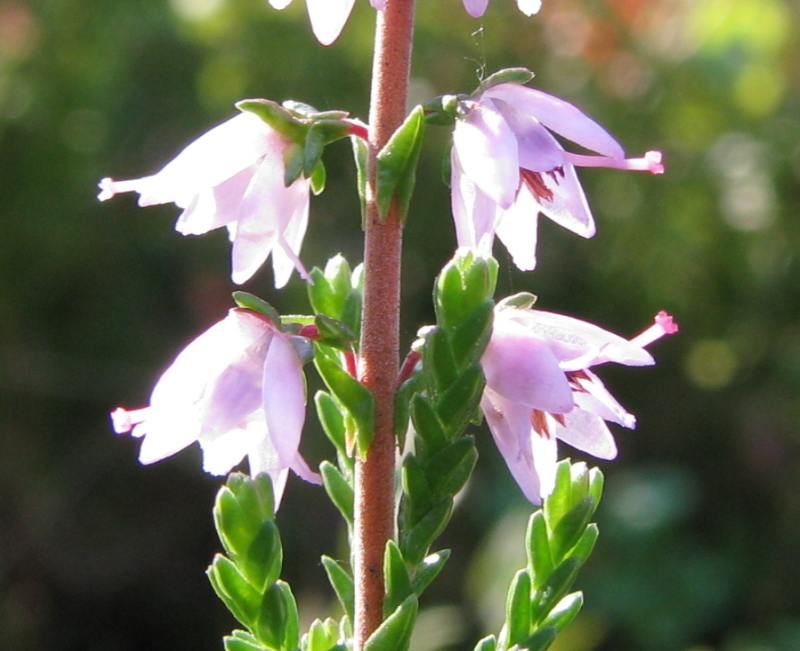
Ling Heather honey has unique sensory qualities and exhibits a gelatinous property called thixotopism. Normally it is gel-like and firm, but it will become temporarily liquid if stirred or agitated.
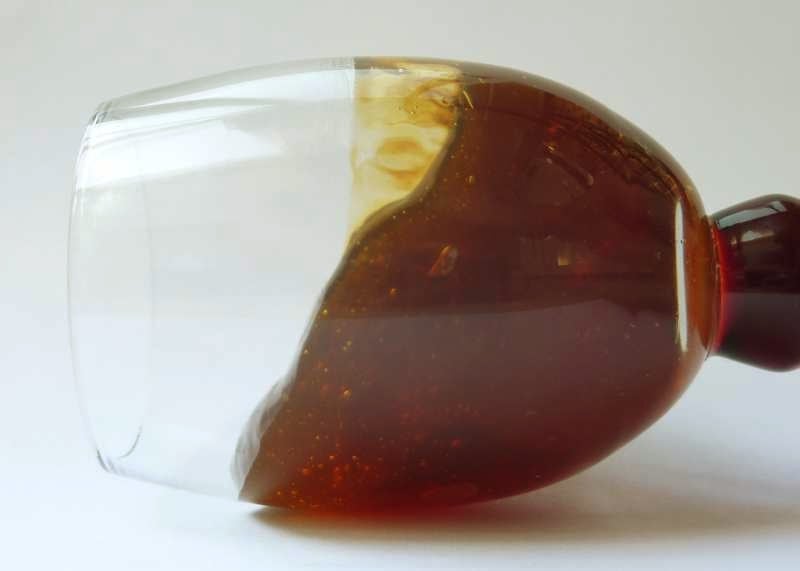
In judging honey, a common test of the purity of Ling honey is to place the opened honey jar on its side to test how quickly it will flow out. Pure Ling Heather honey will stay firmly in place for several minutes. The longer it stays, the purer the honey. Another sign of purity is the presence of small air bubbles trapped in the gel-like honey (a result of pressing to extract the honey), and while it has a bright appearance, it will not be clear.
Honey Heather Sensory Characteristics
Ling Heather honey is reddish/orange to dark amber. It has a slightly bitter, tangy, pungent, smoky, mildly sweet taste that persists for a long time. It has a strong distinctive woody, warm, floral, fresh fruit aroma reminiscent of heather flowers. The crystallization rate is quite slow and in early stages results in a smooth light-colored mass, and if very pure, it may not crystallize at all. Some beekeepers feel that the purest Heather Honey comes from higher moors (British Bee Journal April 4, 1912).Another unusual characteristic of heather honey is its normally high moisture content, usually associated with fermentation. It is sometimes as high as 25% but it is usually between 19