
Portugal Honey
Jump to Regional Travel and Honey Pages
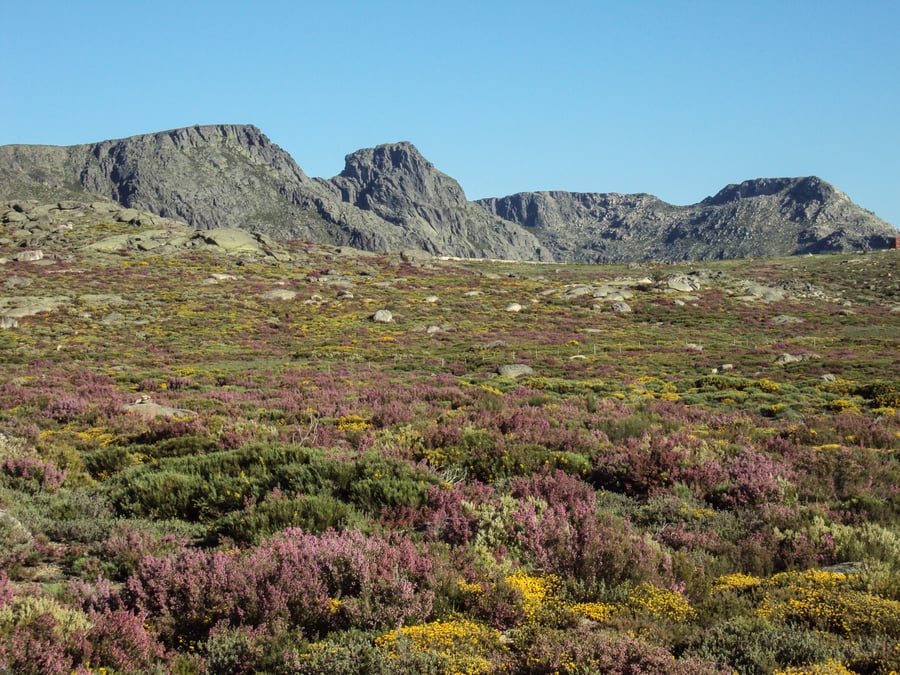
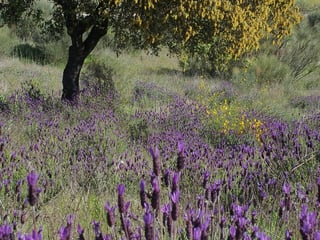
In 1610 Duarte Nunes de Leão, describing the kingdom of Portugal, divided its honey into two kinds. The white honeys came from named places: the country around Lisbon, where they tasted of the roses and orange blossom around them, and the fields of Évora and the Campo de Ourique. The honey of the mato (scrub) was thicker and less white, and it came in great quantity from every part of the kingdom where there was scrub and heath set with rows of hives; where the scrub was myrtle, rosemary or rosmaninho, some of it was very savoury.
Four centuries later the agriculture ministry names wild lavender and heather, with chestnut, as the country’s most emblematic single-flower honeys, and the national beekeepers’ federation says that most of what Portuguese bees work is wild flora, that most apiaries stand on land their keepers do not own, and that the harvest depends entirely on the year’s weather.
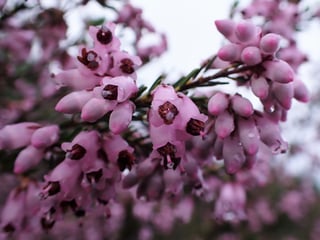
The ministry’s list runs to eleven single-flower honeys, from wild lavender, heather and chestnut to orange blossom and sunflower; two honeydews from oaks are on the federation’s flowering calendar, and the national contest judges eleven floral classes. Heather honey comes from the mountains of the northwest and the centre, chestnut from the high ground around Bragança and Guarda, and wild lavender from the low hills of the eastern interior, from Trás-os-Montes through Castelo Branco to the Alentejo. Eucalyptus flowers in winter. From the oaks of the montado and of the interior hills the bees gather melada, and in the Algarve strawberry-tree honey is taken from the hills in late autumn and orange-blossom honey from the coast in spring.
Wild lavender and heather have an old written record: Leão named the first, and one writer, Gaspar Frutuoso, was calling honey after heather by the 1580s; at the Lisbon honey fair of 1979 heather honey was shown as mel de urze.
The islands have honeys of their own: on the Azores, honey of incenso, an Australian tree, Pittosporum undulatum, that grows on every island; on Madeira, honeys sold under the island’s place names, from a bee population distinct from the mainland’s.
Leão placed the white honeys at Lisbon, Évora, Torres Vedras, Abrantes, the Serra de Minde and the Campo de Ourique, and in the same chapter recorded that cooks had turned from honey to sugar
Leão's chapter on honey and wax opens by saying the kingdom had honey enough for itself and to share with its neighbours, some of it so white and hard that once it had set it looked like very white sugar. The honey of Lisbon and its surroundings tasted of the roses and orange blossom near it, and honey of the same kind came from the fields of Évora, from Torres Vedras, Abrantes and the Serra de Minde, and in quantity from the Campo de Ourique, which he compared to clarified sugar.
The honey of the scrub he set apart: thicker, less white, and found in every part of the kingdom where there was scrub and heath, in many rows of hives, some of it very savoury where the scrub was myrtle, rosemary or rosmaninho. He names rosemary separately, and the Portuguese dictionary of 1720 describes rosmaninho as a lavender. At the end of the chapter Leão turns to sugar: with sugar coming from Madeira, Cabo Verde, São Tomé and Brazil, cooks no longer took the trouble to use honey.
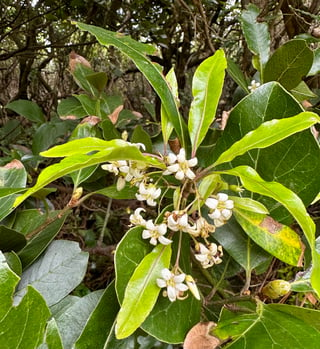
Nine Portuguese honeys hold a DOP. A DOP on the jar means the honey came from a named zone, was made to a written specification and was checked by a control body. Organic honey is sold as biológico under the EU organic rules, which guarantee the hives’ feeding and treatments; organic hives are concentrated in one region. Since 2026 the front of a blended jar has had to name the countries the honey came from.
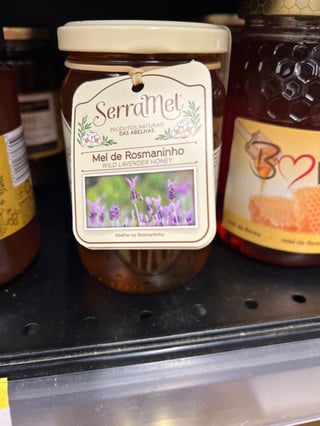
As read in October 2026, Portuguese honey is sold at the counters of the cooperatives that manage the designations, at Lousã and Boticas among them, and in Monchique at the shop of two Algarve producers' associations, beside medronho, the strawberry-tree spirit. In Lisbon a grocer of Azorean produce sells incenso honey, and the national federation’s online shop sells the honeys of five designations side by side. On a Funchal supermarket shelf in October 2026, one chain’s own label was printed “100% Nacional”; the word nacional has no definition in the honey decree.
Honey fairs run from March to November, among them the Feira Nacional do Mel, held in a different town each year. The national contest, the Concurso Nacional de Mel, is judged each spring, and in recent years its honey of the year, the highest score of all, has gone to heather and wild lavender honeys.
Abroad, as read in October 2026, Wild About Honey in Britain has listed a Portuguese wild lavender honey since 2012, Fortnum & Mason in London sells one from Monchique, a wild lavender honey from Penamacor took two stars at Great Taste in 2025, and German shops list Portuguese heather honey by name.
Honeys Portugal Is Known By
- Azores Incenso Honey (Mel dos Açores, Incenso) PDO – The Azores’ protected designation names one flower on its jars, incenso, an Australian pittosporum found on every island, flowering February to April for a pale honey.
- Barroso Heather Honey (Mel de Barroso, Mel de Urze) PDO – Dark heather honey from Barroso, whose protected designation admits only the native Iberian honey bee and allows Mel de Urze on jars rich in heather pollen.
- Serra da Lousã Honey (Mel da Serra da Lousã) PDO – Honey of the wild flora of the mountains around Lousã, harvested as soon as heather and chestnut finish flowering; its designation attributes the strong, slightly astringent taste to heather nectar.
Wild Lavender Honey (Mel de Rosmaninho) – Honey from wild lavenders between Trás-os-Montes and the Algarve, sold under its name by British retailers and awarded in Britain; a small named share of mostly bulk exports.
The only worked designation that makes wild lavender a legal sales name is Terra Quente, ten municipalities in the northeast
The Mel da Terra Quente designation covers ten municipalities of Trás-os-Montes and the upper Douro. It requires wild lavender pollen and allows the sales name Rosmaninho on the jars richest in it. The agriculture ministry's directorate for rural development lists producers working under it in each year from 2020 to 2024.
As read in October 2026, Wild About Honey in Britain sells a wild lavender honey from the Algarve and the Alentejo, and Fortnum & Mason one from Monchique; in Dublin, Fallon & Byrne sells a jar from Penamacor.
- Heather Honey (Mel de Urze, Mel de Queiró) – Dark honey named in Portuguese since the sixteenth century, shown at the Lisbon honey fair in 1979, and a label name in northern protected designations since the 1990s.
History and Tradition
Portuguese honey is made on land that is mostly wild. On the national forest inventory’s field count of 2015, scrub and pasture covered nearly a third of the mainland, the second largest use of the land, and the scrub had grown steadily since 1995. The agriculture ministry describes most of the country’s honey plants as wild species, with chestnut and eucalyptus among the cultivated ones.
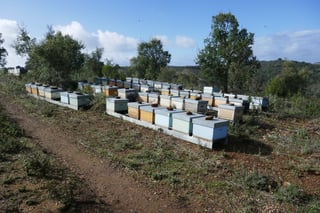
The beekeepers who work this land are mostly small. In the ministry’s figures for 2018 more than half kept fewer than twenty-five hives, while the professionals, about one beekeeper in ten with more than 150 hives each, held most of the country’s hives. The large operations are a southern pattern: beekeepers in the Algarve and the Alentejo kept more hives each than those of any other region. On an estimate the ministry’s programme of 2016 cites, fewer than one beekeeper in ten moves hives to follow the flowering, more often in the districts of Faro and Beja than elsewhere, and the usual moves run from south to north and from the coast inland.
Under a measure of 2024, extended for 2026, the state pays beekeepers who keep their apiaries small and spaced apart, with the pollination of the native flora as its stated aim; the 2026 call is expected to cover about 4,400 beekeepers.
On the federation's flowering calendar some honey plant is in flower in every month of the year
Eucalyptus and rosemary flower from November to March. Wild lavender flowers from February to June, orange blossom from February to April, and heather from March to July, with viper's bugloss from March to June. Chestnut follows in May and June, sunflower from June to August and thistle from July to September. Strawberry tree flowers last, October to December.
The two honeydews are on the same calendar: from the Pyrenean oak in April and again from July to September, and from the holm oak from July to September.
Eucalyptus is a planted forest. Eucalypts reached Europe in the middle of the nineteenth century, and in Portugal their area has grown for fifty years, to about a quarter of the mainland forest in 2015, planted most along the coast of the north, the centre and the Alentejo. The national contest judges eucalyptus honey in a class of its own, and Barroso’s specification sets eucalyptus pollen in its honey below 5 per cent.
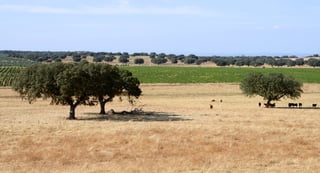
In 2015 the montado covered about a million hectares, a third of the forest, and the national contest judges melada in a class of its own.
Settlers brought bees to the Azores, and a genetic study of 2025 found the bees of every island closer to the Iberian honey bee than to the commercial line Azorean beekeepers brought in from mainland Europe in the 1980s.
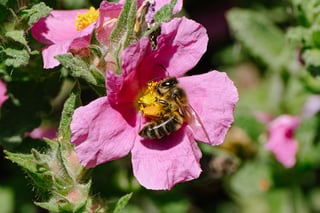
On the mainland the bee is Apis mellifera iberiensis, the Iberian honey bee, which the ministry counts among the sector’s strengths for its hardiness and its fit to Portuguese conditions. A study of drones sampled across the peninsula in 2010 found little mixing with imported lines, and noted that most Iberian beekeepers still raise new colonies by splitting their own rather than buying queens. Barroso’s specification, as amended in 2019, admits only this bee to its apiaries. The national pollinator plan of 2026 sets out to certify and spread queens of the native bee, and the state’s beekeeping programme pays toward buying them; beside them, an association of breeders of the Buckfast, a hybrid line, has worked across the country since 2012.
More than half of that programme’s money each year is allocated to the varroa mite, first detected in Portugal in 1986; the state veterinary service’s plan of 2026 treats it as endemic on the mainland and requires most beekeepers to treat every colony against it at least twice a year.
The yellow-legged hornet, a predator of bees first confirmed in Portugal in 2011, was in every part of the country by 2024, the secretary-general of the Federação Nacional dos Apicultores de Portugal (FNAP), the national beekeepers’ federation, said that year, and on the federation’s estimate 20 to 30 per cent of hives were failing to come through the winter because of it.
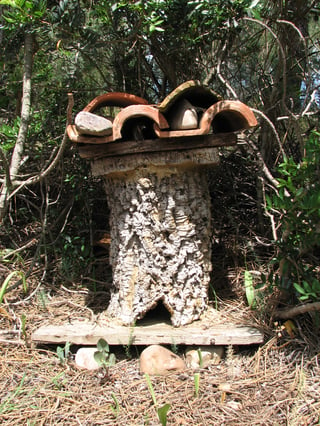
For centuries the cortiço was the hive Portuguese beekeepers preferred. One gave two or three litres of honey a year and a little wax at the cresta, the honey harvest, and the honey left in the wax, boiled in water, gave água-mel, a syrup of the hive and not a honey, which Slow Food’s Ark of Taste lists for the Alentejo and the Algarve.
The first national survey of hives, in 1933 to 1935, still counted 432,772 cortiços against 12,360 frame hives. Apicultura mobilista (movable-frame beekeeping) had reached Portugal in the 1870s, a beekeeping society was founded in Lisbon, the first of its kind on record in the country, and in about 1921 Padre Manuel Tavares de Sousa began a hive-making industry at Rio Mau, near Penafiel, where the Lusitana was made. He designed the hive after he reportedly travelled to the United States and judged the Langstroth and the Dadant, the standard frame hives, too heavy to handle when full.
The Lusitana is still one of the main hives, found mostly in the north, with the Reversível, a Portuguese frame hive, mostly in the south and the Langstroth in the centre and Bragança. The cortiço has not disappeared: in the ministry’s programme of 2016, cortiços and small starter colonies together were about one hive in twenty, with the most weight in the centre and the north.
In the fifteenth century the lord of Sarzedas, near Castelo Branco, taxed twenty-eight rows of hives, all but one in wax
A silha is a row of hive seats, the word Leão used in 1610 for the rows of hives in the scrub. Eduardo Sequeira's beekeeping manual of 1900 gives the word two senses: in the north the whole apiary, enclosed by circular walls, and in the south each row of hive seats within it.
At Sarzedas in the mid-fifteenth century a tax roll titled for the silhas charged 28 of them a yearly due, all but one paid in wax, and the word is in Sarzedas's charter of 1512. At Serpa in 1368 the judges and the beekeepers agreed to set out 26 malhadas, apiaries with their keepers' dwellings and pasture, of close to 10,000 hives between them, and at Mata de Botão some held the privilege of taking cork to build hives. The charters of the Castelo Branco region in the early sixteenth century call bees "gaado do vento", livestock of the wind.
Muros-apiários (stone-walled apiaries) have been surveyed from the Gerês to the Alqueva. Archaeologists recorded 26 in the middle Tejo basin, and found some in use until a few years before their survey of 1999-2000, with cortiços and frame hives, chiefly in the basin of the Ponsul.
All nine Portuguese honey designations were registered with the European Union together, on 21 June 1996, and none has been added since. Each is a place name, from the Minho highlands to Monchique and the Azores. On the January 2025 list of the Direção-Geral de Agricultura e Desenvolvimento Rural (DGADR), the agriculture ministry’s directorate for rural development, the worked designations are managed by local groups, many of them cooperatives; Monchique and the Minho highlands have none. Certified honey is a small share of the crop: DGADR counted about sixteen tonnes certified in its survey of 2020, against a national crop of almost ten thousand. Its lists for the six years from 2020 show producers working under five of the nine names, those of the Serra da Lousã, the Azores and Barroso in every year.
Most of the crop is sold in bulk: about seven-tenths of it, on the estimate FNAP gave in January 2025. In 2024 Portugal imported about as much honey as it harvested, more than half of it from China, and exported more than it harvested, most of it to Spain.
FNAP and a Spanish farmers' union both say honey imported into Portugal leaves again for Spain
In January 2025 FNAP said that since 2017 Portugal has exported honey at lower average prices than it imports, which it reads as evidence that many imports are re-exported, and that this lowers demand for the Portuguese bulk honey, into which most of the crop is sold. In 2018 the federation said that honey landed at the port of Leixões for one of the largest Spanish honey companies, based in Salamanca, could make imports for Portuguese consumption look larger than they were.
COAG, the Spanish farmers' and stockbreeders' organisation, wrote of 2021 that Spanish industry continued to bring Chinese honey into Spain through Portugal, which was again Spain's main supplier; in July 2026 it reported Portugal as Spain's main supplier once more for the first quarter of the year.
The size of the crop changes with the weather. Output fell by about a fifth from 2022 to 2023; in June 2023 FNAP’s president spoke of the worst crisis in forty years, with hives yielding about two and a half kilos against nine in a normal year, and in the same drought, FNAP’s secretary-general said, scrub cleared by 15 April left bees in the forest areas six months without forage. The harvest was back above 12,000 tonnes in 2024.
Fire burns forage and hives together. The fires of June 2017 around Pedrógão Grande burned at least 30 per cent of the forage of the Serra da Lousã designation, by its cooperative’s count, and in August 2025 a preliminary estimate reported by Lusa put the hives burned in Lousamel’s area at close to a thousand. The fire law of 2021 bars beekeepers from using fire in their apiaries on days of very high or maximum fire danger, and in the same clause that allows cork to be stripped by hand on those days it allows the cresta, provided the smoker burns nothing smouldering.
Quality and Standards
A jar sold in Portugal as mel is honey as the EU honey directive defines it. Decreto-Lei 214/2003 wrote that directive into Portuguese law, and Decreto-Lei 136/2025 is the latest of its amendments. Since 1 July 2021 a blend packed in Portugal has had to name every country its honey came from; since 14 June 2026 each country is printed on the front of the jar in order of its share, with the percentage beside it, and jars labelled before that date may be sold until stocks run out. The 2025 decree also bars removing the pollen from honey, except where that cannot be avoided in removing foreign matter. The Azores write their own honey law, Decreto Legislativo Regional 24/2007/A, amended in 2022.
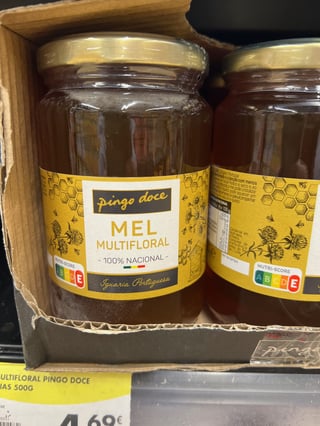
A jar may carry a flower’s name when the honey comes wholly or mainly from that plant and has its character; the decree sets no pollen percentage, so the test falls to the packer and the inspector. A place name is allowed only when all the honey comes from that place. A jar packed by the beekeeper from his own hives carries his registration number; a jar packed in an approved establishment carries an identification mark. Cru (raw), artesanal, silvestre (wild), natural, puro, mel de cortiço and nacional have no definition in the decree and are held only to the general ban on misleading labels. A study published in 2022 of 51 jars sold as single-flower honeys found about half of them single-flower by their pollen.
The nine designations are where a flower’s name has a legal threshold. The specifications of Barroso and of the Minho highlands allow Mel de Urze or Mel de Queiró above a heather pollen floor; the Azores allow Incenso for honey made mainly from that tree; Terra Quente allows Rosmaninho on the jars richest in wild lavender pollen; and the Alentejo specification lists four flowers. A designated jar is marked as its specification requires: at Lousã with the producer group’s numbered seal, at Barroso with the name of its control body, and on the Azores with the control body’s mark. DGADR’s operator lists for 2020 to 2025 show producers under control for the Serra da Lousã, the Azores and Barroso, and in some of those years for Terra Quente and Ribatejo Norte.
Every beekeeper registers with the state veterinary service, declares the number of colonies each September and marks each apiary with a registration number. A controlled zone, granted to a beekeepers' organisation that holds most of the beekeepers or hives of its area, needs prior authorisation for any bees brought in. The Azores’ regional law of 2022 requires veterinary authorisation to bring bees or bumblebees into the islands or to move them between islands, and bars bees, used hives and natural hives from any place of lower health status. The varroa mite reached Pico in 2000, through illegal imports, after which the islands banned bringing bees in; it reached Flores in 2001 and Faial in 2008. Since 2019 the European Union has recognised the other six islands, Santa Maria, São Miguel, Terceira, Graciosa, São Jorge and Corvo, as free of it.
Enforcement sits with the Autoridade de Segurança Alimentar e Económica (ASAE), the food and economic safety authority, which named honey a priority of its 2025 fraud plan. In July 2025 its Operação Mellifera inspected 17 producers, seized about three tonnes and found missing traceability papers, hygiene failures and no food-safety plan; in the weeks before 12 November 2025 it seized more than five tonnes at Évora and Aljustrel from a beekeeper’s packing unit that was packing honey bought from others as its own, under a forged control number.
On Madeira, mel-de-cana is cane syrup, not honey: Madeirans called it mel for almost six centuries, the producers took the name mel-de-cana when European law reserved mel for the bees’ product, and it has had national transitional protection as a designation of origin since 2022. Madeira’s bolo de mel, the island’s dark cake, is made with it.
Specialty Retailers
- Beeland, Mel de Portugal (online, 2025). The online shop of the national beekeepers’ federation, built with the research laboratory MORE CoLAB, where, as read in October 2026, the stores of five designation groups and packers sell their honeys side by side, from Barroso, Montesinho and the Terra Quente in the north to the Serra da Lousã and the Ribatejo Norte in the centre.
- Lousamel (Lousã, Serra da Lousã, 1988). The cooperative that manages the Mel da Serra da Lousã designation; its shop in the Matinhos industrial zone sells the designated honey beside hive equipment, open, as read in October 2026, weekdays from nine to six and Saturday mornings.
- APAGARBE, Loja do Mel e do Medronho (Monchique, Algarve). The shop of two Algarve producers’ associations, APAGARBE and APILGARBE, open all year and selling, as read in October 2026, members’ honey beside medronho, the strawberry-tree spirit.
- Mercearia dos Açores (Lisbon, the Baixa and Picoas). A grocer of Azorean produce on the mainland, selling, as read in October 2026, an organic incenso honey and the Azores multiflora honey of the Mel dos Açores designation.
- Parques de Sintra, Mel Condessa d’Edla (Sintra, near Lisbon, 2023). As read in October 2026, honey from 165 hives in the parks of Sintra, where King Ferdinand II had hives installed in the Pena park in 1877, revived in 2023 and sold in the parks’ shops.
Competition Record
- Concurso Nacional de Mel 2026, Mel do Ano (honey of the year, the highest score overall) and Ouro (gold), Rosmaninho (wild lavender) – Apijardins (Castelo Branco).
- Concurso Nacional de Mel 2026, Ouro (gold), Rosmaninho (wild lavender) – Margens do Alqueva, Joaquim Farófia (Reguengos).
- Concurso Nacional de Mel 2026, Ouro (gold), Rosmaninho (wild lavender), organic – Espécie, 23 Espécies Lda (Vimioso).
- Concurso Nacional de Mel 2025, Platina (platinum), the year’s only one, Rosmaninho (wild lavender) – Apijardins (Castelo Branco).
- Concurso Nacional de Mel 2024, Mel do Ano (honey of the year), Rosmaninho (wild lavender) – Vale da Sarvinda (Vila Velha de Ródão).
- Concurso Nacional de Mel 2023, Mel do Ano (honey of the year) and Ouro (gold), Mel de Urzes (heather) – Casa das Chãs, Brand Best Unip. Lda. (Cabril, Castro Daire).
- Concurso Nacional de Mel 2021, Mel do Ano (honey of the year), Urze (heather) – Mel do Barroso DOP, CAPOLIB, Cooperativa Agro Rural de Boticas (Boticas).
- Great Taste 2025, 2 stars – Serramel Wild Lavender Honey, Euromel, Lda (Penamacor). The Guild of Fine Food’s awards, Britain.
Festivals and Events
- Feira Nacional do Mel – a different town each year, with the Fórum Nacional de Apicultura alongside it; Mogadouro, Trás-os-Montes, from 13 to 15 November 2026. The national beekeepers’ federation’s fair, trade stands and a seminar programme; the forum it travels with was first held at Mértola in 1998.
- Feira do Mel e da Castanha da Lousã – Lousã, below the Serra da Lousã, late November (21 to 23 November 2025 for the 34th edition). Honey and chestnuts in the town of the mountain designation’s cooperative, with more than 120 exhibitors.
- ZimbraMel – Maçã, Sesimbra, on the Setúbal peninsula, the last weekend of August (28 to 30 August 2026 for the 27th edition). The peninsula’s honey fair since 1999, with a honey contest on the Saturday morning and a mead workshop and tasting.
- Feira da Aguardente e do Mel – Cortelha, Salir, in the Algarve hills above Loulé, one day in March (14 March 2026). Honey and medronho, the strawberry-tree spirit, from the village’s own producers, with a walk past the stills; run by the Associação dos Amigos da Cortelha.
Illustrative Links
Links in other languages show a
 icon. Click the icon to open via Google Translate in a new tab -- close the tab to return. Click the link itself to visit the original site directly.
-
Mel dos Açores DOP – The state’s page for the Azores designation, with the incenso honey of Pittosporum undulatum and its season. (DGADR, Produtos Tradicionais Portugueses)
-
Mel de Barroso DOP – The state’s page for the Barroso designation, a honey of the heathers, with its zone of Boticas, Chaves, Montalegre and Vila Pouca de Aguiar. (DGADR, Produtos Tradicionais Portugueses)
-
Concurso Nacional de Mel 2026 – The national honey contest’s 17th edition, judged at Santarém in April 2026 with the national exhibition centre, CNEMA, and the national agriculture fair. (Federação Nacional dos Apicultores de Portugal)
-
Descripção do Reino de Portugal, 1610 – Duarte Nunes de Leão’s description of the kingdom, in whose chapter on honey and wax Leão sorts the country’s honeys by place and plant, in the national library’s digital copy. (Biblioteca Nacional Digital)
-
Acerca de colmeias e colmeeiros na Idade Média – Miguel Maia’s study of medieval Portuguese hives and their keepers, from Serpa’s close to 10,000 hives of 1368 to hive rows taxed in wax. (Medievalista 39 (2026))
-
Decreto-Lei 82/2021, the rural fire law – The consolidated fire law, whose article 69 allows the cresta, the honey harvest, on days of very high or maximum fire danger in the same clause as stripping cork by hand. (Procuradoria-Geral Distrital de Lisboa)
See also
Further Reading
- As abelhas: tratado de apicultura mobilista – Eduardo Sequeira (Magalhães & Moniz, Porto, 1900): The book that Alberto Velloso de Araújo, lecturing at the Ateneu Comercial do Porto in 1896, called the first in Portuguese on its subject, as Teresa Soeiro’s history of the craft records; first published in 1895, in the years when the frame hive began to replace the cortiço.
Sources
81 Sources - Click here to display
- Gabinete de Planeamento, Políticas e Administração Geral (2016). Programa Apícola Nacional 2017-2019.
- Gabinete de Planeamento, Políticas e Administração Geral (2020). Análise setorial Apicultura.
- Instituto da Conservação da Natureza e das Florestas (2019). 6.º Inventário Florestal Nacional, principais resultados.
- Instituto Nacional de Estatística (2026). Produção de mel, indicator 0000924, updated 9 July 2026.
- Eurostat (2026). International trade in goods, honey (CN 0409), Portugal, 2010-2025.
- Direção-Geral de Agricultura e Desenvolvimento Rural (2020-2026). Produtos Tradicionais Portugueses: Mel, Bolo de Mel da Madeira; operator lists by product with DOP/IGP/ETG, 2020 to 2025; Agrupamentos e Organismos Delegados, January 2025.
- Direção-Geral de Agricultura e Desenvolvimento Rural (2020). Resultados do Inquérito aos Agrupamentos, DOP, IGP e ETG, 2020.
- Direção-Geral de Agricultura e Desenvolvimento Rural (2026). Caderno de especificações, Mel-de-Cana da Madeira, denominação de origem.
- European Commission (2026). eAmbrosia, the EU geographical indications register: the nine Portuguese honey PDOs, registered 21 June 1996 under Regulation (EC) No 1107/96, and their amendments.
- Lousamel (2025). Caderno de especificações, Mel da Serra da Lousã DOP, as amended 2025.
- CAPOLIB, Cooperativa Agrícola de Boticas (2019). Caderno de especificações, Mel de Barroso DOP, as amended 31 July 2019 (PDO-PT-0229-AM02).
- IAMA, Região Autónoma dos Açores (2025). Caderno de especificações, Mel dos Açores DOP, as published 2025.
- Cooperativa Agrícola de Alfândega da Fé, Secção Apícola (2026). Caderno de especificações, Mel da Terra Quente DOP, as posted by DGADR.
- FAFEMEL, Cooperativa dos Produtores de Mel de Fafe (1993). Caderno de especificações, Mel das Terras Altas do Minho DOP.
- Evoramel, CRL, Cooperativa Apícola do Alentejo (2026). Caderno de especificações, Mel do Alentejo DOP, as posted by DGADR.
- República Portuguesa (2003). Decreto-Lei 214/2003, de 18 de setembro.
- República Portuguesa (2005). Decreto-Lei 203/2005.
- República Portuguesa (2021). Decreto-Lei 2/2021, de 7 de janeiro.
- República Portuguesa (2021). Decreto-Lei 82/2021, de 13 de outubro.
- República Portuguesa (2023). Portaria 54-G/2023, de 27 de fevereiro.
- República Portuguesa (2024). Portaria 171/2024/1.
- República Portuguesa (2025). Decreto-Lei 136/2025, de 24 de dezembro.
- República Portuguesa (2026). Despacho 4214/2026.
- Região Autónoma dos Açores (2007). Decreto Legislativo Regional 24/2007/A.
- Região Autónoma dos Açores (2022). Decreto Legislativo Regional 17/2022/A.
- Região Autónoma da Madeira (2020). Decreto Legislativo Regional n.º 16/2020/M (apicultura). Jornal Oficial da Região Autónoma da Madeira.
- Região Autónoma da Madeira (2022). Despacho n.º 1/2022/M (Mel-de-Cana da Madeira, denominação de origem). Jornal Oficial da Região Autónoma da Madeira.
- European Union (2018). Regulation (EU) 2018/848 on organic production and labelling of organic products.
- Direção-Geral de Alimentação e Veterinária (2021). Programa Sanitário Apícola 2021.
- Direção-Geral de Alimentação e Veterinária (2026). Mel: rastreabilidade e rotulagem.
- Direção-Geral de Alimentação e Veterinária (2026). Plano de Luta contra a Varroose, version of 13 May 2026.
- Direção-Geral de Alimentação e Veterinária and Instituto da Conservação da Natureza e das Florestas (2015). Plano de Ação para a Vigilância e Controlo da Vespa velutina em Portugal.
- Autoridade de Segurança Alimentar e Económica (2025). ASAEnews 133, October 2025, on honey fraud enforcement and Operação Mellifera.
- Qualfood (2025). ASAE apreende cinco toneladas de mel por práticas fraudulentas, 12 November 2025.
- Governo de Portugal (2026). Apoios à apicultura prolongados por mais um ano, news release.
- Federação Nacional dos Apicultores de Portugal (2017-2026). Concurso Nacional de Mel regulations and results, 2017 to 2026; Feira Nacional do Mel and Fórum Nacional de Apicultura; Projecto Água-mel.
- Centro Nacional de Exposições e Mercados Agrícolas (2025, 2026). Concurso Nacional de Mel results, 2025 and 2026.
- Confederação dos Agricultores de Portugal (2024). Anuário do Sector Agroalimentar de Portugal 2024, chapter 3.4, Mel, with an interview of João Diogo Casaca, FNAP.
- Lusa, via SIC Notícias (2017). Incêndios queimam milhares de colmeias e deixam mel certificado da Lousã em risco, 29 June 2017.
- Lusa, via RTP (2023). Apicultores queixam-se que setor do mel está a passar a pior crise em 40 anos, 12 June 2023.
- Lusa, via SIC Notícias (2025). Apicultores protestam em Lisboa contra fraudes na importação de mel, 28 January 2025.
- Lusa, via Observador (2025). Incêndios. Cerca de 60% dos associados da cooperativa Lousamel afetados pelos fogos, 21 August 2025.
- Forbes Portugal (2018). Saltar fronteiras, 11 September 2018.
- Coordinadora de Organizaciones de Agricultores y Ganaderos (2022). Balance comercio exterior miel, año 2021.
- El Debate (2026). Report of COAG’s first-quarter 2026 honey trade balance, 14 July 2026.
- Diário de Lisboa (1979). Report of the XIX Feira do Mel de Lisboa, Sociedade dos Apicultores de Portugal, 17 December 1979; Casa Comum digitisation, Fundação Mário Soares.
- Fondazione Slow Food per la Biodiversità (2026). Ark of Taste: Água-mel, Portugal.
- Leão, D. N. de (1610). Descripção do Reino de Portugal. Lisboa: Jorge Rodriguez. Chapter XXVII, Do mel & cera, fol. 52-52v.
- Bluteau, R. (1712-1728). Vocabulario Portuguez e Latino, vol. 7 (1720), s.v. Rosmaninho. Lisboa: Officina de Pascoal da Sylva.
- Frutuoso, G. (c. 1586-1590). Saudades da Terra, Livro IV. Ponta Delgada: Instituto Cultural de Ponta Delgada, 1998 edition.
- Maia, M. (2026). Acerca de colmeias e colmeeiros na Idade Média (séculos XIII-XV). Medievalista, 39. doi:10.34619/k0ku-tbfj
- Henriques, F., Caninas, J. C., Branco Correia, F., Santos, C., and Gardete, J. J. (1999-2000). Muros-apiários da bacia do médio Tejo (regiões de Castelo Branco e Cáceres). Ibn Maruan, 9/10, 329-363.
- Soeiro, T. (2006-2007). Em busca do doce sabor. Portvgalia, Nova Série, 27-28, 119-158.
- Sequeira, E. (1900). As abelhas: tratado de apicultura mobilista. Porto: Magalhães & Moniz.
- Yadro Garcia, C. A., et al. (2025). Contrasting whole-genome diversity patterns and adaptation in honeybees from two southern European glacial refugia. iScience, 29(1), 114497. doi:10.1016/j.isci.2025.114497
- Henriques, D., Lopes, A. R., Low, M., and Pinto, M. A. (2025). Human-mediated introgression and Varroa destructor shaped the genetic structure of honey bee populations in the Azores. Scientific Reports, 15, 25217. doi:10.1038/s41598-025-08950-y
- De la Rúa, P., Galián, J., Pedersen, B. V., and Serrano, J. (2006). Molecular characterization and population structure of Apis mellifera from Madeira and the Azores. Apidologie, 37(6), 699-708. doi:10.1051/apido:2006044
- Cipriano, C. S. L. (2022). A incidência da varroose no arquipélago dos Açores entre os anos 2008 e 2020. Licenciatura report, Universidade dos Açores.
- Pires, S., Murilhas, A., Pereira, O., and Maia, M. (2005). Current effectiveness of amitraz against Varroa in Portugal. 39th Apimondia International Apicultural Congress, Ireland.
- Machado, A. M., et al. (2022). Quality assessment of Portuguese monofloral honeys: physicochemical parameters as tools in botanical source differentiation. Food Research International, 157, 111362. doi:10.1016/j.foodres.2022.111362
- Universidade de Trás-os-Montes e Alto Douro (2026). Jardim Botânico, Flora Digital: Eucalyptus globulus.
- Universidade de Coimbra and Escola Superior Agrária de Coimbra (2026). invasoras.pt, invasive plant species page: Pittosporum undulatum.
- Florestas.pt (2020). Quais as espécies que estão na origem do mel português?, 10 March 2020.
- Guild of Fine Food (2026). Great Taste directory: Serramel Wild Lavender Honey, Euromel, Lda.
- Wild About Honey (2026). Raw Algarvian Wild Lavender Honey - Rosmaninho, product listing, first published 16 December 2012.
- Fortnum & Mason (2026). Portuguese Wild Lavender Honey, 200g, product listing.
- Fallon & Byrne (2026). Serramel Lavender Honey, 500g, product listing.
- Feiner Käse Hemmen (2026). Honig Heideblüten Portugal, 500g Glas, product listing.
- Ovinho, O Vinho Portugal Import (2026). Heidehonig Santa Maria 500gr Bio Nordportugal, product listing.
- Mercearia dos Açores (2026). Mel Atlântico de Incenso Bio 500g Anti-Gota - Ribeira Grande and Mel Multiflora DOP 500g Fruter - Ilha Terceira, product listings.
- Beeland (2026). Loja Mel Portugal, home and store-listing pages.
- Lousamel, CRL (2026). Home page and online shop, Zona Industrial dos Matinhos, Lousã.
- CAPOLIB, Cooperativa Agrícola de Boticas (2026). Online shop and news pages on Mel de Barroso, Boticas.
- APAGARBE, Loja do Mel e do Medronho (2026). Shop listing on Visit Monchique, Monchique.
- Parques de Sintra - Monte da Lua (2026). Mel Condessa d’Edla, project page, Sintra.
- Associação Buckfast Portugal (2026). Home page, Melgaço.
- Câmara Municipal da Lousã (2025). Feira do Mel e da Castanha da Lousã, 34th edition, event page.
- Câmara Municipal de Sesimbra (2026). ZimbraMel, Feira do Mel da Península de Setúbal, 2026 edition page.
- Barlavento (2026). Feira da Aguardente e do Mel at Cortelha, 5 March 2026.
- HoneyTraveler (2026). Field photographs, Pingo Doce Super Anadia, Funchal, 16 October 2026.
- HoneyTraveler (2026). Field photographs, A Charola, Loja 15, Mercado dos Lavradores, Funchal, 24 October 2026.