
Soyogo Honey (ソヨゴ蜂蜜)
The Story
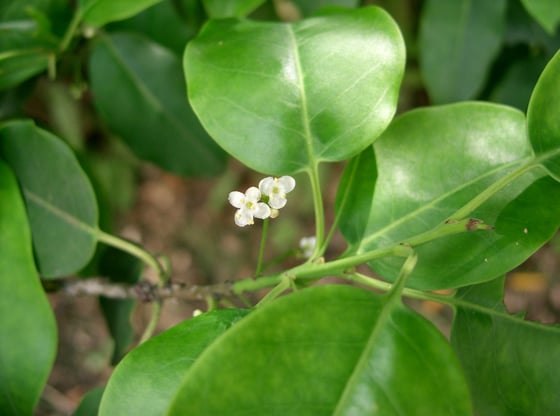
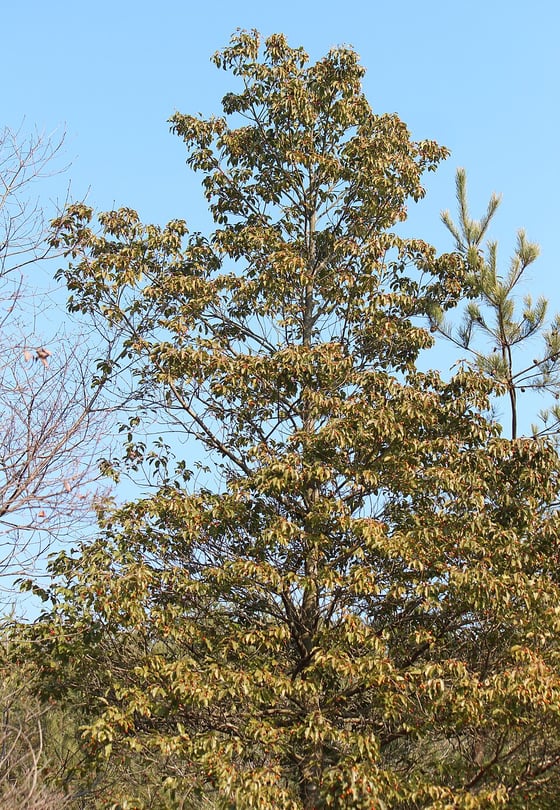
In the mountain forests of eastern Gifu, a holly called soyogo blooms in early June. The flowers are white and barely four millimeters across – small enough to be invisible at any distance – but the nectar they produce is abundant, and the bees working the Tono satoyama zone find them by the thousand. Soyogo (Ilex pedunculosa, 冬青) grows along forest margins and dry ridgeline thickets across western Honshu, but the Tono plateau – the mountain country centered on Ena City (恵那市) and Mizunami City (瑞浪市) – carries one of the densest natural stands in Japan. For stationary beekeepers here, it is the June honey.
The tree has other lives in Japanese material culture. Its dense, cream-colored wood was worked into abacus beads (そろばんの珠) and comb teeth, its leaves yield a tannin-brown dye, and in cold-climate regions where true sakaki cannot survive, soyogo stands at household shrines in its place – the ritual tree at the boundary between human and sacred. It carries the flower language 先見の明: foresight.
The honey is deep orange, smooth, and full-bodied, with a herbal freshness unusual among Japanese tree honeys. Multiple producers describe the aftertaste as resembling a herb candy – clean, lingering, and distinctive. Production is concentrated in the Tono zone of eastern Gifu, with smaller documented production across Nagano, Hiroshima, and wider western Japan.
Characteristics
A monofloral honey from one of Japan’s most ecologically specific nectar sources. Soyogo flowers for two to three weeks in early June, occupying a gap in the Tono seasonal honey calendar between acacia and summer wildflower flows. Stationary beekeeping (定置養蜂) is standard practice in the region; hives stay in one location year-round, allowing beekeepers to time extraction precisely to the soyogo window. Honey is extracted in early June before later summer species open. Brix 79-81 degrees at documented producers – fully matured, unheated. Color is deep orange to amber. Texture is smooth and fluid. Used in mead production by at least one Tono producer. Buyers should note that mochi honey (モチノキはちみつ, from Ilex integra – a related species in the same genus) is considered nearly identical in flavor profile by Japanese producers. Both are Aquifoliaceae family honeys with similar herbal-sweet character; pollen analysis is the reliable distinction between them. Regional flavor variation exists: Gifu producers describe the honey as having a deep, wild herbal richness; Nagano-sourced soyogo (documented by Kyoto specialist retailer Dorato) is described as butter-caramel in character – toasted sweetness with less herbal edge. Both expressions are genuine.
Click to Display — The Details: botanical origin, sensory profile, and its regional identity
Botanical Name: Ilex pedunculosa -- soyogo (冬青)
Botanical Family: Aquifoliaceae
Bee Species:
Western honeybee (Apis mellifera) – standard for commercial monofloral production in the Tono region. Nihon mitsubachi (Apis cerana japonica) also forages soyogo but is not the source of commercially labeled monofloral soyogo honey.
Color:
Deep orange to amber; unusually rich in color among Japanese mountain honeys
Flavor Profile:
Clean, full sweetness with herbal freshness. Smooth, fluid texture. Aftertaste is a lingering floral note described by Tono producers as similar to a herbal candy – refreshing and persistent without sharpness. Neither cloying nor light.
Tasting Notes:
Initial entry is clean and direct with full sweetness. Mid-palate carries an herbal freshness. Finish is lingering and floral, settling without sharpness. The combination of body and refreshing quality is unusual: most Japanese monofloral tree honeys emphasize either weight (tochinoki, soba) or delicacy (acacia, renge). Soyogo occupies a different position – full but not heavy, herbal but not medicinal.
Aroma:
Herbal and faintly floral; a light menthol-like freshness not common in Japanese tree honeys
Forage Origin:
Soyogo (冬青, Ilex pedunculosa), a slow-growing dioecious evergreen holly of the family Aquifoliaceae. Native to the mountain forests of western Honshu, Shikoku, and Kyushu, as well as Taiwan. Grows in forest margins and dry ridgeline thickets in the satoyama zone. Flowers are white, 4-5 mm diameter, produced in late May through mid-June. Despite their small size they yield abundant nectar. The tree is dioecious – only female trees produce flowers with full nectar. The Tono region of eastern Gifu Prefecture carries one of the densest natural populations in Japan.
Pairings:
Yogurt and fresh dairy; pancakes; mild aged cheeses; coffee and black tea
Origin Story
Soyogo has a material history in Japan that precedes its recognition as a honey source. The dense, slow-grown wood was used for abacus beads (そろばんの珠), combs (くし), and tool handles – the classical alias 具柄冬青 (tool-handle winter-green) records this directly. In cold-climate regions of Honshu where true sakaki (Cleyera japonica) cannot survive, soyogo steps into the role of shinboku – a sacred tree designated as yorishiro, a physical vessel for kami. Bound with shimenawa and planted in the chinju no mori of local shrines, it stands at household altars for births, marriages, and seasonal rites. The kanji name 冬青 (winter-green) reflects its year-round evergreen persistence. Its flower language is 先見の明 – foresight – attributed to the durability of its thick leaves through drought and cold.
Its use as a monofloral honey source is relatively recent. The Tono zone of eastern Gifu – where soyogo stands are unusually dense – is the primary commercial concentration, with production documented across western Japan wherever the tree is abundant, including Hiroshima and Nagano Prefectures. Chinese production exists given the tree’s range, though Japan is the primary market source. Hori Bee Farm (堀養蜂園) in Ena City identifies soyogo as their primary honey. The beekeeper, Hori Takayuki, studied under a licensed tree doctor (樹木医) before founding the farm – an unusual credential for a beekeeper.
Cultural Context
Soyogo occupies an unusual position in Japanese material culture for a honey- producing tree. As a sakaki substitute in Shinto ritual, it serves as shinboku – a yorishiro, a tree that houses kami. Marked with shimenawa and rooted in the chinju no mori, it holds the boundary between human settlement and the sacred in communities where true sakaki cannot survive. Its wood was worked into abacus beads and combs. Its leaves yield a tannin- brown dye used in traditional textile work. The flower language assigned to it – 先見の明, foresight – reflects the tree’s resilience. None of this cultural weight appears in the retail description of the honey, but the tree carrying it is the same tree that produced the June harvest.
Harvest & Forage
Bloom window: late May through mid-June, with peak in early June. Extraction is timed to early June before later summer nectar sources open. Stationary beekeeping (定置養蜂) is the standard practice here. No published pollen dominance data was available from documented sources for this honey.
Beekeeping Context
Stationary (定置養蜂) beekeeping across the satoyama landscape of Ena City and Mizunami City, Gifu Prefecture. Hori Bee Farm operates 230 hive groups at fixed sites. The seasonal Tono honey calendar follows the mountain flower sequence: yamashakura (mountain cherry) in spring, uwamizuzakura (common bird cherry), acacia, soyogo in June, yuzu in autumn. The same beekeeper profile – small-scale, single-location, quality-focused – is consistent across the other documented soyogo producers in the region.
Named Producers
Hori Bee Farm (堀養蜂園) – Ena City (恵那市) and Mizunami City (瑞浪市), Gifu Prefecture. Stationary beekeeper, 230 hive groups. Soyogo is listed as their primary honey. Acacia honey from this farm received the Gifu Governor’s Award. Distributed through Mitsukoshi Isetan.
Bee Farm Asano (BEE FARM ASANO) – Gifu Prefecture, Tono region. Lists soyogo as the most abundantly harvested honey from their location.
Kanonohachi (かの蜂) – National specialty honey retailer. Stocks soyogo honey from Gifu with detailed flavor documentation.
Translations
- ソヨゴ蜂蜜 (soyogo hachimitsu) – the standard Japanese commercial label
- ソヨゴはちみつ – alternate kana form seen in some retail listings
- Soyogo honey – English; no established international equivalent exists
- 冬青蜜 (tousei-mitsu) – rare written form using the kanji name for the tree