
Canada Honey
Jump to Regional Travel and Honey Pages
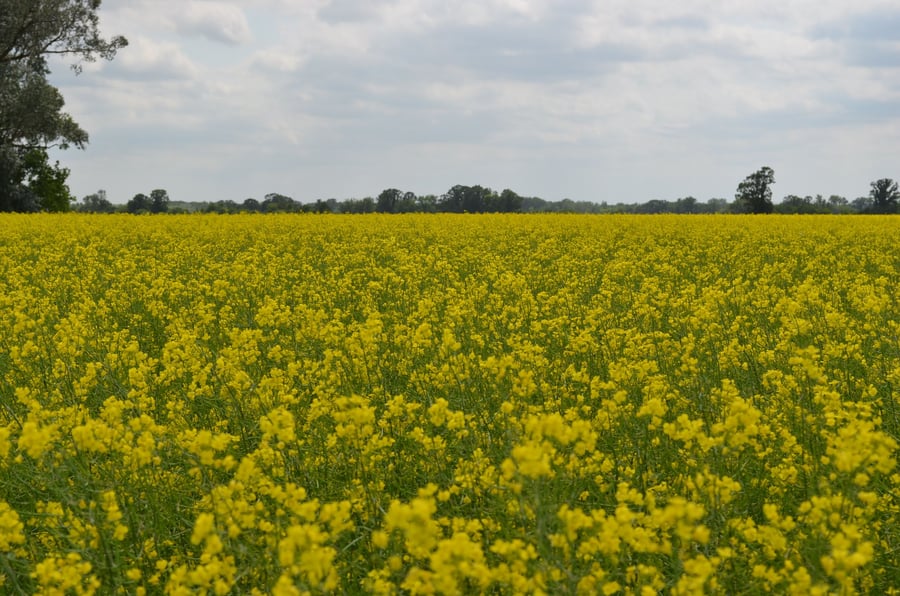
Canada is the second-largest country on earth, and most of its people live along the bottom edge of it. The interior is separated from the Pacific by ranges of mountains that run the full height of the country; east of them lies the prairie, and north and east of the prairie the boreal forest runs on for thousands of kilometres, then tundra, then the Arctic Ocean. The latitudes that make the winters long also make the summer days long: on the prairie the sun is up for sixteen or seventeen hours at midsummer, more further north, and for a few weeks in July entire horizons are in flower at the same time. In January the same places reach minus forty.
At a Canadian farm gate – or a market stall, or the honour-box at the top of a Puslinch, Ontario driveway, where the jar is taken and the money left – the jar most often says wildflower: fleurs sauvages in Quebec, somewhere under the words pure, raw, unpasteurized and local, and the place name is the real information. Restigouche wild honey. Pure Nova Scotia honey. 100% Ontario. A wildflower honey is its own region’s bloom, whatever opened within flying range of the hive that season, so the same word means a different honey in every province – and some beekeepers name the harvest by season instead: spring, summer and autumn jars in Ontario, miel de printemps, d’été et d’automne in Quebec.
The named honeys sit on top of that base, and each comes from a particular part of the country. Clover, mild and pale, is on labels in every region, from a Victoria farm store to a family brand in Quebec’s Beauce, and it carried Canada’s export reputation for a century. Buckwheat, the settlers' dark honey, runs from Quebec – where a house in Montreal’s Jean-Talon Market sells it as “Quebec’s black treasure” – through Ontario to Manitoba. West of the mountains, British Columbia and Yukon beekeepers truck hives to recent burn sites for fireweed, a flow that may last four weeks or only two and a honey so pale that, in one Yukon beekeeper’s words, “you can actually see through the jar.” Ontario and Quebec add basswood from the summer hardwoods and bold goldenrod in fall; in the Maritimes and around Lac-Saint-Jean, hives go out to the wild-blueberry barrens each June for pollination and come back with an amber crop of blueberry blossom. And some are less familiar: dandelion and knapweed blossom in the Okanagan, coriander honey on Vancouver Island, a marsh honey in Ottawa, a forest miellat – honeydew – from the Hautes-Laurentides north of Montreal, and hives at Norman Wells, above the sixty-fifth parallel, filling with fireweed and wild clover.
The country’s largest honey crop is white prairie honey, drawn from canola and clover – fine-grained, quick to set, gentle. It reaches the shelf as creamed honey, as white honey, or folded into the clover jar. One Saskatchewan beekeeper explains packing clover over canola simply because it is milder.
Canada classifies its honey by colour, and has graded it that way since a federal law of the mid-1930s. The system was built for selling honey on description: a drum of prairie honey could be priced by a distant buyer from its certificate, without being tasted, because colour is cheap to measure, repeatable between a farm shed and a laboratory, and tracks flavour well enough for commerce – “usually, the darker the honey, the stronger the flavor,” Agriculture Canada’s own grade guide explained.
The same classification runs from the export dock to the fall fair. The bulk trade still prices honey by colour class. At the fairs, the colour classes are brackets that keep like against like – a mild clover is never judged beside a buckwheat – and within the bracket the judges score preparation: cleanliness, clarity, moisture, the fill of the jar. Flavour earns a tenth or a fifth of the points, and only for faults; as Calgary honey judge Ron Miksha puts it, “judges do not rate honey by how much they personally like the floral source.” The American system differs on exactly this point: a US Grade A gives half its points to flavour, judged against the honey’s floral source. Canada’s grade requires only that a honey’s flavour match its colour class.
Colour class does not identify the flower – a fireweed and a canola honey can share the class of White – and the regulations say so themselves: the American standard states colour “is not a factor of quality,” and Agriculture Canada’s guide that it “does not affect grade.” Other countries classify differently. Italy keeps a state register of certified honey sensory experts – the only one in the world, by its own institute’s account – and its national competition, running since 1981, is judged by floral type with laboratory checks and trained tasting panels; France’s national concours is organized by varietal and appellation. Sensory evaluation has begun in Canada as well: Ontario’s beekeeping shows include a black-bottle class judged on taste and aroma alone, two Quebec beekeepers sit on Italy’s register, an Italian instructor taught sensory analysis at Quebec’s bee research station in 2025, and McGill is chemically fingerprinting Quebec honeys in support of the province’s first typed honeys. By 2017 American retail counters had dark and specialty honeys out-pricing white.
Honey colour is read in millimetres against a wedge of amber glass, on an instrument patented in 1932
The Pfund grader is an amber glass wedge: a wedge-shaped cell of honey slides against it until the colours match, and the reading is the distance moved, in millimetres. A 1925 US Department of Agriculture circular adopted it for honey, and those millimetres are still where the consumer classes divide -- White up to 30, Golden to 50, Amber to 85, Dark above -- so a jar's class is settled by a measurement rather than an opinion.
The instrument that carried the 1930s grading rule survives -- the Dominion Honey Classifier, a comparator box made by F.W. Jones and Son of Bedford, Quebec, its vials labelled from "Extra White (Export Only)" down through "Dark Amber" -- one sits in the national science and technology collection.
The colour reading moves. Honey is classified in liquid form, because crystallization lightens its appearance; heat and age darken a honey, filtration lightens it, and blending to a class is routine trade practice.
What Canadian judges actually score, and the tasters who judge from blacked-out jars
Ron Miksha, who has judged at Alberta fairs, defends the system on fairness grounds: flavour scoring "has nothing to do with the judge's appreciation of honey," because a judge who loves buckwheat must not penalize a clover -- so the card scores what can be scored: cleanliness, density, clarity, presentation. He also names the system's built-in dilemma: heating honey wins clarity points but caramelizes flavour.
Carl Chesick, founder of the Black Jar Honey Contest in Asheville, makes the opposite case: because taste is not part of fair judging, "you can wind up with a best-in-show honey that tastes like crap." His answer is the opaque jar -- nothing to judge but taste. Canadians enter the Black Jar and win in its Far North category, and Ontario's beekeepers now keep a black-bottle class of their own.
The Quebec critique is about identity rather than judging. Apicultrice (beekeeper) Claude Dufour told Le Devoir that the standardized post-war jar -- "lightly heated, golden, caramel-tasting" -- became the norm at a cost she calls a lack of respect for the bees' work, and that Quebec has no officially typed honey yet: her ambition is a recognized miel du terroir (a honey typed to its place), with clover, linden, buckwheat and dandelion as the first candidates. She and Mélissa Girard are the first Canadian women accredited to Italy's national register of honey sensory experts.
The size of the crop comes from the long northern days. The season is short – roughly May to August on the prairies – but a prairie summer day carries sixteen hours and more of daylight, and half the country’s colonies spend part of it on canola, a crop seeded across more than twenty million acres, with sweet clover and alfalfa around the edges. The result shows in the per-colony yields: Saskatchewan colonies averaged nearly two hundred pounds across 2010 to 2014, and some prairie beekeepers regularly take over three hundred in a good year. The shortness also makes the crop swing – a bad winter or a dry July can move the national harvest by nearly a fifth.
The honey is a small fraction of what those colonies are worth to the country. Agriculture and Agri-Food Canada puts honey bee pollination at about $3.18 billion a year in added harvest value, and about $7 billion once hybrid canola seed is counted, against a honey crop worth around a quarter of a billion.
Hybrid canola seed also runs on a second managed bee. The alfalfa leafcutter, a solitary bee first imported into western Canada in 1962, does about half of the pollination the seed crop needs, and more than four billion of them are put to work each year on alfalfa and canola seed. Canadian stock is largely free of chalkbrood, so live cells are exported south to keep the American alfalfa seed industry supplied.
The far edge of that country is the Peace, the river district straddling the Alberta-British Columbia border, where Eva Crane, visiting in the 1950s, found what she called an El Dorado as far as beekeeping was concerned. Its town of Falher, Franco-Albertan and set in the Smoky River country, calls itself the Honey Capital of Canada, has held a honey festival each June since 1970 with a bee-beard demonstration at its centre, and keeps a twenty-two-foot bee in a park on Main Street. Tisdale, in Saskatchewan, keeps a smaller one and made the same claim. It dropped its own slogan, Land of Rape and Honey, in 2016, twenty-eight years after an industrial band took the phrase off a souvenir mug for an album title.
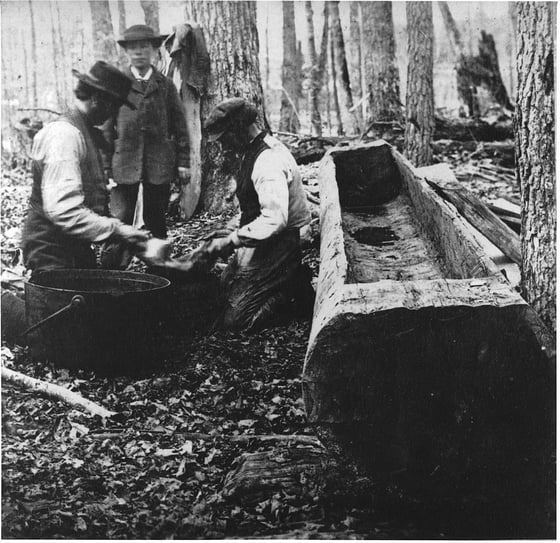
There were no honey bees in the Americas before European ships. Canada has more than 800 native bee species, and Statistics Canada, which counts every honey bee colony, does not track them. For thousands of years the sweeteners here were tree saps: maple, boiled to sugar by Anishinaabe, Haudenosaunee, Mi’kmaq and other Eastern Woodlands peoples, who traded it in birch-bark containers; birch, tapped by Woodland Cree. Honey bees crossed the Atlantic as settlers’ cargo – a recorded Indigenous name for the new insect was “the white man’s fly” – and were in eastern Canada over 250 years ago; the first colonies in British Columbia came by ship from California, landing at Victoria in May 1858.
For the half-century after 1870 the centre of the craft was small-town Ontario: David Allanson Jones built a honey operation so large that the town was renamed Beeton in 1874, founded the Canadian Bee Journal in 1885, and led a beekeepers’ association older than the province’s ministry of agriculture; Ontario’s bee inspectors of the same era produced a foulbrood cure the world adopted. Then sweet clover spread west with First-World-War-era agriculture, beekeepers followed it, and by the late 1950s the prairies had the lead for good – under a system that treated the bee itself as an annual input: colonies killed each fall, the whole crop taken, and two-pound packages of live American bees installed every April. Eva Crane’s 1966 account describes an industry with “no continuity from one year to the next.”
In 1987 the border closed against American bees over parasitic mites; the mites arrived anyway by 1989, but the closure forced Canadian beekeeping to keep its bees. The industry built wintering barns where colonies sit in darkness at four degrees for five months; brought in Buckfast stock from an English abbey in 1989, the first European imports since 1927; and, from 2004, bred mite-resistant queens at Saskatraz, an isolation apiary named by crossing Saskatchewan with Alcatraz. Winter losses have averaged 27.7 per cent since the national tally began in 2007, and the winter of 2021-22 took 45.5 per cent, the worst on record – yet colony numbers keep setting records, rebuilt with splits, home-raised queens, and spring packages flown from New Zealand, Chile, Italy and Australia.
Bees reached Quebec by swarm around 1805, and rode to the BC Interior in tea chests
In the east the bee moved north on its own wings. Swarms crossing from the United States reached the Quebec City region around 1805, and the first beekeeper known by name in French Canada is a priest -- the curé Charles Bégin of Île Jésus, who kept bees from 1804 to 1824. Forty years after the first swarms crossed, an 1844 census counted 7,818 of them in Quebec.
In the west the bee travelled as freight. From the two 1858 colonies at Victoria, beekeeping crossed to the mainland in 1865 and worked up the Fraser Valley over twenty years; bees bound for the Interior rode in tea chests on the BX stagecoach. Chinese workers who had built the railway are credited with the province's first commercial honey production, hiving bees in hollow cedar shingle-bolts.
The prairies came last. Saskatchewan's first honeybee records date to 1900, arriving with settlers from the east; in southern Alberta a Lethbridge-area grocer named George Kerr kept forty-five colonies in 1919, and the Graham brothers of Coaldale built the province's first commercial apiary in 1921 -- it grew to 750 hives, and its owners helped found Alberta's beekeepers' association and its honey co-op.
Jones bred imported queens in isolation on Georgian Bay islands, and his weekly is still readable today
Jones started in 1870 with two colonies in Langstroth hives and patented his own double-walled Jones Perfection Bee Hive the same summer. By 1880 he was taking 70,000 pounds of honey from 400 colonies, and in 1886 he shipped 30,000 pounds of Canadian honey to the Colonial and Indian Exhibition in London and sold all of it.
The queens he imported from Cyprus and Palestine in 1879-80 needed isolation to breed true, so Jones used islands in Georgian Bay off Parry Sound -- one still carries the name Jones Island. The island program ran four years and never paid commercially; isolated breeding stations return again and again in Canadian beekeeping.
The Canadian Bee Journal ran from April 1885 until fire destroyed Jones's Beeton factory in 1893, and the title carried on under other publishers into the twentieth century. The whole run is digitized and free to read. Jones died in 1910, postmaster to the end, in Beeton.
The shaking cure the world adopted, and the 1892 ban on spraying trees in bloom
American foulbrood, a spore-forming bacterial disease, destroyed colonies faster than nineteenth-century beekeepers could replace them. William McEvoy of Woodburn, Ontario -- one of the world's first government bee-disease inspectors, appointed under Ontario's foul brood law in the early 1890s -- worked out a cure without chemicals: shake the colony free of its infected combs onto fresh foundation so the bees exhaust the tainted honey, and destroy the old combs so no spore survives. It spread worldwide as the McEvoy treatment, and South Australia cited Ontario's law as the precedent for its own bee-disease act of 1894.
Ontario's beekeepers also won an early environmental law: in 1892, after a decade of documenting colonies poisoned by orchard sprays, the province banned the spraying of fruit trees in bloom -- among the earliest pollinator-protection laws anywhere, and by then there were 146,341 hives in the province for it to cover.
Prairie beekeepers killed their colonies each fall and bought new American bees each spring
The arithmetic was straightforward: on the northern prairies a wintered colony might die anyway, and feeding it through seven months of cold cost more than a spring package. So the bees were treated like an annual crop input. After the last flow the colonies were gassed with calcium cyanide and every frame of honey taken; the provincial extension manual for western beekeepers carried the kill procedure in print.
Each April the replacements arrived: two-pound packages -- a young queen and a few thousand workers -- railed and trucked from the Gulf states and California. Crane noted that a prairie beekeeper's whole year depended on that shipment. The Peace River district, at 55 to 57 degrees north, where the long summer days can put 200 pounds on a colony, developed two-queen package systems to build field strength faster than a single queen could.
The system ended abruptly in 1987. The scale of the conversion shows in one pair of numbers: about 6,000 colonies were wintered indoors in western Canada in 1969; the figure later reached around 40,000 -- and wintering, not packages, had become the industry's defining skill.
Colonies winter in dark barns at four degrees for five months -- a tool, not a cure
A modern wintering barn is a controlled environment: four to seven degrees, humidity held steady, constant air exchange, total darkness -- work is done under red light, which bees do not see. Colonies go in around late October and come out five to six months later, thousands of hives to a building.
The idea is older than the barns. Quebec beekeepers wintered bees in cellars long before the border closed -- Crane describes a bee cellar dug under a Quebec honey house, holding steady a few degrees above freezing -- and the federal Bee Division's 1926 bulletin, Wintering Bees in Canada, named wintering as the limiting problem of the whole industry.
Today about a fifth of Canada's colonies winter indoors, and nearly two-thirds of Quebec's. It is a tool, not a cure: in the hard winter of 2023-24 the indoor-wintered colonies fared slightly worse than the outdoor ones. The barns provide control -- of feed, of mice, of wind -- not immunity from the mite.
Saskatraz breeders leave their colonies in with the mites; the survivors' queens sell across North America
Saskatraz began in 2004-05, when the Saskatchewan Beekeepers' Association and molecular biologist Albert Robertson assembled breeder colonies from queen lines across the province. The government news release that funded it explained the name: an apiary of colonies "kept in isolation while they are monitored and selected for mite resistance." Saskatchewan crossed with Alcatraz.
The method is recurrent natural selection. The breeding colonies face varroa without synthetic treatments; the ones that survive and still make honey become the parents of the next round. Resistance is bred into the bee itself, not applied as a chemical the mite can develop resistance to.
The queens are made in two countries. Saskatraz breeder stock goes to a California queen producer that raises the hybrids and sells them across North America.
Canadian honey tests clean. The federal food agency’s authenticity program – targeted testing, not a random survey – has found adulteration overwhelmingly in imported honey. At Montreal in 2019 Canada hosted the world beekeeping congress and, for the first time, every entry in the world honey competition was lab-tested before judging. Seventy-one of 157 entries failed and were pulled from the tables; a prairie producer took gold in soft-set honey; and within five years the world body had abolished its honey awards entirely, citing the lessons of Canada 2019.
Where the crop goes explains why the names are little known abroad. About a quarter of the honey is exported, nearly all to the United States and Japan, most of it in bulk for blending; a single brand represents Canadian honey on a British supermarket shelf. The honeys with names – the fireweed, the buckwheat, the seasonal Quebec jars – are sold mostly where they are made: at farm gates, market stalls and fairs across the country.
157 jars tested, 71 disqualified -- and within five years the world honey prize was abolished
The 46th Apimondia congress filled Montreal's Palais des congrès in September 2019 -- some five thousand delegates, hosted by the Canadian Honey Council. For the first time in the World Beekeeping Awards' history, every honey entry went to a laboratory before a judge saw it.
Of 157 entries, 71 failed: added sugars in roughly one jar in seven, antimicrobial residues in others, basic physiochemistry -- moisture, HMF -- in more. The disqualified jars stayed on the display tables, replaced by cards reading "This exhibit has failed laboratory examination and cannot be judged further." No continent was exemplary, the host committee reported.
The sequels ran smaller: thirty-nine of 145 honeys withdrawn at Istanbul in 2022, five of 59 at Santiago in 2023. In November 2024 Apimondia cancelled the honey category outright for its 2025 congress, citing "the inability to have honey fully tested for adulteration" and "the lessons learned from Canada 2019 and Chile 2023."
The same Montreal congress elected bee scientist Jeff Pettis as Apimondia's first North American president -- and a jar from the Wendell family, whose hives work the Saskatchewan-Manitoba border, left with gold in soft-set honey.
Nearly all exports go to the US and Japan, and Canada imports more honey by value than it exports
Canada exported 9,545 tonnes of honey in 2025, and the United States and Japan took about 97 per cent of it between them, almost all as bulk honey for blending and industry. Manitoba is the export engine, shipping over half the export value; Alberta's larger crop mostly feeds domestic packing.
One Canadian brand has reached a foreign shelf under its own name -- St. Lawrence Gold, whose blueberry blossom and prairie wildflower jars went into Waitrose, launched by its distributor as "the first Canadian honey available in the UK".
And the trade runs both ways: Canada imports more honey by value than it exports -- 11,235 tonnes in 2025, led by Brazil by volume, with New Zealand second by value. About a kilogram per person a year is available for consumption, and a growing share of it is imported.
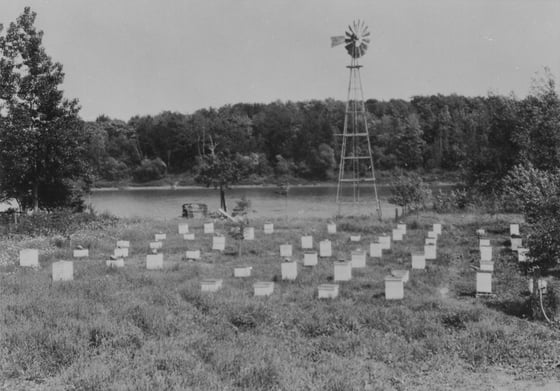
Quebec makes four per cent of the country’s honey. A queen-breeding operation in the Hautes-Laurentides ships some fifteen thousand queens a year, a provincial certification guarantees a jar is one hundred per cent Quebec honey, and a mead revival has put honey wine back on the province’s tables. First Nations operations keep bees from a Mi’kmaw-owned farm on varroa-free Newfoundland to the Tsuut’ina Nation beside Calgary. Urban beekeeping started early – a Toronto hotel put hives on its roof in 2008, and a Montreal company has since carried urban beekeeping to twenty-five hundred buildings in six countries.
Canadians also teach the world’s beekeepers. The University of Guelph runs what it calls the largest apiculture course in the world; its videos, translated into fourteen languages, have been watched thirty million times, and the research centre hands them to beekeeping groups abroad to translate, repost and earn from. An Alberta college ran a commercial beekeeping program it billed as the first of its kind anywhere, and drew more than 150 international students; a Canadian-led project in Vietnam trained more than 190 farm households, and an independent evaluation found targets exceeded and incomes raised; and South African beekeepers have twice, on the record, come to Canadian apiaries to learn and gone home to build honey businesses.
Guelph gives its bee courses away in fourteen languages, and two Grahamstown beekeepers trained in Ontario built an exporting meadery
The tradition is old: young men from the United States and Britain learned beekeeping in D.A. Jones's Beeton yards for twelve cents an hour. Its modern centre is Guelph, where 800 to 1,000 students a year take the apiculture course, international students among them; a Mexican veterinary internship has run for twenty-two years; and the research centre ships its video series abroad on memory sticks for use in courses, giving foreign groups the files to translate, repost and earn from. Its head beekeeper says he hears constantly from people abroad whose businesses the techniques helped build.
Alberta's Fairview College hired Denis McKenna in 1979 to build a commercial beekeeping course billed as the first of its kind in the world. It drew more than 150 international students, including a twenty-student cohort from Tanzania, and McKenna later travelled with Canada's aid agency helping to establish programs modelled on Fairview abroad. The program closed in 1999 and was revived in 2012 as Canada's first beekeeping vocational certificate.
The best-measured case is Vietnam: a Guelph-led, Canadian-aid-funded project trained more than 190 farm households in Ha Tinh province between 2007 and 2012, and an independent, peer-reviewed evaluation found the project exceeded its targets, with household incomes raised. One of its researchers, Hanh Pham, took her project-funded Guelph doctorate home and now directs bee research in Vietnam.
South Africa has come to learn twice, by the record. In 2002 two young beekeepers from Grahamstown's Makana meadery found an Ontario apiary by emailing Canadian beekeepers, spent three weeks at Dutchman's Gold in Carlisle learning production and extraction, and went home to a business that won international medals and exported as far as Switzerland. And the owner of Overberg Honey Co. told HoneyTraveler in 2025 that his father-in-law, a Northern Cape beekeeper, knew the beekeepers at Scandia, Alberta -- canola and alfalfa country between Brooks and Lethbridge -- and arranged four months' work there, "just to go and see how big a beekeeping business can be." At home he runs a seventy-year-old honey business with a couple of thousand hives among the fynbos: "We love Canada. Love to go back."
Honey shows up in the culture too, almost always tied to a single region: a Manitoba sculptor whose bee-built works hang in the National Gallery, a British Columbia bee scientist whose book took the Governor General’s prize, a honey-dill sauce Winnipeggers treat as standard and few Canadians elsewhere have tasted, Easter eggs still written in molten beeswax in the Ukrainian communities of the prairies. What the whole country shares is the November gathering: the Royal Agricultural Winter Fair in Toronto, founded in 1922, judges honey at the top of a ladder that begins at township fall fairs, and a recent white-honey trophy went to a producer from Gillam, in far northern Manitoba, at the fifty-sixth parallel.
One Hautes-Laurentides family sells fifteen thousand queens a year to beekeepers across Canada
The Desrochers family bought its first hive at Ferme-Neuve, in the Hautes-Laurentides, in 1978. Their son Anicet built Miels d'Anicet on that start: some 1,200 hives on wild forest forage, raw honeys bottled by season, a farm restaurant, and a queen-breeding operation selling around fifteen thousand queens a year to beekeepers across the country. In 2025 the founders passed the company to a young local beekeeper they had trained; Anicet stayed on the bees.
A Toronto hotel put six hives on its roof in 2008 -- and the city now discourages new hobby hives
The Fairmont Royal York in Toronto put six hives on its roof in 2008 -- reported at the time as the first hotel rooftop apiary in the world. The colonies produce a few hundred pounds a year for the hotel kitchens, the honey has taken ribbons at the Royal, and the chain has since spread bee programs to more than twenty of its hotels.
Alveole, founded in Montreal in 2013 by three friends home from commercial beekeeping in Manitoba, turned the hive into a building amenity: staff beekeepers, workshops on the roof, honey jarred floor by floor. The company now tends hives on some 2,500 commercial buildings in six countries.
The counter-current is also Canadian. Toronto's own pollinator guidance now discourages new hobby honey-bee hives, pointing out that the city's 360-plus native bee species compete with them for forage. In Vancouver the emphasis runs to community: Hives for Humanity has kept apiaries with residents of the Downtown Eastside since 2012.
Honeys Canada Is Known By
- Clover and canola, the prairie blend – the crop half the country’s colonies work each summer, canola seeded across more than twenty million acres with sweet clover round the edges: a pale honey that crystallises fine enough to spread, and one Japanese honey specialists stock by name as Canadian white clover.
- Buckwheat – the dark honey of eastern Canada’s old grain country, judged in classes of its own at the Canadian National Exhibition in Toronto by 1909, the year a beekeepers’ committee met on the exhibition grounds to advise the price of the dark honey crop, and still sold under its own name from Quebec to Manitoba.
- Fireweed – the first plant to cover a burned or logged mountainside; in 1920 the provincial apiary inspector for Greater Vancouver reported that his district depended on it for its main honey crop, and British Columbia and Yukon beekeepers still truck hives up to those slopes for the few weeks in midsummer when it flowers.
- Basswood, or tilleul on Quebec labels – the linden of eastern Canada’s hardwood forests, which blooms for about two weeks in midsummer and had a competition class of its own by 1909, when the Canadian National Exhibition in Toronto judged fifty-pound displays of granulated linden honey, and Ontario and Quebec producers still bottle it under its name.
- Wild blueberry blossom, miel de bleuetière – honey off hives placed in the barrens to pollinate the crop: New Brunswick keeps 10,615 colonies of its own and had 30,342 more trucked in for the 2025 bloom, and Quebec names the jar for the field it was made in.
History and Tradition
The government took bees on early. Ottawa built a federal Bee Division at the Central Experimental Farm with its own Apicultural Building and the titled office of Dominion Apiarist. Its first holder, F.W.L. Sladen – the English pioneer of bumblebee science – designed the building, wrote the era’s national manuals, and drowned in 1921 at his isolated queen-mating station on Duck Island in Lake Ontario.
The Division’s bulletins were what beekeepers across the country worked from – Bees and How to Keep Them ran through editions from 1923 – and any of them could mail a comb sample to Ottawa for microscopic disease diagnosis. The work went west with the crop: bees were kept at the Beaverlodge research farm in the Peace country from 1922, and ninety years later the same station became home to Canada’s first National Bee Diagnostic Centre.
The named honeys were being judged by name a century ago. In September 1909 the Canadian National Exhibition in Toronto judged basswood and buckwheat in classes of their own – fifty-pound displays of granulated linden honey in glass, a hundred pounds of extracted buckwheat – and on the eighth of that month a beekeepers’ committee met on the exhibition grounds to read the season’s crop reports and advise the price of dark honey. On the coast the province’s apiary inspectors were filing signed district reports by 1920, and the one for Greater Vancouver, Alex Keir, wrote that his district depended on fireweed for its main honey crop.
The record-keeping has been continuous. Statistics Canada has tracked honey since 1924, and the University of Guelph has taught apiculture since 1894, its 1920 apiculture building the first purpose-built in North America. The federal reference today is Agriculture and Agri-Food Canada’s annual statistical overview of the honey and bee industry.
Quality and Standards
Canadian honey is labelled in grades and colours, and the two are separate declarations. Under the Safe Food for Canadians Regulations, the grade – Canada No. 1, No. 2 or No. 3 – is a quality statement: No. 1 requires moisture at 17.8 per cent or less, cleanliness through a fine sieve, minimum enzyme activity, and a flavour free of taint. The colour class – White, Golden, Amber or Dark on consumer jars, a six-class scale from Extra White for the bulk trade – is legally a description of “hue or shade,” read in liquid form on a honey classifier or Pfund grader, and it does not affect the grade: a dark honey can be Canada No. 1. Graded domestic honey is marked “Product of Canada” or “Canadian Honey”; a mixture must say so on its face – “A Blend of Canadian and (source) Honey.” The colour-grading habit is old: a 1934 federal mandate required uniform grading of export honey, in force from 1935, with the domestic market following in 1939.
Authenticity is policed with chemistry. Since 2018-19 the Canadian Food Inspection Agency has run targeted surveillance on honey using two laboratory methods – stable isotope ratio analysis for cane and corn sugars, and nuclear magnetic resonance for the wider field of added syrups. The first cycle found over a fifth of targeted samples adulterated – every one of them imported; all domestic samples passed – and blocked some 12,800 kilograms of fake honey at the border, with over 83,000 kilograms stopped the following year. The testing is risk-targeted rather than random, so those figures describe the surveillance, not the marketplace – the agency itself is careful on the point.
The border has bee-health law of its own. Packages of live bees from the United States have been barred since 1987 under the Health of Animals Regulations, a closure upheld by risk assessments in 2003 and 2013; American queens, individually inspectable, are allowed. Approved package sources are New Zealand, Australia, Chile and Italy. A federal consultation on reopening the package border closed in early 2025 without, as yet, a decision.
Canada guarantees origin voluntarily: the BNQ-audited Miel 100 % Québec certification, Aliments du Québec labelling, organic certification through accredited agencies – and the federal grade marks, which are the main declaration on a Canadian jar. No Canadian honey carries a geographical indication or reserved appellation; Quebec’s register of protected designations lists nine products, none of them a honey.
Specialty Retailers
- Miels d’Anicet (Ferme-Neuve, Quebec; first family hive 1978). Raw seasonal honeys from wild Hautes-Laurentides forage, a queen-breeding operation, a farm restaurant, and Miel: l’art des abeilles, written with Anne-Virginie Schmidt. Boutique open daily year-round as published in August 2026; check before travelling.
- Intermiel (Mirabel, Quebec; founded 1976). Guided tours seven days a week in summer as published in August 2026, hive openings, a meadery and distillery – fifty years running and around a hundred thousand visitors a year. Check before travelling.
- Miels Liaison (Quebec). A beekeeper-curator presenting Quebec micro-terroir honeys the way wine is presented – aromas, intensities, honey-and-cheese pairings – with partner beekeepers completing the range.
- Main Street Honey Shoppe (Vancouver; two shops). Thirty-plus honeys on Main Street and at the North Vancouver Shipyards when the range was read in August 2026, unpasteurized and BC-leaning; New Zealand’s True Honey Co. names it as its Canadian stockist.
- Ontario Honey House (Toronto). A Corso Italia shop stocking honey from more than thirty independent Ontario beekeepers – the province’s varietal range in one room, with classes alongside and apitherapy, hive products used as treatments.
- Planet Bee Honey Farm (Vernon, British Columbia; since 1997). Raw honeys from fireweed to dandelion and knapweed blossom, tasted free, with observation hives and garden tours in the Okanagan; open all year as published in August 2026.
- Wendell Estate Honey (Roblin, Manitoba). A century-old family operation on the Saskatchewan-Manitoba border bottling estate raw prairie honey – World Beekeeping Awards gold at Montreal 2019.
- BeeMaid Honey (Winnipeg and Spruce Grove). The beekeeper-owned prairie co-operative that packs, tests and exports much of the western crop for the beekeepers who own it.
Competition Record
- World Beekeeping Awards, Apimondia Montreal 2019 – gold, soft-set honey: Wendell Estate Honey (Roblin, Manitoba, from family hives on the Saskatchewan-Manitoba border), at the congress where 45 per cent of entries failed laboratory testing; the same producer took bronze in 2023.
- American Honey Show 2024 – Best in Show: Honey Bee Zen Apiaries / Swan Valley Honey (Creston, British Columbia), with a creamed honey – the first Canadian entry ever to win it; the same producer took first in Class A, Water White, the palest colour class judged.
- Royal Agricultural Winter Fair 2024 – Professional Grand Champion Liquid Honey and Premier Exhibitor: Beamish Honey (Barrie, Ontario); Amateur Grand Champion Liquid Honey: Steven Coyle (Kitchener, Ontario).
- Royal Agricultural Winter Fair 2025 – Beamish Honey repeated as Grand Champion; the Lorna Robinson Trophy for white honey went to M & N Honey of Gillam, Manitoba, at the fifty-sixth parallel.
- London International Honey Awards – Three Foragers Bee Co. (Saskatchewan): Platinum 2022 for its white honey and Gold 2026 for creamed; Dr. Bee (British Columbia): Gold in 2022, 2023 and 2025 for its northern Alberta wildflower ‘Ice Honey.’
- Coupe des Nations (Quebec City, held since 2000) – the national honey-wine competition: repeat gold medals to Intermiel (Mirabel) and to Miel Nature (Beauharnois), whose first came in 2005.
Illustrative Links
- Statistical overview of the Canadian honey and bee industry, 2025 – Agriculture and Agri-Food Canada’s annual statistical reference: colonies, beekeepers, production, trade and pollination value. (Agriculture and Agri-Food Canada)
- The Canadian beekeeping industry in overview – The national association’s own portrait of the industry: who keeps bees where, what the seasons allow, and what pollination is worth. (Canadian Honey Council)
- Honey authenticity requirements in Canada – How the federal agency tests honey for added sugars, and what importers and sellers must prove. (Canadian Food Inspection Agency)
- The Canadian Bee Journal, digitized from 1885 – The full run of D.A. Jones’s weekly, readable page by page from volume one. (Canadiana)
- The Honey Bee Research Centre at the University of Guelph – Canada’s oldest apiculture program: research, courses, public tours and a honey shop whose sales fund bee-health science. (University of Guelph)
- The Royal’s honey, beeswax and mead competition – Canada’s national honey judging since 1922, at the Royal Agricultural Winter Fair each November in Toronto. (Royal Agricultural Winter Fair)
- The Bee King of Beeton in the Dictionary of Canadian Biography – The scholarly life of D.A. Jones: the hives, the queens, the journal, and the town that took his bees’ name. (Dictionary of Canadian Biography)
- Eva Crane’s Canadian bee journey, 1966 – The historian of beekeeping tours package-era Canada: the prairie system, Quebec bee cellars, and the Peace River El Dorado. (PDF, Eva Crane Trust – Bee World, 1966)
See also
Further Reading
- Bee Time: Lessons from the Hive – Mark L. Winston (Harvard University Press, 2014): The Canadian apiculture scientist’s meditation on bees and people, and winner of the Governor General’s Literary Award for Nonfiction.
- Revery: A Year of Bees – Jenna Butler (Wolsak & Wynn, 2020): A year of beekeeping on an off-grid boreal Alberta farm, shortlisted for the Governor General’s award – the cold-country beekeeping life firsthand.
- Miel: l’art des abeilles, l’or de la ruche – Anicet Desrochers and Anne-Virginie Schmidt (Éditions de l’Homme, 2013): a honey-gastronomy book in French, from the Hautes-Laurentides queen breeder and his partner.
Sources
- Statistics Canada. Production and value of honey, Table 32-10-0353-01 (2025 crop year, released December 2025). statcan.gc.ca
- Statistics Canada (2026). Principal field crop areas, seeded acreage release. statcan.gc.ca
- Statistics Canada (2024). Busy bees in '23. statcan.gc.ca
- Pitts-Singer, T. L., and Cane, J. H. (2011). The alfalfa leafcutting bee, Megachile rotundata: the world's most intensively managed solitary bee. Annual Review of Entomology, 56, 221-237.
- Agriculture Canada (1984). Alfalfa leafcutter bee management manual. publications.gc.ca
- Saskatchewan Alfalfa Seed Producers Development Commission (2025). Industry statement on leafcutting bee use, May 2025.
- Canadian Food Inspection Agency. National biosecurity guide for the alfalfa leafcutting bee industry, read August 2026. inspection.canada.ca
- United States Department of Agriculture, Agricultural Research Service, Logan, Utah. Alfalfa leafcutting bee research programme, read August 2026.
- Agriculture and Agri-Food Canada (2026). Statistical Overview of the Canadian Honey and Bee Industry, 2025. agriculture.canada.ca
- Canadian Food Inspection Agency. Canadian Grade Compendium, Volume 6: Honey, incorporated by reference under the Safe Food for Canadians Regulations, read 11 September 2026. inspection.canada.ca
- Canadian Food Inspection Agency. Labelling requirements for honey, Safe Food for Canadians Regulations section 276, read August 2026. inspection.canada.ca
- United States Department of Agriculture, Agricultural Marketing Service (1985). United States Standards for Grades of Extracted Honey, fifth issue.
- Canadian Food Inspection Agency (2019). Enhanced honey authenticity surveillance, 2018-2019. inspection.canada.ca
- Government of Canada (2019). Government of Canada prevents nearly 12,800 kg of adulterated honey from entering the Canadian market, news release, July 2019. canada.ca
- Government of Canada (2020). Government of Canada protects Canadians against food fraud in honey and other products, news release, December 2020. canada.ca
- Canadian Food Inspection Agency. Health of Animals Regulations, honey bee package import prohibition, with the 2003 and 2013 risk assessments, read August 2026. inspection.canada.ca
- Canadian Food Inspection Agency (2025). Consultation on honey bee packages from the United States, closed January 2025. inspection.canada.ca
- Canadian Association of Professional Apiculturists (2022). Statement on Honey Bee Wintering Losses in Canada, 2021-2022. capabees.com
- Canadian Association of Professional Apiculturists (2025). Annual colony loss report, 2025. capabees.com
- Atlantic Tech Transfer Team for Apiculture (2026). Review of the New Brunswick Beekeepers' Association Annual General Meeting 2026, March 2026. atttabuzz.com
- Crane, E. (1966). A Canadian Bee Journey. Bee World, 47. Eva Crane Trust archive. evacranetrust.org
- Canadian Honey Council (2019). Hivelights, Fall 2019, Apimondia Montreal 2019 president's report. honeycouncil.ca
- Apimondia (2024). Statement on the removal of the honey category from the 2025 World Beekeeping Awards, November 2024.
- The Guardian (30 November 2024). Beekeepers halt honey awards over 'huge fraud' in global supply chain. https://www.theguardian.com/business/2024/nov/30/beekeepers-halt-honey-awards
- Bonnell, J. (2020). Insecticides, Honey Bee Losses and Beekeeper Advocacy in Nineteenth-Century Ontario. Ontario History, 112(2).
- Gooderham, C.B. (1926). Wintering Bees in Canada. Dominion Department of Agriculture, Bulletin 74, New Series. publications.gc.ca
- Sladen, F.W.L. (c. 1916). Bee-keeping in Canada. Dominion Department of Agriculture, Exhibition Circular 18. Canadiana.
- British Columbia Department of Agriculture (1921). *Fifteenth Annual Report of the Department of Agriculture for the Year 1920*, reports of the Inspectors of Apiaries. Sessional Papers of the Province of British Columbia. https://doi.org/10.14288/1.0226032
- Skeoch, A. Jones, David Allanson. Dictionary of Canadian Biography, vol. 13 (1901-1910). biographi.ca
- Town of Falher. Honey Capital of Canada, town site, read August 2026. falher.ca
- CBC News (2016). Tisdale drops its Land of Rape and Honey slogan, August 2016. cbc.ca
- Société du patrimoine des Beaucerons (2021). L'apiculture en Beauce: histoire d'une exploitation marginale, 20 May 2021, citing Forget and Turcotte, Histoire de l'apiculture québécoise 1608-1966. spbbeauce.ca
- Canadian Bee Journal (1885 onward). Digitized run, Canadiana.
- The Canadian Bee Journal (1909). Vol. 17, no. 9, September 1909: Canadian National Exhibition prize list, honey exhibit report and the Buckwheat Honey Crop Report of 8 September 1909. Canadiana, oocihm.8_04191_530.
- Ontario Beekeepers' Association (1880). Constitution. Canadiana.
- McEvoy, W. (1903). Foul brood: its treatment and cure. Ontario Department of Agriculture. Canadiana.
- Ingenium, Canada Science and Technology Museum. Dominion Honey Classifier, F.W. Jones and Son, artifact 2002.0127.001. collection.ingenium.ca
- Ingenium. Bees: A Honey of an Idea, bilingual virtual exhibition, read August 2026. bees.ingenium.ca
- University of Guelph Honey Bee Research Centre. About us and tour information, read August 2026. hbrc.ca
- Agriculture and Agri-Food Canada. Beaverlodge Research Farm and the National Bee Diagnostic Centre, read August 2026. agriculture.canada.ca
- Institut de la statistique du Quebec (2026). Portrait de l'apiculture au Quebec en 2024. statistique.quebec.ca
- Conseil des appellations reservees et des termes valorisants (2026). Liste des produits sous appellation reservee, May 2026. cartv.gouv.qc.ca
- Miksha, R. Bad Beekeeping Blog, on judging honey by colour class, read August 2026. badbeekeepingblog.com
- Center for Honeybee Research. Black Jar Honey Contest, Carl Chesick, read August 2026.
- Albo Nazionale degli Esperti in Analisi Sensoriale del Miele, the Italian national register of honey sensory experts, read August 2026.
- Concours General Agricole, Paris. Honey classes by varietal and appellation, read August 2026.
- Royal Agricultural Winter Fair, Toronto. Honey, Beeswax and Mead competition results, read August 2026. royalfair.org
- London International Honey Awards. Results, 2022 to 2026.
- Chatting Food. St. Lawrence Gold honey debuts in Waitrose. chattingfood.com
- Grande Prairie Regional College. Commercial beekeeping program, Fairview campus, read August 2026.
- Overberg Honey Co. Interview with HoneyTraveler, December 2025. Research-Content/South-Africa/overberg-honey-co-interview-transcript-2025-12.txt
- Fairmont Royal York, Toronto. Rooftop apiary, read August 2026.
- Alveole, Montreal. Company profile, read August 2026. alveole.buzz
- Hives for Humanity, Vancouver. Programme description, read August 2026.
- City of Toronto. Pollinator protection guidance, read August 2026. toronto.ca
- Miels d'Anicet. Producer site and boutique information, Ferme-Neuve, Quebec, read August 2026. mielsdanicet.com
- Intermiel. Producer site and visit information, Mirabel, Quebec, read August 2026. intermiel.com
- Miels Liaison. Producer site, Quebec, read August 2026. miels-liaison.ca
- Main Street Honey Shoppe. Retailer site, Vancouver, read August 2026. mainstreethoney.com
- Ontario Honey House. Retailer site, Toronto, read August 2026. ontariohoneyhouse.ca
- Planet Bee Honey Farm. Producer site, Vernon, British Columbia, read August 2026. planetbee.com
- Wendell Estate Honey. Producer site, Roblin, Manitoba, read August 2026. wendellestate.ca
- BeeMaid Honey. Co-operative site, Winnipeg and Spruce Grove, read August 2026. beemaid.com