Mangrove Honey
The Story
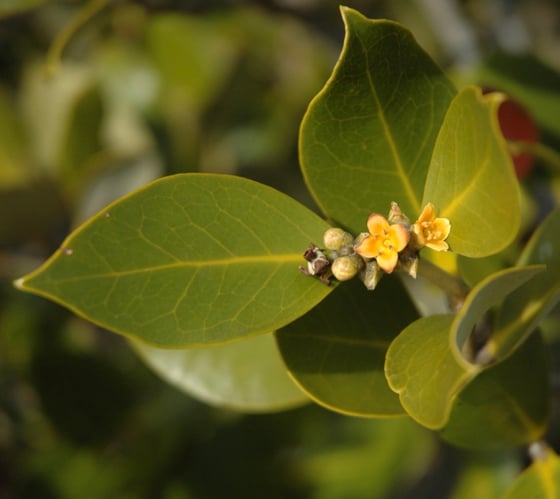
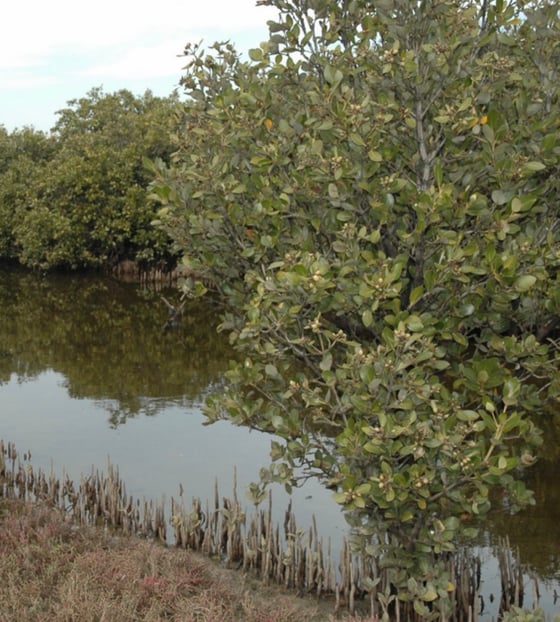
Mangrove honey carries a puzzle in its colour. The Queensland beekeeping record rates the coast’s mangroves as makers of pale honey – in the standard reference for the state’s bee flora, grey mangrove is logged as a minor source of light amber, and river mangrove, its companion along the same tidal shoreline, as a maker of honey paler still, almost water-white. Yet the mangrove honey that comes off the tropical Queensland coast can arrive far darker than that record would predict, sometimes the colour of mahogany and robust with it. The honey carries the mangrove’s name and the mangrove is its defining source – but why a coast whose mangroves are known for pale honey can yield a dark one is a question we haven’t fully answered.
What is not in question is where these bees live, and what that does to them. On a mangrove coast the hives sit at the edge of the sea, and the bees do something most honey bees never need to: they drink salt water. Field studies have caught them collecting seawater for its sodium – the one mineral their flowers cannot supply – and working the exposed tidal mud at low tide for the same reason. Producers who keep bees on these estuaries hold that the salt and the silt are what give the honey its character. The science confirms the bees do it; just what that contributes to the honey is not known.
Characteristics
Mangrove honey resists a single description because the coast that makes it is not a single tree. Where the honey runs pale, it answers to the grey and river mangroves the Queensland record rates as light, delicate sources; where it runs dark and robust, the colour most likely comes from the coastal hardwoods – bloodwood, melaleuca, the gums – that flower into the same tidal window, since darker honey tracks higher polyphenol content. What the mangrove reliably lends is a marine signature: studies of mangrove honey elsewhere report high proline and elevated sodium, the briny minerality the tasting carries. The result is a honey both saline and floral, light or dark by season.
Click to Display — The Details: botanical origin, sensory profile, and its regional identity
Nectar Contributors:
- Primary: Grey mangrove (Avicennia marina)
- Primary: River mangrove (Aegiceras corniculatum)
- Background: Red mangrove (Rhizophora stylosa)
- Background: Yellow mangrove (Ceriops australis)
- Background: Large-leaf orange mangrove (Bruguiera gymnorrhiza)
Bee Species:
Western honey bee (Apis mellifera). The introduced commercial bee of the Queensland coast, and – notably for this honey – documented as the most effective pollinator of grey mangrove in Australian studies, having taken up a flower its native pollinators work only weakly. On a tidal coast it forages not only nectar but seawater and tidal mud for the sodium its floral diet lacks.
Color:
Variable. Often light to medium amber, but mangrove honey from this coast can range to dark amber or mahogany; the darker end is not fully explained by the mangroves alone.
Flavor Profile:
Robust, faintly saline, with a savoury edge unusual in a coastal honey
Tasting Notes:
The first impression is sweetness with a savoury turn behind it – a faint salinity that reads as minerality rather than table salt, the signature most often reported for honey from the tidal forest. The body is fuller than the pale Avicennia honeys of other coasts, and at the darker end carries a malty, almost molasses depth. The finish is long and a little drying, closing on the same briny-green note the aroma opens with. Crystallisation varies with the season’s floral mix: the lighter crops can set to a fine grain, the darker ones stay fluid longer.
Aroma:
Warm, faintly briny, green-floral
Forage Origin:
Primary: Grey mangrove (Avicennia marina, Acanthaceae). The most widely encountered mangrove of the Queensland coast, and through the tropical north the variety eucalyptifolia, which ranges from Mackay to Cape York. It is the mangrove the bees meet first and most often, frequently the dominant or sole tree across a stand, and the species Australian studies identify as the one honey bees actively work and pollinate along the tidal estuaries. Its nectar alone, by the beekeeping record, makes only a light amber honey of modest yield – a minor source named for the forest it anchors rather than for any flood of nectar.
Supporting: River mangrove (Aegiceras corniculatum, Primulaceae). The same estuaries carry this smaller mangrove along their upper, fresher reaches, and it is the one the Queensland honey-flora authorities rate the most valuable of the mangrove group – though its honey is paler still, an extra-white that candies quickly to a fine grain. Where it flowers heavily it can carry a flow on its own; here it joins the grey mangrove as part of the same coastal forage rather than standing apart.
Background: Red mangrove (Rhizophora stylosa), yellow mangrove (Ceriops australis), and large-leaf orange mangrove (Bruguiera gymnorrhiza). A tropical mangrove forest is zoned by the tide – a seaward fringe, a dense Rhizophora belt, then Ceriops and Bruguiera toward the landward edge – so a coastal hive sits within reach of several mangroves flowering in succession, not one. None of these is a notable honey producer in its own right, but together they are the botanical company the bees keep, and part of why a mangrove honey from this coast is never quite the work of a single tree. The darker hardwoods of the same shoreline – bloodwood, melaleuca, the coastal gums – flower into this window too, and the colour and characteristics of the honey return to them.
Pairings:
The saline, savoury edge that makes mangrove honey unusual also makes it a cook’s honey rather than only a sweetener. It stands up to strong cheeses and cured or grilled seafood, where its briny note reads as seasoning, and a darker crop carries enough body to glaze roast vegetables or meat. Against the coast it came from, it suits a plain toasted bread and good butter, where the minerality has room to show.
Health Uses:
Coastal honeys of this kind are often valued locally for the marine minerality that sets them apart from inland blossom honeys, and mangrove honey carries a folk reputation, in the many parts of the world that produce it, as a robust honey taken for general wellbeing. These are traditional associations rather than tested effects, and the honey is best understood as food first.
Origin Story
Mangrove honey has a longer pedigree than its scarcity suggests. The early apicultural literature already counted mangrove among the honeys a beekeeper could recognise on its own – Frank Benton’s 1896 USDA manual lists it beside linden, sage, and orange as a single-source honey known by its colour and flavour. In Queensland the mangrove coast was mapped for bees by the state’s honey-flora surveyors, who rated each tidal species in turn and judged the river mangrove the most valuable of the group. Elsewhere in the world mangrove built whole honey economies: on the coast of Guyana a single Avicennia accounts for the great majority of the country’s honey.
For the saltwater peoples of tropical Queensland the grey mangrove was a working tree long before it was a honey source. Its wood was burned and its smoke used against sandflies, and on parts of the coast its seed was processed – soaked and leached in the tidal mud until the bitterness left it – as one of the few mangrove foods made fit to eat. The tree stood inside daily coastal life; the honey is a later chapter in a much older relationship between these communities and the forest between the tides.
Harvest & Forage
Mangroves flower through the warmer months, with grey mangrove and river mangrove opening across late spring and summer along the tropical coast; river mangrove tends to flower heavily only in alternate years, so the mangrove flow shifts in strength from season to season. The honey is never far from company. The same warm window brings the coastal hardwoods – bloodwood, melaleuca, the gums – into flower, and a hive worked too long or placed too far back from the tideline will carry their nectar into the crop, shifting it darker and fuller. A clean mangrove honey is a matter of placing hives close to the tidal forest and reading the flow, taking the crop while the mangroves hold the bees’ attention rather than after the hardwoods have pulled them inland.
Beekeeping Context
Mangrove honey is a honey of small coastal operations rather than broadacre apiaries. The hives sit at the edge of the estuaries, on the margin between the tidal forest and the land, where the bees can reach the mangroves at the front and the coastal scrub behind. It is necessarily a limited honey: the mangrove flow is modest, the stands are often narrow, and the country that produces it is the same country that floods twice a day. Producers on the far north Queensland coast who bottle it as a single honey work it in small batches, siting hives by the tideline and extracting close to the flow – the kind of attention that a minor, place-bound honey demands and a commodity honey cannot afford.
Named Producers
100% Pure FNQ Honey (Daniel), far north Queensland. A veteran coastal beekeeper of roughly fifty years and several hundred hives, who sites hives by area to bottle single-source honeys and sells direct at Rusty’s Markets in Cairns. Bottles a mangrove honey drawn from the tidal forests of the far north coast.
Translations
- Grey mangrove honey – English