New Zealand Honey
New Zealand is home of the renowned Manuka honey, a variety of favorites and many noteworthy unique honeys found only in New Zealand. Glorious unspoiled lands produce a wide variety of fine honeys and unique multiflorals from endemic plant life (grows only in New Zealand) that makes up to 80% of trees, ferns and flowering plants in New Zealand.
A central reason New Zealand has emerged as a distinctive source of honey lies in its endemic plant life. Long geographic isolation produced a flora unlike that of any other temperate country, and today an estimated 80 percent of New Zealand’s trees, shrubs, and flowering plants occur nowhere else. For beekeepers, this means nectar landscapes shaped not by centuries of agriculture, but by native forest, scrub, wetlands, and alpine systems. Well-known species such as mānuka and kānuka are part of this picture, but they are joined by forest trees like rewarewa, valued for its dark, malty honey, and rātā, whose dramatic flowering once supported highly prized regional harvests. These native plants often bloom briefly and irregularly, sometimes in difficult terrain, producing honeys that are local, seasonal, and variable rather than uniform. Even when blended with introduced pasture species such as clover, this endemic backbone gives New Zealand honeys a character that reflects ecology as much as flavour — rooted in landscapes that remain fundamentally their own.
Honey and beekeeping in New Zealand: early roots and modern quality enforcement
Before organised beekeeping (pre-1850s): Aotearoa New Zealand had no long-standing tradition of “honey harvesting” before European honey bees arrived, because native bees are solitary and do not produce harvestable honey in hives. European honey bees were probably first introduced in March 1839, when Mary Bumby landed two hives at the Mangungu Mission Station in the Hokianga. From that point, honey became locally available in a new way as managed (and later feral) colonies spread and early beekeepers began keeping and harvesting from European bees.
Honey quality standards, enforcement, and mānuka in New Zealand
Safety standards, export assurance, and enforcement: New Zealand’s honey quality system is built on food law and export controls that work together. At the base level, all honey sold domestically or exported must comply with the Australia New Zealand Food Standards Code, including strict limits for tutin — a naturally occurring toxin that can enter honey via tutu-related honeydew. MPI’s Food Standard: Tutin in Honey sets clear legal limits and provides compliance pathways so producers can demonstrate honey is safe. For export markets that require official assurance, honey businesses must operate under formal verification systems within the Animal Products framework, most commonly registered Risk Management Programmes with independent verification. This creates a documented chain of responsibility covering hygiene, batch identity, and traceability. Enforcement is effectively tied to market access: honey that cannot demonstrate safety, compliance, or authenticity cannot legally enter key domestic or export channels, and failures can trigger corrective action, investigation, or penalties under MPI oversight.
Mānuka honey: when, where, how, and why it matters: Mānuka honey is produced when bees collect nectar from the mānuka shrub (Leptospermum scoparium), a native plant that flowers for a short window, typically late spring to early summer. The most recognised mānuka-producing regions are the East Coast (including Gisborne and East Cape) and Northland, with additional production in parts of the central and lower North Island where mānuka scrub is established. Because the flowering period is brief and often weather-dependent, mānuka harvests are variable from year to year, which adds to its scarcity. What sets mānuka apart is not just flavour, but its association with antibacterial activity and premium medicinal use, which has driven global demand and high prices. That value also creates fraud risk, so New Zealand enforces a specific export definition: honey sold as mānuka for export must be verified by MPI-recognised laboratories against a science-based standard before it can be marketed as such. In practice, this means mānuka is both a cultural and ecological product of specific landscapes, and one of the most tightly regulated honeys in the world — prized not only for what it is, but for the confidence buyers have in its verified origin.
Organic honey production and standards
Organic honey production in New Zealand operates under certification schemes rather than a single government-defined “organic” law. Producers who wish to market honey as organic must be certified by an MPI-recognised organic assurance body (such as BioGro New Zealand or AsureQuality Organic). Certification focuses heavily on apiary placement and environmental controls: hives must be located within defined forage radii where nectar and pollen sources are predominantly organic or wild, free from prohibited agrichemicals, sewage sludge, or genetically modified crops. Because bees forage freely, organic certification relies on land-use mapping, risk assessment, and buffer management rather than absolute control.
In addition to site controls, organic standards regulate hive materials, disease management, and residue avoidance. Synthetic miticides, antibiotics, and most chemical treatments are prohibited; instead, beekeepers rely on approved organic acids, essential oils, physical controls, and strong biosecurity practices. Organic honey must also meet all standard food-safety and export requirements that apply to conventional honey, meaning organic certification is layered on top of New Zealand’s existing safety, traceability, and authenticity frameworks. Enforcement is carried out through regular audits, residue testing, and certification renewal, and loss of certification can occur if environmental, treatment, or documentation standards are not maintained.
Honey festivals, competitions & events in New Zealand
-
Apiculture New Zealand Annual Conference and Trade Exhibition
Location: Rotates (previously Christchurch / Rotorua)
Approximate dates: June each year (varies; check link for details).
Industry-wide beekeeping conference, trade booths, networking, and honey showcases. -
Apiculture NZ National Honey Competition
Location: Held as part of the Apiculture NZ conference
Approximate dates: Entries typically close in June; awards presented at the June conference. -
Mānuka Honey Tasting Events (various pop-up tastings)
Location: Various (often Auckland/Wellington region)
Approximate dates: Held intermittently (e.g., late November events). -
World Mānuka Honey Day
Location: Nationwide celebration events (varies)
Approximate dates: First Monday of November each year; highlights mānuka harvest & awareness. -
New Zealand Beekeeping Incorporated (NZBI) Annual Event
Location: Varies regionally
Approximate dates: Annual industry event (timing varies; check link for updates). -
NZ Beekeeping Community Events Calendar
Location: Nationwide (multiple local field days & workshops)
Approximate dates: Spring–autumn (e.g., field days in May–June; tutorials in different regions). -
UMF Honey Association initiatives & promotions
Location: National (varies by activity)
Approximate dates: Ongoing programmes with event tie-ins throughout year. -
Otago Farmers Market (Dunedin)
Location: Dunedin
Approximate dates: Every Saturday (year-round) — great for local honey sampling. -
Hokitika Wildfoods Festival
Location: Hokitika (West Coast)
Approximate dates: Early March annually — features local food producers including honey.
For the most up-to-date scheduling and additional honey-themed events (such as field days, tastings, and local festivals), check the event pages annually as dates and formats can change from year to year.
Recent honey award winners (2023–2024)
The following producers and honeys have received national or international recognition in the last two years. Together, they illustrate the range of honeys New Zealand is known for — including mānuka, clover, bush, kānuka, and specialty regional honeys.
-
Apiculture New Zealand National Honey Competition (NZ)
Supreme Champion Honey – 2023
The Mānuka Collective — awarded overall champion at New Zealand’s premier domestic honey competition. -
Outstanding New Zealand Food Producer Awards – 2023
Branch Creek Honey (Otago) — awarded for creamed clover and raw honey products, highlighting the strength of South Island pasture honeys. -
London International Honey Awards – 2024
Midlands Apiaries / Mount Somers Honey — Gold awards for clover and blended honeys, representing classic New Zealand table honeys. -
London International Honey Awards – 2023
Manawa Honey — recognised for kānuka and bush honey entries, offering an alternative to mānuka with softer medicinal and floral profiles. -
International recognition (selected mānuka examples)
Haddrell’s of Cambridge — Gold awards (2023–2024) for UMF-rated mānuka honeys; widely regarded as a benchmark producer.
Primal by Nature — Platinum and Gold awards at the 2024 London International Honey Awards for high-UMF mānuka.
For visitors, these awards point to reliable producers across a spectrum of styles — from everyday clover and regional bush honeys to carefully verified mānuka — and provide a practical starting point for tasting, purchasing, or planning producer visits.
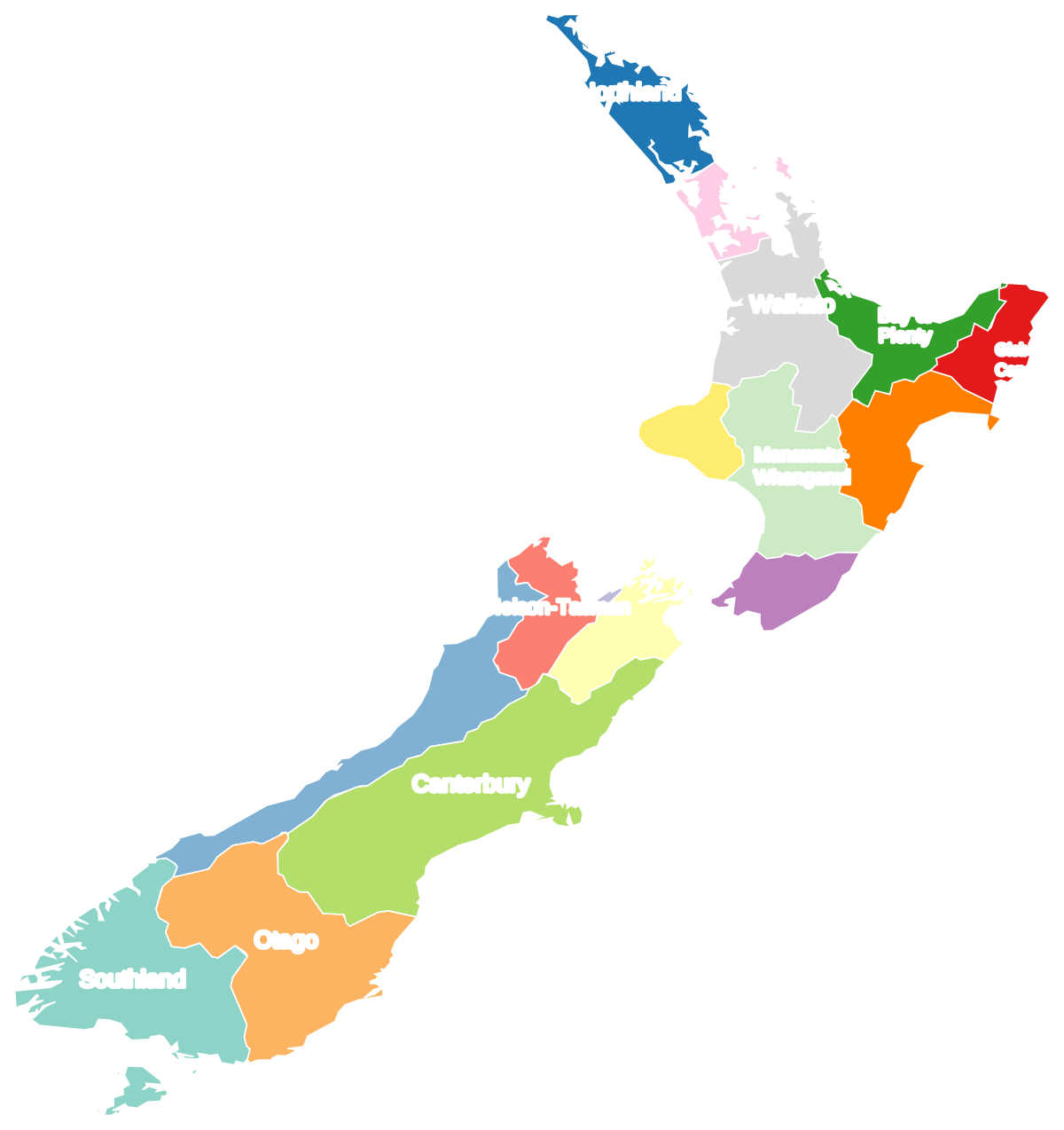
Map data: Natural Earth (public domain)
Key sources
- New Zealand Ministry for Primary Industries (MPI) – Honey and Bee Products Processing Requirements
- MPI – Food Safety and Honey (including tutin controls)
- MPI – Exporting Honey and Bee Products
- Animal Products Act 1999 (New Zealand)
- Food Act 2014 (New Zealand)
- Australia New Zealand Food Standards Code
- MPI – Mānuka Honey Science Definition and Export Requirements
- Apiculture New Zealand (Apiculture NZ)
- Te Ara – The Encyclopedia of New Zealand: Beekeeping
- Food Regulations and Enforcement Framework (NZ)
Monofloral Honey Standards (pdf) New Zealand Journal of Agriculture 1985 Vol. 28
Cool-climate pasture honeys alongside rare and compositionally complex native bush honeys near the South Coast and Fiordland margins.