
Chestnut Honey
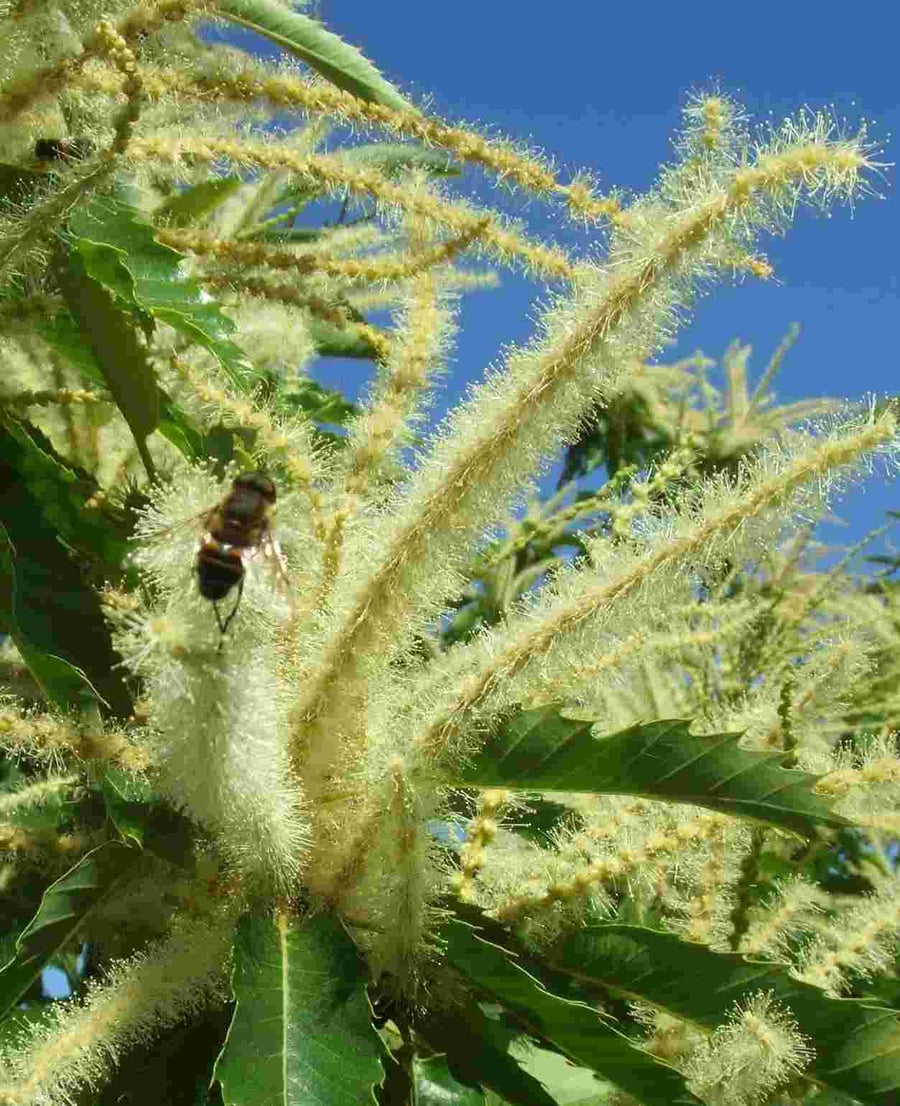
The chestnut tree belongs to the same family as beeches and oaks. For thousands of years the chestnut was a primary source of nutrition in the mountainous areas of the Mediterranean where grains did not grow well. The primary honey producer, the sweet chestnut tree (Castanea sativa) is common in Europe where it was introduced from Sardis (in what is now Turkey) thousands of years ago, hence the name Sardinian Nut, now known simply as the chestnut…not to be confused with Sardinian honey, so called because it is produced on the Italian island of Sardinia.
Although not a nectar-producer, the American Chestnut (Castanea dentata), a native species of the United States, once grew so densely it was said a squirrel could jump from tree to tree without once touching the ground between New York State and Georgia. In an ecological disaster, close to 4 billion trees in the Eastern United States were wiped out in the early 1900’s by a blight. Efforts to create a hybrid resistant to the blight are ongoing. Fortunately the Sweet Chestnut has shown resistance to the blight and as a happy consequence we are able to enjoy chestnut honey from these nectar-producing trees.

Chestnut honey has a strong aromatic taste and a slightly bitter after taste. Rich in pollen content, mineral salts and tannin, with a high proportion of fructose that resists crystallization and a relatively low acidity. Dark in color, ranging from yellowish brown to almost black, sometimes with amber hues, it has an aromatic, pungent herbal aroma and taste and slightly tannic (due to the tannin in the tree). The flavor is unique, not very sweet and with an almost bitter aftertaste and very persistent, highly appreciated by those who like a strong, less sweet honey. Blossoms from May to June.
It is excellent with aged cheeses (Stracchino, Ricotta) or hearty meat dishes. Or try it the Tuscan way; drizzled over a piece of Pecorino Toscano with some fresh pears.
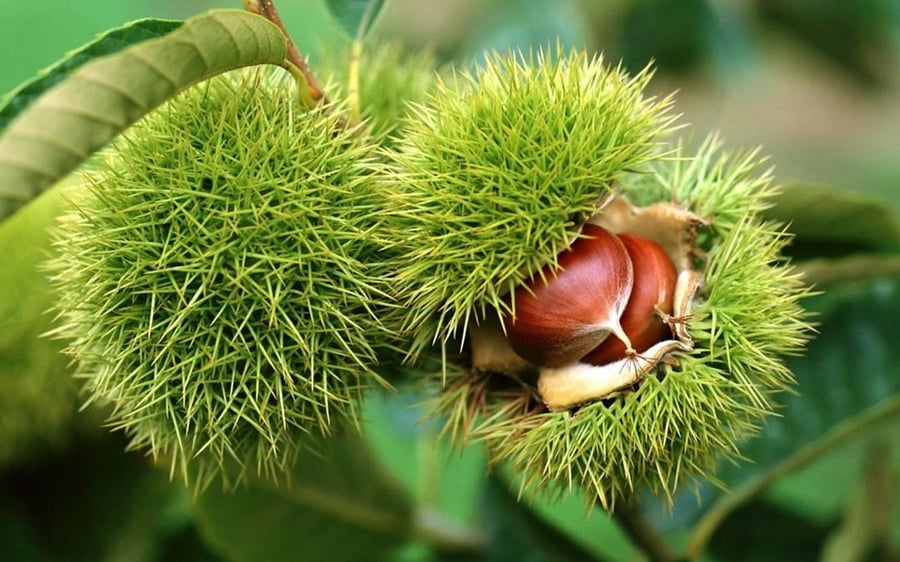
Of the common species of Chestnut trees, the Sweet Chestnut (Castanea sativa) grown mainly in Europe produces honey, and the Allegheny Chinkapin (C. pumila) grown in Eastern USA produces a strong and bitter honey.
Translations: Italian: Miele di castagno; Turkey: Kestane balı; France: Miel de châtaignier; Germany: Kastanienhonig; Spain: Miel de castaño; Greece: Το μέλι καστανιάς; Albania: Mjaltë gështenjë; Japanese Chestnut (Castenea crenata - 日本栗 - ri ben li); Chinese Chestnut (C. mollissima - 板栗 - li); Henry Chinkapin (C. Henryi - 锥栗 - zhui li); Sequin (C. Seguinii - 茅栗 - mao li)
Sources: Main: Albania, China, Turkey, Italy, Spain, Switzerland, France; Secondary: Austria, Belgium, Germany, Greece
Health Benefits: Rich in trace minerals and iron, vitamins B and C, Chestnut Honey strengthens muscles, blood circulation, regulating, liver and stomach, relieving fatigue, strengthens the immune system. Chestnut Honey brings positive effects to the respiratory and digestive systems.
See also
No related honeys added yet.