Borage or Viper's Bugloss Honey
Flavor profile
Characteristics
Slow to crystallize due to high fructose content. May last years if properly stored.
Pairings
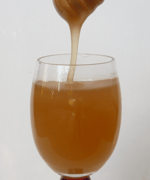
Viper’s Bugloss honey is a yellow gold color with a light clean taste, a floral bouquet and lemon characteristics.
It is delicious in tea or coffee and compliments a strong cheese such as blue or Roquefort. Interestingly, in honey tastings it is often among the favorites by men, although also enjoyed by women.
Cultural Notes
AKA: Blue Bottle, Blue Weed, Wild Borage, Bugloss, Viper’s Bugloss, Cat’s-tail, Blue Cat’s-tail, Viper’s Grass, Iron-weed, Langdebeef, Our Lord’s Flannel or Our Saviour’s Flannel, Snake Flower, Snake’s Bugloss, Viper’s Herb, Blue Thistle, Blue Devil, pa’ qué te quiero mañosa (Spanish — “why do you want to touch” — a reference to its thorns)
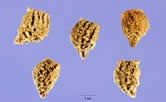
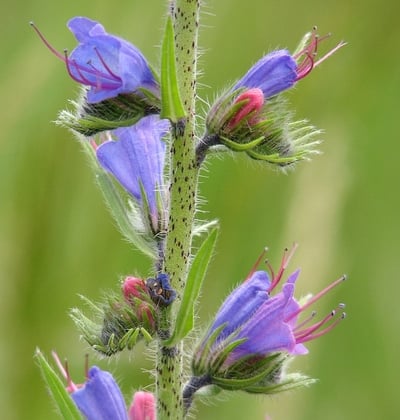
The name Viper’s Bugloss came about from a perceived resemblance between the seeds and a viper’s head, or the spots on the stem like a viper’s skin. It was thought to be a useful antidote to snakebite based on the fanciful logic of 14th century herbalist’s Doctrine of Signatures that states that the appearance of a plant indicates its use to humanity. In his 1656 The Art of Simpling, herbalist William Coles described the plant: “its stalks all to be speckled like a snake or viper, and is a most singular remedy against poison and the sting of scorpions.” The Latin name Echium originates ultimately from the Greek echis for viper, while bugloss is derived from the Greek for Ox Tongue — a reference to the shape and roughness of the leaves.
Translations
Harvest considerations
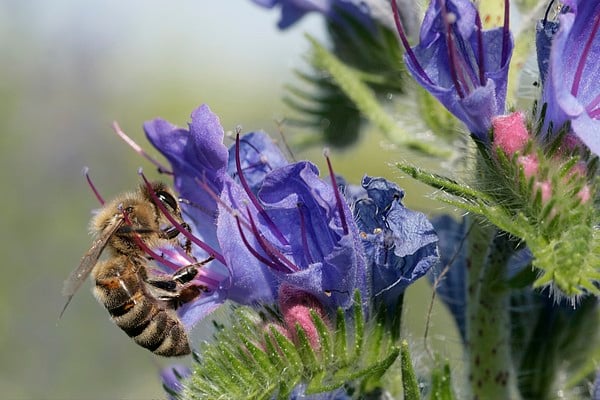
Viper’s Bugloss is a wild plant that enjoys dry meadows and fields, waste places and roadsides. It grows tall and its beautiful blue wildflowers – rarely white or pink – flower from late spring to mid-summer.
A member of the Borage family, it is native to southern Europe but is found in most countries from United States to New Zealand. It is often one of the many blossoms contributing to multifloral honeys from around the world, but in single flower honeys where it accounts for at least 45% of the content, New Zealand is the primary source. Mainly from the Southern island where it grows wild in the dry mountain valleys and mountain sides during the summer months. This pure environment is ideal because of the low risk of pesticide and chemical contamination.
Health uses
Source Regions
See also
No related honeys added yet.
References
- <small>Image Credits: Image with bee: by Arne Ader, Closeup by Luis de Pablos Alcázar</small>
- Photo: Evelyn Simak, CC BY-SA 2.0, via Geograph Britain and Ireland: https://www.geograph.org.uk/photo/5801578