Honey Standards
Honey standards and certification are an important way for consumers to know what they are getting. With standards it is easier to trust the quality and source by simply checking the label of the honey we buy. Without standards, if it is labeled, “Pure Honey”, what does that mean? Does it also contain corn syrup as well as ‘pure’ honey? Unfortunately this is a possibility.
Standards begin with a common definition and description. An excellent definition of honey comes from the World Health Organization (WHO) Codex Alimentarius (CA) for Honey, “Honey is the natural sweet substance, produced by honey bees from the nectar of plants or from secretions of living parts of plants or excretions of plant-sucking insects on the living parts of plants, which the bees collect, transform by combining with specific substances of there own, deposit, dehydrate, store and leave in honeycombs to ripen and mature.”
For the description of honey, it continues, “Honey consists essentially of different sugars predominantly glucose and fructose. The color of honey varies from nearly colorless to dark brown. The consistency can be fluid, viscous or partly to entirely crystallized. The flavor and aroma vary, but usually derive from the plant origin.”
In the definition, you may have read, “…excretions of plant-sucking insects…”!? That doesn’t sound too appetizing. How does that relate to the honey we know? You may be surprised to learn, much of the worlds’ honey is made partly or entirely from sweet excretions of insects rather than nectar from blossoms. It is called honeydew, fir or forest honey. It is much loved by those who prefer a darker and stronger tasting honey. There are two official types of honey based on their source:
- Blossom Honey or Nectar Honey; the honey which bees create from nectars of plants.
- Honeydew Honey; the honey which bees create mainly from sap secreted by insects (Hemiptera) from the living parts of plants or secretions of living parts of plants.
Enforcement of these standards varies by country. In United States there is no inspection or enforcement. Honey may carry the USDA seal, but there are few federal standards for honey, no government certification and no consequences for making false claims. This is directly from the USDA Rules and Regulations, “…honey does not require official inspection in order to carry official USDA grade marks…there are no existing programs that require the official inspection and certification of honey…”
The best method for determining the quality of honey produced in the USA is to know the local producer and ask them about their honey and production procedures.
Factors that comprise the standards of honey
1/ Composition and quality factors- Honey should not contain any food ingredients other than honey.
- It should not contain any objectionable matter, flavor or odors from processing or storage.
- It should not have fermented.
- Don't remove any pollen or constituent matter
- Not heated or processed so that the essential composition is changed.
- Heating and filtering within proscribed limits and labeled if outside those limits as, "pasteurized" or "filtered"
- Sugars used to feed bees should not adulterate the honey (i.e. Sugars should not be added to honey or fed to bees during honey creation also known as honey flow).
- Non-ripe honey may not be harvested nor water added. Honey is ripened in the hive by evaporating water until it reaches a certain water content and is capped by the bees in the honeycomb.
- Honey may be labeled according honey removal process. Extracted, by centrifugal force of decapped combs. Press or pressed by pressing combs. Drained by draining decapped combs.
- Honey may be labeled according to the style. Honey, in a liquid or crystallized state or a mixture of the two. Comb when in the comb or cut comb or chunk when containing parts of the comb.
- Botanical source. Predominant floral source (see single flower honey) or type; floral or honeydew, fir or forest honey. Honey labeled as from a single floral source cannot be blended with other honey (must meet minimum concentration requirements as well).
- Geographic or topological source. The country region or specific location within a country with corresponding honey characteristics.
- Species of bee. Most honey is produced by Apis Mellifera, but there are many other species with unique characteristics of honey.
- Organic, raw (unheated), natural. To be labeled as organic honey, must be based on organic production procedures. As raw honey, requires production and storage at, or under maximum hive temperature. As natural honey, is a always mislabeling since all honey is natural.
- Free of heavy metals in amounts that become a hazard to health.
- Not exceed maximum limits of pesticide and veterinary drugs.
- Follow general principles of food hygiene
Honey standards criteria
Many of the standards have specific measurable criteria.- Composition: moisture content, fructose, sucrose and glucose percentages
- Type (blossom or honeydew): conductivity
- Floral source: pollen analysis
Recognizing and Protecting the Sources of Honey
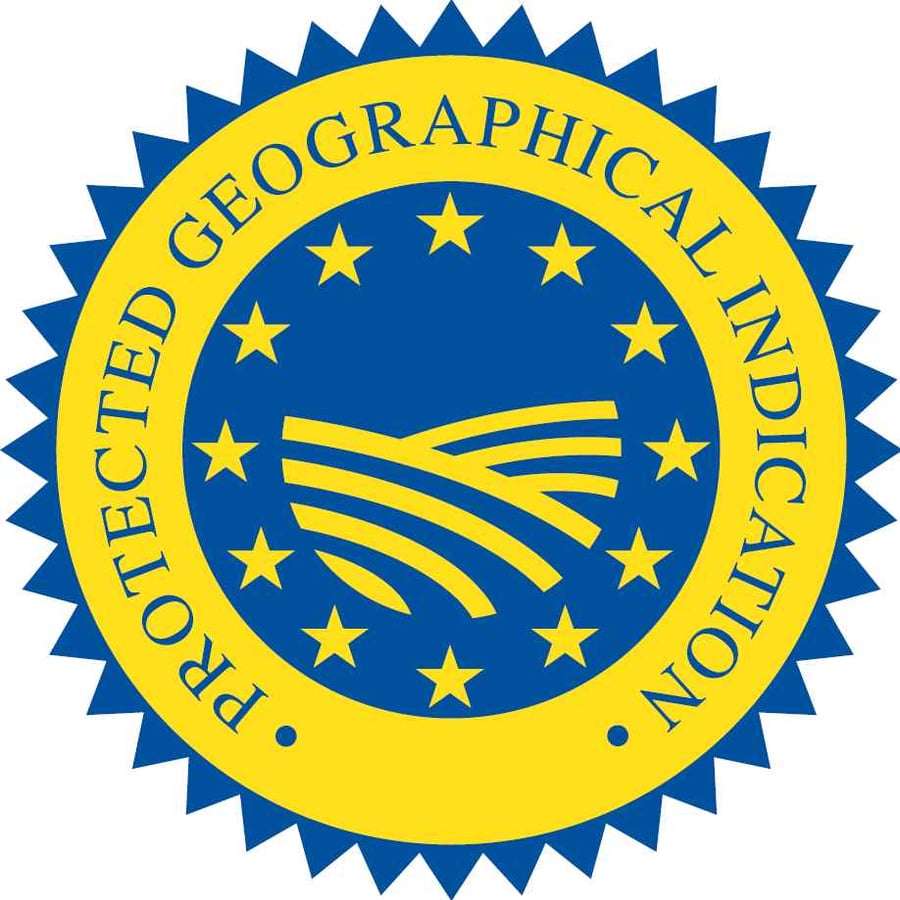
The authenticity of the origins of food and agricultural products is of great importance to consumers, as well as local producers. In many countries, foodstuffs including honey, are identified by their location through regulatory means. In the European Union, this is regulated by the Protected Geographical Indication (PGI) and the Protected Designations of Origin (PDO). This is similar to, and inspired by, the Appellation systems used in other countries. such as the Appellation d'origine contrôlée (AOC) France, the Denominazione di origine controllata (DOC) Italy, the Denominação de Origem Controlada (DOC) Portugal, and the Denominación de Origen (DO) Spain. In the United States, American Viticultural Area (AVA) is used to identify and designate specific wine growing regions.

Recognizing and protecting regional foodstuffs from around the world (including honey) is important as they are in danger of being lost. The international organization, Slow Food supports small producers and farmer’s markets and catalogs their quality food products. Food cataloging is done through the activity, “The Ark of Taste”. From Slow Food, “The Ark of Taste aims to rediscover, catalog, describe and publicize forgotten flavors. It is a metaphorical recipient of excellent gastronomic products that are threatened by industrial standardization, hygiene laws, the regulations of large-scale distribution and environmental damage.” They have already identified many rare honeys from around the world. (see USA Ark of Taste, Slow Food Italy - founding country)
 |
 |
 |
Examples of honey standards from several countries:
United States - USDA Standards for Grades of Extracted HoneyFlorida Standard of Identity for Honey. Florida is the first state to officially identify what honey is and does offer some purity guidelines:
World Health Organization of the United Nations:
European Union:
- EU Council Directive 2001/11o/EC Relating to Honey (pdf)
- PDO, PGI, TSG Database of Origin and Registration - DOOR
England
- The Honey (England) Regulations 2003 UK Food Standards Agency-Honey (pdf) (enforcement details)
Canada
France
- Decree No. 2003-587 of 30 June 2003 adopted in application of Article L. 214-1 of the Consumer Code in respect of honey (Google translated to English from French) (Original French version - Décret n°2003-587 du 30 juin 2003 pris pour l’application de l’article L. 214-1 du code de la consommation en ce qui concerne le miel)
Germany
- German Honey Regulation - HonigV (Google translated to English from German) (Original German version - Deutschen Honigverordnung (HonigV))
Italy
- National Beekeeping Registry Decree - Description (Google Translated to English from Italian)
See also
No related honeys added yet.